
During the late 19th century, Germany became an imperial power with colonies in Africa and the Pacific Ocean that attracted settlers, merchants, soldiers and administrators. Their presence influenced the native cultures in several ways, including architecture, linguistics and foodways. However, Germany lost its overseas colonies after being defeated in World War I; as a result, this relatively brief period of imperial control has been overlooked or forgotten in many former German colonies.[1] In total, an estimated 6 million Germans departed their homeland between 1820 CE and 1920 CE in search of economic opportunity and, after the Revolutions of 1848 CE, political freedom. [2] Although most German migrants eventually settled in Europe or the United States, significant numbers also migrated to the Americas, including Canada, Mexico, Brazil, Chile and Argentina, as well as the Pacific, such as Australia and New Zealand. Although brief, Germany’s imperial legacy still influences the brewing industries and beer consumption patterns of several former German colonies, including the Chinese region of Tsingtao and the former African colonies of Namibia and Tanzania. Analyzing the brewing industries of these aforementioned regions reveals the German preference for lager continues to influence many brewers and millions of drinkers around the world today, even if the impact is often subtle.

German Jesuit priests had traveled to China as early as the 17th century; however, Germany did not exert significant influence in China until the end of the 19th century. In 1897 CE, German warships occupied Tsingtao, a coastal city in Shandong province, in retaliation for the murder of two German missionaries.[3] After World War I erupted in Europe in 1914 CE, Japan, a member of the Allied powers, attacked the German forces in Tsingtao, which numbered only a few thousand men. The German presence left a small footprint and lasted only a short time. However, the Tsingtao Brewery continues to produce a pale lager that is available in the USA. The firm, originally named the Germania Brewery, was founded in 1903 CE, six years after the German occupation began, and key personnel were German, including the directors, brewmaster and cellar master.[4] In addition, numerous other Chinese breweries also produce lager beer today, and Snow Beer is the most popular with an annual production of about 113 million liters in 2018 CE.[5] Although the German occupation lasted less than 20 years, their preference for lager has had a significant influence on Chinese consumption. On the other hand, few people in China trace their heritage to Germany, and the 2010 CE Chinese census recorded only 14,400 Germans.[6] I did not find any evidence of German heritage associations in Tsingtao or any other part of China.
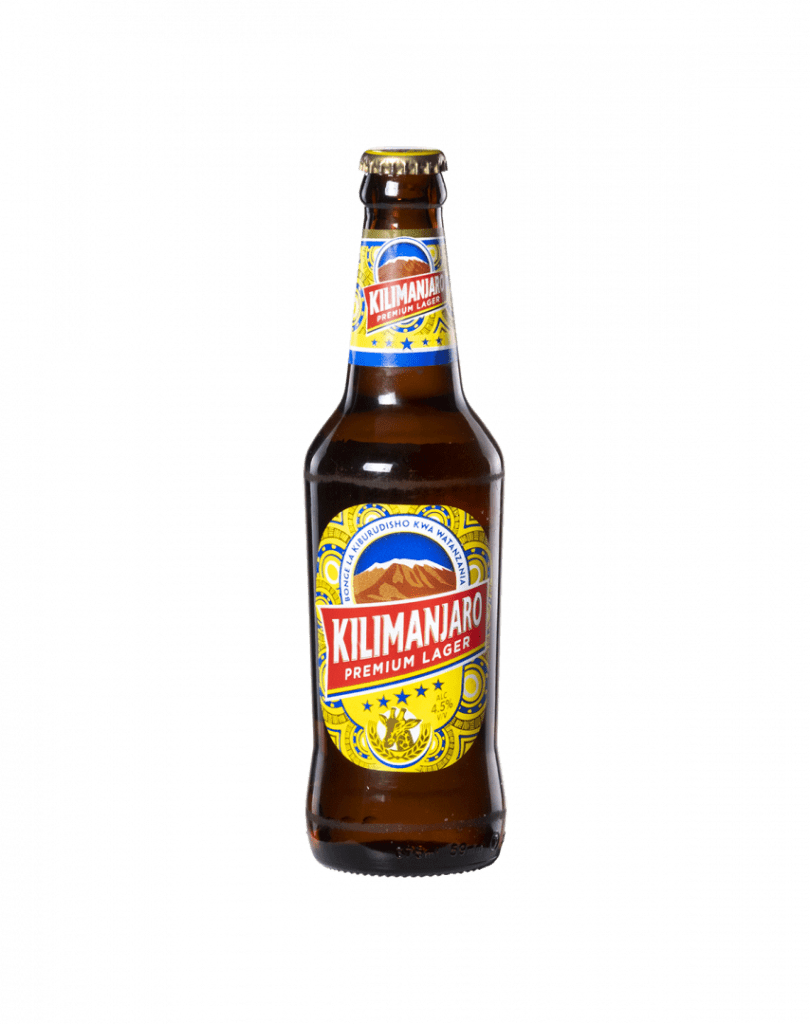
The German Empire also included territories in Africa, including Tanzania (part of German East Africa) and Namibia (formerly German South West Africa). German officials signed treaties with local chieftains to create the colony of East Africa in 1885 CE. As in other colonies, the German occupation force was small and less than 1% of Tanzanians today are of European descent.[7] I could not locate any German heritage associations in Tanzania either. However, the German preference for lager continues to exert a strong influence on the contemporary Tanzanian brewing industry. Tanzania Breweries Limited (TBL), located in the coastal capital of Dar es Salaam, is the largest producer with about 70% of market.[8] TBL was founded in 1933 CE, under the name Tanganyika Breweries, which is 15 years after the German occupation had ended. Killimanjaro premium lager is TBL’s most popular brew, and lagers, pale lagers or pilsners are the most common choices for Tanzania beer drinkers.[9] It does not appear that any Tanzanian beer is readily available in the USA.
In contrast to Tanzania, Namibia exhibits a stronger connection to its German colonial legacy. German warships landed troops there in 1884 CE, but the occupation force numbered only 14,000 by 1913 CE.[10] In 2011 CE, the Namibian census reported that only 4,300 households, less than 1% of the total, spoke German as their main language.[11] The Swakopmunder Brauerei may have been the first commercial brewery in the colony when it began operations in early 1900 CE, 16 years after the colony was formed, in the coastal city of Swakopmund.[12] It produced Berliner Weissbier and Dunkel Bier. Today, the leading brewery is Namibia Breweries Limited (NBL), founded in 1920 CE in the central capital of Windhoek. NBL’s annual production is more than 200 million liters with Tafel lager being the most common brew.[13] In general, lager and pilsner are popular styles with Namibian beer drinkers.[14] It does not appear that any Namibian beer is available in the USA. While I did not find any German heritage associations in Namibia, I did discover an annual German festival called Wika (sponsored by NBL) which began in 1952 CE. In addition, Windhoek hosts an Oktoberfest celebration; but both events were postponed this year due to COVID-19.[15] In addition, Namibia is the only African country with a daily German-language newspaper.[16] However, the Namibian government has also started to challenge the reverence for its German colonial heritage in recent years by removing a controversial statue dedicated to German soldiers killed while waging a genocidal war against native peoples.[17] Perhaps the reckoning has been delayed by a desire to placate German tourists who spend money in Namibia.[18] Regardless, the Namibian preference for lager has thus far escaped controversy.
Although the German Empire did not incorporate any colonies in the Americas, numerous Germans migrated to Canada, Mexico, Brazil, Chile and Argentina. Germans first traveled to South America in the 16th century, but they were few in number. Migration intensified during the 19th century, especially after the failed Revolutions of 1848 CE. Another wave of migration occurred after World War II as displaced Germans fled the destruction of their homeland. Alleged Nazi war criminals tried to evade justice by hiding in South America as well.[19]
About 7,000 Germans colonists and mercenaries initially settled in Brazil in the 1820s after being recruited to fight for Brazil to retain Uruguay, which was in the process of obtaining its independence from Brazil.[20] Immigration continued throughout the 19th and 20th centuries with about 220,000 Germans arriving by 1972 CE.[21] German immigrants probably brewed beer on a domestic scale, and it took about 30 years for the first commercial brewery to appear in 1853 CE in the city of Petropolis (not far from the coastal capital of Rio de Janeiro).[22] Pilsner is the most popular beer in Brazil with American-style lagers in second place.[23] Skol, an American-style lager produced by brewing giant InBev, is the single most popular brew in Brazil.[24] Xingu, a black lager, is available in the USA.[25] Many Brazilians trace their heritage to German immigrants and some 3 million Brazilians still speak some form of German.[26] Although I could not locate any German heritage associations, it seems plausible that one or more exists, but without many English-language references. However, Brazil does claim to host the second largest Oktoberfest celebration in the world in the south-eastern city of Blumenau (which is also the home of a beer museum).[27]

The first significant group of German settlers arrived in the Patagonia region of Argentina in 1853 CE. By 1895 CE, about 25,000 Germans had migrated to Argentina[28] with another 72,000 arriving between 1919 CE and 1932 CE.[29] Today, about 500,000 Argentinians still speak German.[30] However, I could not locate any German heritage associations in Argentina, but again, that could be due to a lack of reference material in English (as opposed to an absence of such organizations). Nevertheless, the German preference for lager beer continues to influence the Argentinian brewing industry and consumer preferences. Quilmes is the leading brand in Argentina with a 67% market share.[31] The top seller for Quilmes is Cristal lager and other breweries compete by producing their own light lagers and pale lagers.[32] Quilmes was founded in 1880 CE by Otto Bemberg, a German immigrant, in the coastal city that is the brewery’s namesake (near the capital Buenos Aires). Quilmes is available in the USA.
German migration to Chile began in the late 1840s and at least 30,000 had arrived before World War I.[33] Today, only an estimated 500,000 Chileans are of German descent.[34] In addition, there are several German language schools and a weekly German newspaper in Chile, although I did not locate any German heritage associations (again possibly due to a lack of English language references). German influence in the Chilean brewing industry also remains strong. One of oldest Chilean commercial breweries is Austral which was founded in 1896 CE by Jose Fischer, a German immigrant, in Punta Arenas (a small and remote coastal town at the southern tip of Chile).[35] However, Austral’s production only amounts to 1% of the Chilean market,[36] and the Compania Cervecerias Unidas (CCU), incorporated in 1902 CE, is the leading brewer with about 77% of the market.[37] CCU Cristal, another pale lager, accounts for 60% of CCU’s sales. [38] CCU exports to the USA, and overall Chilean beer exports experienced rapid growth in recent years from a paltry $4 million in 2002 CE to more than $113 million in 2013 CE.[39] Kunstmann, a Chilean craft brewery, is an obvious example of German cultural influence. Kunstmann brews in accordance with the 1516 Reinheitsgebot and features many different iconic German beer styles, including lager, bock and Weissbier.[40] Kunstmann began exporting to the USA more than 20 years ago and hosts the largest annual beer festival in Chile (which was also cancelled this year due to COVID-19).[41] Kunstmann is based in the town of Valdivia. A German immigrant had opened a commercial brewery in Valdivia in 1851 CE (only a few years after the first Germans arrived in Chile), but the business did not recover from a destructive earthquake in 1960 CE. Kunstmann pays homage to their German brewing heritage on their website.[42]
Individual Germans first arrived in Mexico in the 1820s, but the first wave of significant migration did not begin until the 1840s.[43] In the 1920s, about 16,000 German Mennonites from Canada migrated to Mexico.[44] Today, there are about 30,000 self-identified Germans living in Mexico,[45] although up to 20% of the overall population could have German ancestry.[46] Spaniards had created the first commercial brewery in Mexico in the 1540s, but it was a failure.[47] The first successful commercial brewery was Cerveceria Cuauhtemoc which opened in 1891 CE in Monterrey (about 50 years after the first Germans arrived).[48] Cuauhtemoc is best known for its Czech-style pilsner called Bohemia, although Mexicans also enjoy Vienna style lagers due to the influence of the Hapsburg emperor Maximilian I who came from Vienna to rule Mexico briefly in the 1860s.[49] However, Mexican consumers tend to prefer lighter lagers and pilsners. The best-known Mexican light lager is Corona Extra, produced by Cuauhtemoc’s rival Grupo Modelo, which is available in the USA. Other common Mexican export beers include Dos Equis Amber (Vienna lager), Tecate (lager) and Modelo Especial (lager/pilsner).[50] I could not locate any German heritage associations in Mexico, but several cities host Oktoberfest celebrations. Furthermore, the city of San Luis Potosi funds a German Cultural Center that offers language classes and cultural programs.

While the United States attracted the most German immigrants, Canada also attracted a few settlers. However, a lack of direct transportation and a shortage of available land in Canada discouraged more Germans from settling there. Between 1871 CE and 1914 CE, only about 40,000 German migrants had arrived in Canada.[51] Approximately 290,000 Germans also fled to Canada after World War II.[52] In 1971 CE, an estimated 1.3 million Canadians had German heritage which amounted to 6.1% of the total population.[53] There are a plethora of German heritage groups in Canada, including regional clubs, a historical association and a German-Canadian museum in Mississuaga, Ontario (only open on Sunday afternoons or by appointment). In addition, Canada celebrates German heritage month every October to correspond with Octoberfest and Canadian Thanksgiving.
When it comes to beer, Canadians prefer light lagers.[54] The first commercial breweries in Canada opened in the 17th century while it was still a French colony, but these endeavors were not successful. The oldest surviving Canadian brewery, Molson, was founded by John Molson in 1786 CE in Montreal.[55] That predates, by several decades, any large-scale German immigration which did not begin until the 19th century. Molson’s top-selling beer is the Molson Canadian lager, although American-style light lagers, such as Budweiser, are also popular. Many Canadian lagers, including Molson, Labatt Blue and Moosehead, are easily available in the USA. Canadian brewers also contributed their own seemingly innovative version of lager beer, “ice beer,” where the brew is partially frozen after fermentation. However, this apparently novel idea is based upon the same concept as the German eisbock where ice is removed from a frozen beer in order to produce a brew with higher alcohol content.[56] Although Canada was originally a French colony later conquered by the British, German influence in the Canadian brewing industry has been significant.
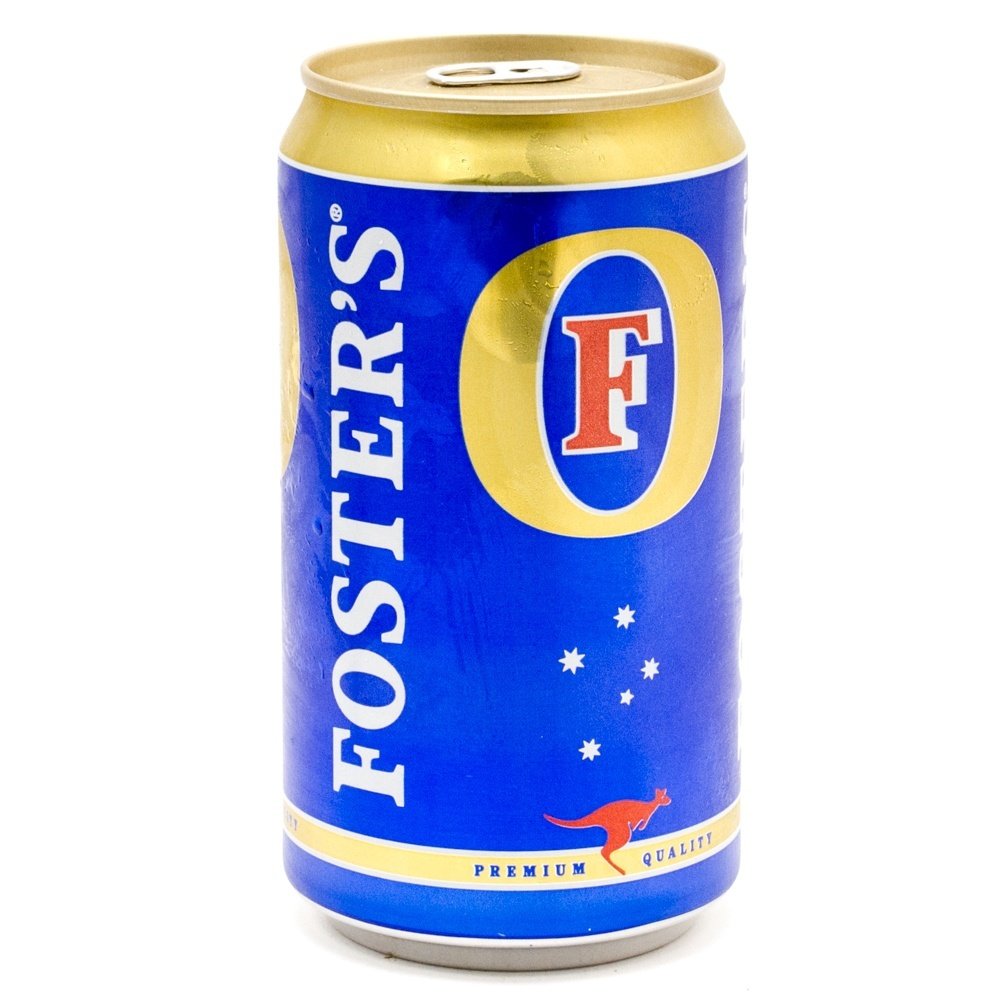
German migrants also settled in other British colonies, including Australia and New Zealand. The first wave of German immigrants arrived in Australia in 1838 CE primarily for religious reasons.[57] By 1900 CE, 38,000 German immigrants were residing in Australia.[58] However, it wasn’t until 1885 CE, nearly 50 years after the first German immigrants arrived, that Australia began producing lager which accounts for 95% of Australian beer consumption today.[59] Great Northern Brewing, Victoria Bitter and Carlton Draught, all lagers, are the leading beers in Australia.[60] Founded in 1822 CE, Cascade Brewery, located on the southern island of Tasmania, is Australia’s oldest brewer which predates significant German immigration.[61] Foster’s Lager is the biggest Australian export beer and is widely available in the USA, although it is not a top seller in the domestic market.[62] However, even smaller Australian craft brewers are exporting beer, including pilsner, to the American market.[63] Incidentally, German immigrants in the 19th century are also credited with creating the Australian wine industry.[64]
In addition to affecting the contemporary Australian brewing industry, German influence has also had other impacts on Australian culture. In the 2016 CE Australian census, 4.5% of the population claimed German heritage.[65] Australia has a Wendish Heritage Society and the German-Australian Genealogy and History Alliance, as well as Die Woche Australien – a weekly German language newspaper. The Goethe Institut, a cultural organization, also has offices in Melbourne and Sydney where language classes and cultural programs are hosted.
Finally, approximately 10,000 German immigrants settled in New Zealand between 1843 CE and 1914 CE. [66] Explorer Captain James Cook brewed the first batch of beer in New Zealand in 1773 CE. He used rimu twigs and manuka leaves to brew up a concoction that would ward off scurvy.[67] The first commercial brewery opened in 1835 CE, which also predates significant German migration, in the region called the Bay of Islands.[68] Today, the most popular beer in New Zealand is the New Zealand Draught, with DB Draught, Lion Red and Speight’s Gold Medal Ale being to the top brands. Although the exact origins of the New Zealand Draught style are unclear, it is actually a lager.[69] However, none of the leading brands appear to be available in the USA. Today, approximately 200,000 New Zealanders trace their heritage to Germany.[70] German cultural influence persists today through an office of the Goethe Institut in Wellington and the German Bohemian Heritage Society.
In conclusion, German immigrants brought their love of beer with them when they settled in various regions around the world. The German Empire, although short-lived, helped facilitate the spread of German culture, including foodways, in the colonies of Tsingtao in China, Namibia (former German South West Africa) and Tanzania (formerly part of German East Africa). Although the German Empire did not incorporate any colonies in the Americas, numerous German immigrants settled in Mexico, Chile, Brazil and Argentina. German migrants also chose to start a new life in former British colonies, including Canada, New Zealand and Australia. In most of these countries, the preference for lagers or pilsners, as well as other variants such as pale lager, can likely be attributed to the cultural influence of German immigrants who played a key role in the nascent brewing industries (as well as the Australian wine sector). Some breweries, such as Kunstmann in Chile, overtly acknowledge their German heritage and even go so far as to brew according to the Reinheitsgebot. German influence is also evident in other cultural areas as well, including the arts and media. Although I was unable to locate German heritage associations in many of the South American regions, they may exist – especially in places like Argentina and Brazil where large parts of the population claim German heritage. The problem may have been that I can’t read Spanish and thus relied on English language online references which were obviously more plentiful in former British colonies. Despite this limitation, it is clear that German immigrants have had an enduring impact around the world.
[1] John Silk, “Germany’s colonial legacy in Bougainville and South Pacific,” DW.com, Deutsche Welle, published 12/12/2019, accesses 12/20/2020, https://www.dw.com/en/germanys-colonial-legacy-in-bougainville-and-south-pacific/a-51649786
[2] Documentation Centre and Museum of Migration in Germany (DOMiD), “Migration history in Germany,” DOMiD, published n.d., accessed 12/20/2020, https://domid.org/en/service/essays/essay-migration-history-in-germany/
[3] Benjamin Dodman, “The siege of Tsingtao: how Germany surrendered an empire – and a beer,” France24.com, France24, published 07/11/2014, accessed 12/21/2020, https://www.france24.com/en/20141107-siege-tsingtao-how-germany-lost-empire-left-beer-qingdao-world-war-one-japan
[4] Dr. Wilhelm Matzat, “Germania Brewery and its employees (1903-1914),” Tsingtau.org, published 11/01/2007, accessed 12/21/2020, https://tsingtau.org/germania-brauerei-und-ihre-angestellten-1903-1914/
[5] “Snow Beer – The Best-Selling Beer in the World,” travelchinaguide.com, Travel China Guide, revised 09/10/2019, accessed 12/21/2020
[6] “Major Figures on Residents from Hong Kong, Macao and Taiwan and Foreigners Covered by 2010 Popualtion Census,” National Bureau of Statistics of China, published 04/29/2011, accessed 12/21/2020, https://web.archive.org/web/20110514214156/http:/www.stats.gov.cn/english/newsandcomingevents/t20110429_402722638.htm
[7] George Thomas Kurian, “Tanzania – Ethnic Groups,” upenn.edu, African Studies Center at the University of Pennsylvania, n.d. published, accessed 12/21/2020, https://www.africa.upenn.edu/NEH/tethnic.htm
[8] Julia Faria, “Beer market share in Tanzania 2020, by brewery,” statista.com, Oxford Business Group, published 12/04/2020, accessed 12/21/2020, https://www.statista.com/statistics/1186227/beer-market-share-by-brewery-in-tanzania/
[9] “A tasting of the most important beers in Tanzania!,” paradiessafaris.com, Paradies Safaris, published 11/20/2019, accessed 12/21/2020, http://paradiessafaris.com/a-tasting-of-the-most-important-beers-in-tanzania/
[10] Dirk Gottsche, Remebering Africa: The Rediscovery of Colonialism in Contemporary German Literature (Rochester, NY: Camden House, 2013), 66.
[11] “Namibia 2011: Population & Housing Census Main Report,” archive.org, Namibia Statistics Agency, n.d. published, accessed 12/21/2020, https://web.archive.org/web/20131002064316/http:/www.nsa.org.na/files/downloads/Namibia%202011%20Population%20and%20Housing%20Census%20Main%20Report.pdf
[12] Tycho van der Hoog, Breweries, Politics and Identity: The History Behind Namibia’s Beer (Oxford: African Books Collective, 2019), 23.
[13] Sebastian Geisler, “German Brewing Secrets Turn Namibia Into Unlikely Beer-Making Mecca,” worldcruch.com, World Crunch, published 05/07/2013, accessed 12/21/2020, https://worldcrunch.com/food-travel/german-brewing-secrets-turn-namibia-into-unlikely-beer-making-mecca
[14] Griffin Shea, “Ice cold in Africa: What to drink in Namibia’s beer town,” cnn.com, CNN, revised 09/07/2015, accessed 12/21/2020, https://www.cnn.com/travel/article/namibia-beer/index.html
[15] “German carnival called off,” Namibian.com, The Namibian, published 06/24/2020, accessed 12/21/2020, https://www.namibian.com.na/201991/archive-read/German-carnival-called-off
[16] Devon Maylie, “Namibia Taps Its German Roots for Oktoberfest,” wsj.com, The Wall Street Journal, published 10/28/2013, accessed 12/21/2020, https://www.wsj.com/articles/SB10001424052702304200804579163512275301676
[17]Gina Paula Figueira, “Interrogating the German Colonial Narrative in Namibia,” goethe.de, Goethe Institut, published October 2019, accessed 12/21/2020, https://www.goethe.de/prj/lat/en/spu/21689214.html
[18] Maylie, “Namibia Taps Its German Roots”
[19] David Tock, “German Immigration and Adaptation to Latin America,” liberty.edu, Liberty University, published 04/26/1994, accessed 12/21/2020, https://digitalcommons.liberty.edu/cgi/viewcontent.cgi?article=1110&context=honors, 1-2.
[20] Tock, “German Immigration,” 4.
[21] Maria Stella Ferreira Levy, “O papel da migracao internacional na evolucao da populacao brasileira (1872 a 1972),” scielo.br, Scientific Electronic Online Library, published June 1974, accessed 12/22/2020, http://ref.scielo.org/2c8fkv
[22] “Bohemia – History,” bohemia.br, Cervejeiro Bohemia, n.d. published, accessed 12/21/2020, https://www.bohemia.com.br/historia
[23] “Beer Sector in Brazil,” flandersinvestmentandtrade.com, Flanders Investment and Trade, published August 2020, accessed 12/21/2020, https://www.flandersinvestmentandtrade.com/export/sites/trade/files/market_studies/Beer%20study%20Brazil.pdf
[24] “Brazil’s top 5 beers,” cyprusbeermaniacs.com, Cyprus Beer Maniacs, published 06/12/2014, accessed 12/21/2020, http://www.cyprusbeermaniacs.com/brazils-top-5-beers/
[25] Bob MacDonald, “Xingu Beer’s History as Exotic as the Brew Itself,” chicagotribune.com, Chicago Tribune, published 06/16/1988, accessed 12/21/2020, https://www.chicagotribune.com/news/ct-xpm-1988-06-16-8801080544-story.html
[26] Ofer Tirosh, “Which Languages Are Spoken in Brazil?,” tomedes.com, Tomedes, published 07/08/2020, accessed 12/21/2020, https://www.tomedes.com/translator-hub/languages-spoken-in-brazil
[27] “Oktoberfest Blumenau,” oktoberfesttours.travel, Oktoberfest Tours, n.d. published, accessed 12/21/2020, https://www.oktoberfesttours.travel/oktoberfest-celebrations/blumenau-brazil/
[28] Tock, “German Immigration,” 40-41.
[29] Stefan Rinke, “German Migration to Latin America,” in Germany and the Americas: Culture, Politics, and History, eds. Thomas Adam and William Kaufman (Santa Barbara: ABC-Clio, 2005), 30.
[30] “Argentina,” worldlanguage.com, World Language, n.d. published, accessed 12/22/2020, http://www.worldlanguage.com/Countries/Argentina.htm
[31] Kenneth Rapoza, “In Patagonia, Argentina’s Beer Biz Keeps Hopping,” forbes.com, Forbes, published 02/21/2015, accessed 12/22/2020, https://www.forbes.com/sites/kenrapoza/2015/02/21/in-patagonia-argentinas-beer-biz-keeps-hopping/?sh=56a8583a6be3
[32] “Quilmes and 4 other Popular Beers in Argentina,” puertolaboca.com, Puerto La Boca, published 07/24/2020, accessed 12/22/2020, https://www.puertolaboca.com/blog/quilmes-and-other-popular-beers-in-argentina
[33] “Medallas Chile,” medallaschile.blogspot.com, Medallas Chile, published 12/23/2011, accessed 12/22/2020, http://medallaschile.blogspot.com/2011/12/colonizacion-alemana-en-llanquihue.html
[34] Victoria Dannemann, “Alemanes en Chile: entre el pasado colono y el presente empresarial,” dw.com, Deutches Welle, published 03/31/2011, accessed 12/22/2020, https://www.dw.com/es/alemanes-en-chile-entre-el-pasado-colono-y-el-presente-empresarial/a-14958983-1
[35] Karina Jozami, “A Very Cold Beer,” interpatagonia.com, InterPatagonia, n.d. published, accessed 12/22/2020, https://www.interpatagonia.com/puntaarenas/austral-brewery.html
[36] Aaron Kase, “Beer Tastes Better at the Bottom of the World,” vice.com, Vice, published 05/09/2016, accessed 12/22/2020, https://www.vice.com/en/article/nzkkpd/beer-tastes-better-at-the-bottom-of-the-world
[37] “The Beer Market in Chile,” flandersinvestmentandtrade.com, Flanders Investment & Trade, published March 2014, accessed 12/22/2020, https://www.flandersinvestmentandtrade.com/export/sites/trade/files/market_studies/301140326142723/301140326142723_2.pdf
[38] Ibid.
[39] Ibid.
[40] “The Beer Guide: Chile,” cuppatocopatravels.com Cuppa to Copa Travels, n.d. published, accessed 12/22/2020, https://www.cuppatocopatravels.com/beer/the-beer-guide-chile/
[41] “Cerveceria Kunstmannn: From Chilean Patagonia to the world,” patagonjournal.com, Patagon Journal, published 05/23/2019, accessed 12/22/2020, http://www.patagonjournal.com/index.php?option=com_content&view=article&id=4216%3Acerveceria-kunstmann-de-la-patagonia-chilena-al-mundo&catid=202%3”Apublireportaje&Itemid=340&lang=en
[42] “Neustra Historia,” cerveza-kunstmann.cl, Cerveceria Kunstmann, n.d. published, accessed 12/22/2020, http://www.cerveza-kunstmann.cl/en/la-cerveceria/nuestra-historia/
[43] Tock, “German Immigration,” 20-21.
[44] J. Winfield Fretz and H. Leonard Sawatz, “Mexico,” gameo.org, Global Anabaptist Mennonite Encyclopedia Online, published November 2010, accessed 12/22/2020, https://gameo.org/index.php?title=Mexico
[45] Ingrid Dobler, Maren von Groll and Alois Moosmuller, “The Importance of the Diaspora Community for Business in Mexico: A Comparison of German and U.S. American Staff Members Posted Abroad,” in Area Studies, Business and Culture: Results of the Bavarian Research Network Forarea, ed. Horst Kopp (Munster: LIT Verlag, 2003), 318.
[46] “Los que Ilegaron – Alemanes,” youtube.com, Canal Once, published 11/04/2012, accessed 12/22/2020, https://www.youtube.com/watch?v=-OoZ0O-rgUU
[47] Lisa Grimm, “Beer History South of the Border,” seriouseats.com, Serious Eats, revised 08/09/2018, accessed 12/22/2020, https://drinks.seriouseats.com/2012/02/mexican-beer-history-victoria-bohemia-modelo-corona-brands.html
[48] Ibid.
[49] Ibid.
[50] “Mexican Beers,” mexperience.com, Mexperience, n.d. published, accessed 12/22/2020, https://www.mexperience.com/mexican-bar/mexican-beers/
[51] K.M. McLaughlin, The Germans in Canada (Ottawa: Canadian Historical Association, 1985), 4-5.
[52] Ibid., 17.
[53] Ibid., 15.
[54] Josh Rubin, “Canada,” in The Oxford Companion to Beer, ed. Garrett Oliver (New York: Oxford University Press, 2012), 386-392.
[55] “The History of Canadian Beer,” mentalitch.com Mental Itch, n.d. published, accessed 12/22/2020, https://mentalitch.com/the-history-of-canadian-beer/
[56] Kate Bernot, “Thanks, Canada, for the ice beers,” thetakeout.come, The Takeout, published 10/12/2020, accessed 12/22/2020, https://thetakeout.com/thanks-canada-for-the-ice-beers-1845173121
[57] Ian Harmstorf, “Germans,” sa.gov.au, Adelaidia, published 06/05/2015, accessed 12/22/2020, https://adelaidia.history.sa.gov.au/subjects/germans
[58] “Immigration: Federation to Century’s End 1901-2000”,” archive.org, Department of Immigration and Multicultural Affairs, published October 2001, accessed 12/22/2020, https://web.archive.org/web/20101204201624/http://www.immi.gov.au/media/publications/statistics/federation/federation.pdf
[59] “Australian Beer,” beerandwine.guide, Beer & Wine Guide, published 05/01/2018, accessed 12/22/2020, https://beerandwine.guide/beer/australian-beer/
[60] Christopher Hughes, “Market share of leading commercial beers in Australia 2019,” statista.com, Statista, published 03/12/2020, accessed 12/22/2020, https://www.statista.com/statistics/1095500/australia-market-share-of-leading-commercial-beers/
[61] “Australian Beer,” Beer & Wine Guide.
[62] “Beauty Bottlers,” smh.com Sydney Morning Herald, published 01/25/2005, accessed 12/23/2020, https://www.smh.com.au/lifestyle/beauty-bottlers-20050125-gdkk07.html
[63] Phil Galewitz, “Australian Brewery Says ‘G’Day’ to U.S. Beer Scene,” alcoholprofessor.com, The Alcohol Professor, published 07/19/2017, accessed 12/23/2020, https://www.alcoholprofessor.com/blog-posts/blog/2017/07/19/australian-brewery-says-gday-to-u-s-beer-scene
[64] Paul Keating, “Speech by the Prime Minister, the Hon. PJ Keating, MP Luncheon the His Excellency Dr. von Weizsaecrer, President of the Federal Republic of Germany Parliament House, Canberra, 6 September 1993,” pmc.gov.au, Department of the Prime Minister and Cabinet, published 09/06/1993, accessed 12/23/2020, https://pmtranscripts.pmc.gov.au/release/transcript-8956
[65] “Cultural Diversity in Australia, 2017,” abs.gov.au, Australian Bureau of Statistics, published 06/28/2017, accessed 12/23/2020, https://www.abs.gov.au/ausstats/abs@.nsf/Lookup/by+Subject/2071.0~2016~Main+Features~Cultural+Diversity+Article~60
[66] James N. Bade, “Germans,” teara.govt.nz, The Encyclopedia of New Zealand, revised 03/25/2015, accessed 12/23/2020, https://teara.govt.nz/en/germans/print
[67] Nigel Perry, “Manuka Beer,” teara.govt.nz, The Encyclopedia of New Zealand, published 09/24/2007, accessed 12/23/2020, https://teara.govt.nz/en/ephemera/14470/manuka-beer
[68] Jocelyn Chisholm, “Joel Samuel Polack,” teara.govt.nz, The Encyclopedia of New Zealand, revised March 2006, accessed 12/23/2020, https://teara.govt.nz/en/biographies/1p18/polack-joel-samuel
[69] John Oszajca, “NZ Draught,” newzealandbrewer.co.nz, New Zealand Brewer, published 10/06/2019, accessed 12/23/2020, https://www.newzealandbrewer.co.nz/nz-draught/
[70] Bade, “Germans.”








 Freelance Writer Paul Glasser