Bande Dessinée: An Introduction

tintin

Asterix and Tintin are the most famous examples of bande dessinée (French for “drawn strips”), however, the world of Franco-Belgian comics is much richer than just these two icons. Although I am a fan of Franco-Belgian comics, I’ve never actually read either of these massive best bestsellers. In the same vein, I’m not a fan of mainstream Anglo graphic novel superheroes, such as Batman and Superman. World War II is my favorite comics genre, whether in English or French, and that will be the focus of my upcoming bande dessinée (BD) reviews.

First, I’d like to provide a general historical and cultural introduction to the art of bande dessinée. Some readers may already be familiar with BD, but others may not know much about comics in either English or French. Hopefully, both novices and experts will find something useful in this blog post, which draws heavily from Dr. Laurence Grove’s monograph “Comics in French The European Bande Dessinée in Context.”

Grove provides a straightforward definition of bande dessinée as a French language mixture of images and written text that form a narrative (pg. 16). Grove places Franco-Belgian comics in the broad French tradition of visual cultural that can be traced back to medieval illuminated manuscripts. He analyses BD primarily through the lens of cultural studies.

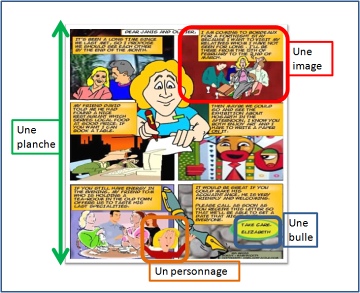
Grove begins by defining a number of basic terms, although he later warns against the obsession of defining BD. For example, a one-shot BD tells a unique self-contained story, which contrasts with an ongoing story told across several published works. BD can be serialized in a journal or can be published in book form (an album). A planche is a single page and most BD are published in the 48CC format. 48 represents the number of pages and CC denotes being published with cardboard covers (cartonnée) and in color (couleur). On each page, there are usually three rows (bandes) that each contain four individual images (cases) which are read from left to right. Of course, many BD creators break these rules from time to time. For example, the “Garage Hermétiqueseries by Jean Giruad, pen name “Moebius,” could often be read from left to right, top to bottom, or vice versa. The cadre is the boundary around each case. Speech bubbles are known as bulles or ballons. The gouttière is the gap between each case and is used to denote the passage of time. A wider gouttière represents more time (pg. 21-32).

42143

(Image from tolearnfrench.com)

In addition, Grove examines how literary elements have influenced bande dessinée. For example, the voix de narrateur is presented in a special block of text known as the récitatif (pg. 32). Grove also explains that cinematic styles have had a major impact on BD. Examples include the use of wide-angel shots (plan general), low-angle shots (contre plongée), and high-angle shots (plongée) (pg. 35).

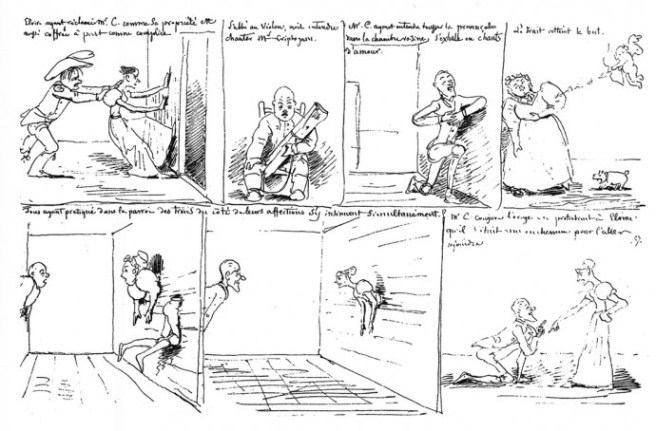
Furthermore, Grove refutes the chronological approach that is traditionally used to describe the history of Franco-Belgian comics. Rodolphe Töpffer, a Swiss teacher, is often credited with creating the first bande dessinée in the 1830s. However, Grove argues that there is a rich history of interaction between text and image in French culture. He asserts that focusing on Töpffer ignores how the emphasis shifted from the text to the images during the Industrial Revolution (pg. 88). I tend to agree with Grove’s thesis because it smacks of the “great man” theory of history, which emphasizes the importance of a single individual and ignores greater social and cultural trends.

topffer-manuscrit-cryptogame-690x454

(Image from Töpffer’s Histoire M. Cryptogame, 1840 – http://www.topfferiana.fr)

Grove asserts many similar proto-bande dessinée works were published around the same time, because the introduction of new lithography technology made it easier to mass produce images. He also argues that by the end of the 1800s, the image began to take a leading role. The growth of photography and the birth of motion pictures helped give birth to the modern BD (pg. 110). Grove claims that the interwar years was the golden age for bande dessinée and that BD became a distinctly French art form after World War II. In fact, BD has since become known as the “ninth art,” which puts it on equal footing with classical arts including architecture, painting, and sculpture.

Since the 1990s, more scholars have been writing about BD in English. Academic conferences have been organized to discuss Franco-Belgian comics and graduate students have published dissertations on bande dessinée in increasing numbers.

BD has become a big business with more than 4,000 new titles published in 2008. Five publishers control more than 75 percent of the market with sales totaling several hundred million euro. Bande dessinée also inspire television and film adaptations, along with merchandising and amusement parks.

On the other hand, independent publishers, such as l’Association, print works that encourage stylistic and narrative experimentation. Grove acknowledges that bande dessinée can also be analyzed through the lens of art history, linguistics, and psychoanalysis. He briefly mentions how male artists dominate the ninth art, and I would like to have read more criticism about the role of gender in Franco-Belgian comics.

Overall, Grove’s book provides a good overview of bande dessinée for both novice readers and experts looking for a more critical analysis. Now that we have a sound understanding of Franco-Belgian comics, I’ll post my first BD review in a few days.

Paul Glasser: Francophile

I’ve decided to start adding some original content to this blog, rather than just reposting some of my journalistic clips. I’m a Francophile and a graphic novel enthusiast, so I’ll combine these interests by discussing and reviewing bande dessinée (Franco-Belgian comics).

I first became interested in French culture and history at about age 12 or 13 when I read “A Year in Provence,” a memoir by British expatriate Peter Mayle. I attended Madeira Jr./Sr. High School in Cincinnati and we only had three options when it came to studying foreign language: French, Spanish, and Latin. I chose French and I took classes all the way up to Advanced Placement level as a senior. After graduating, I spent a few weeks in France as part of a group with other French students from Madeira.

I hate flying, and I took a bunch of Xanax to control my anxiety during the flight. We landed in Charles de Gaulle Airport and then took a bus tour around Paris. The bus was not air conditioned, and I had not slept well on the flight over. I got up and started walking towards the back of the bus with the hope that I could lay down and try to rest. But, about half way down the aisle I threw up everywhere. I blame it on the fact that I probably took too much Xanax. The first stop on the tour was the Louvre, and while everyone else in the group was checking out Mona Lisa, I was lying on a bench drinking water outside the museum.

We stayed with a local family outside of Paris and the first night we had egg salad for dinner. I hate egg salad, but I was pretty tired and hungry so I did my best to eat some. I went to the bathroom and promptly threw up again. The mom cleaned everything up and I was mortified.

After that first day, the rest of the trip was amazing. We went to Notre Dame and Versailles before visiting Château de Chenonceau and Château de Chambord in the Loire Valley. Our last stop was a few days in Nice. I hope to go back some day soon!

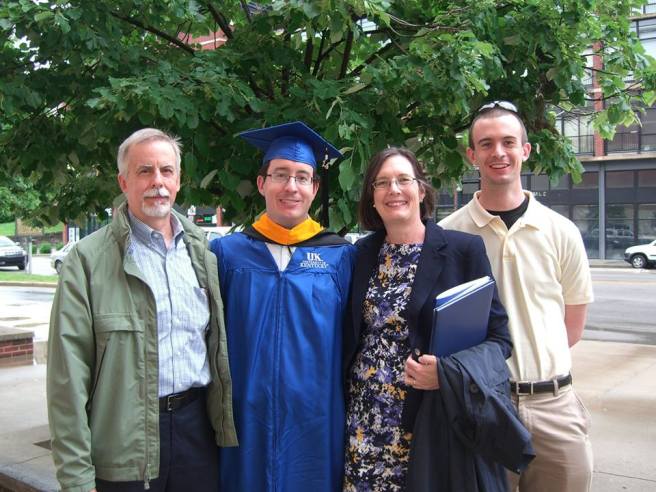
After returning home, I began my undergraduate studies at Purdue University. I took a class on French history and several more conversational courses. I also love French films, and Charles de Gaulle, leader of the Free French during World War II, is my favorite historical figure. I graduated in 2004, but let my interest in French languish until I started my master’s degree in French cultural history at the University of Kentucky in 2011.

I was always fascinated by the heroic mystique of the French résistance during World War II, so I studied the memoirs of men and women who had fought against the German occupation. Reading their memoirs forced me to revive my language comprehension skills.

Before I completed my master’s degree in 2014, I also rediscovered my interest in graphic novels. As a youngster, I had occasionally bought a few Transformers or Teenage Mutant Ninja Turtles titles. At the University of Kentucky, I started visiting local comic shops regularly with a particular eye for anything related to World War II.

graduation

During a trip to Louisville in 2010 or 2011, I stopped at The Great Escape, a comics and music store. I browsed the graphic novel section and found a story called “The Final Flight” (French title “Le Dernier Envol”). It was actually one of the few books from the French bande dessinée publisher Paquet that had been translated into English. This collection of short stories told the interconnected tales of four pilots during World War II. I loved how the stories were woven together, but the incredibly detailed and lavish artwork also stunned me. It was like nothing I had ever seen from an American graphic novel. Each panel could have been its own work of art. For example, in the following image, the artist Romain Hugault, captures the wear that has peeled off the paint from the fuselage. After finishing “The Final Flight,” I knew I had to have more. The book was part of Pacquet’s “Cockpit” series, which focuses on aeronautical tales from World War I to the contemporary era.

finalflight

I setup an account on amazon.fr and ordered the “Le Grand Duc” series, which focuses on a love story between a German and Soviet pilot during World War II. Since then, I’ve purchased a number of other World War II stories from the “Cockpit” collection. Over the coming weeks and months, I’ll publish reviews of “Le Grand Duc” and many others. However, the next installment in my bande dessinée blog posts will be an overview of the historical and artistic development of Franco-Belgian comics.

JulieMarn_wTuftedTitmouse.JPG

Published by IN Community Magazines – West Jefferson Hills Fall 2016

PITTSBURGH – In addition to providing vital information on bird populations in Pittsburgh, the National Aviary’s Neighborhood Nestwatch program has also sparked an interest in birds among children and adults.

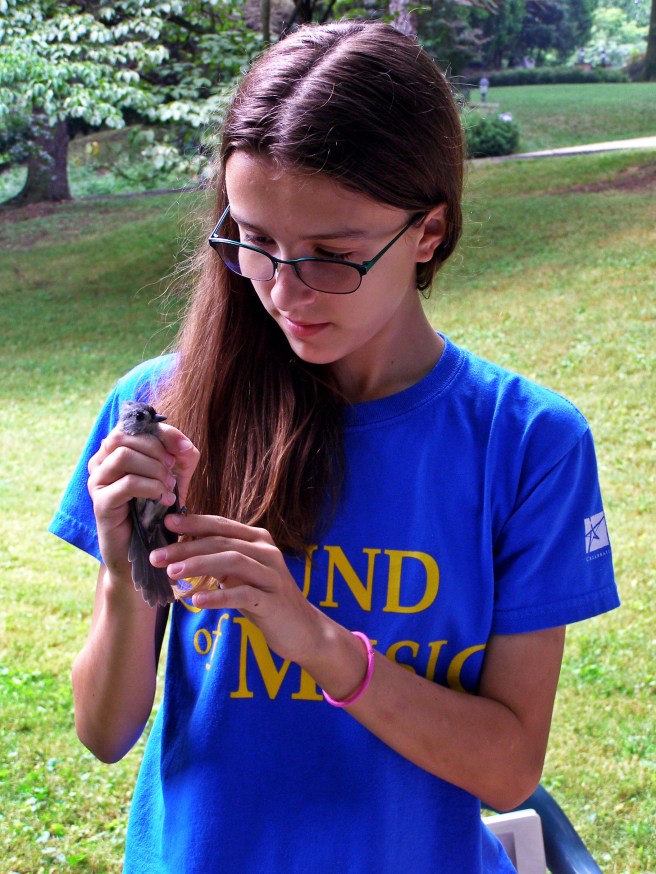
Several families in the West Jefferson Hills area are among the 160 households that participated in the program this year. That’s up from 35 homes when the program began in Pittsburgh in 2013. The families work with Bob Mulvihill, an ornithologist at the National Aviary, to help capture, measure, tag and release birds between May and August. Families also monitor bird nests during the nesting season and throughout the year track birds tagged during the program.

The Neighborhood Nestwatch program is a citizen science effort that began at the Smithsonian Migratory Bird Center in Washington D.C. The concept of citizen science has become increasingly popular in recent years as experts look for ways to collect lots of data quickly and accurately without spending large amounts of money, Mulvihill says.

“Even without scientific training, human beings are excellent observers with all of their sensory apparatus,” he says. “Citizen science makes it possible to collect large quantities of data that can address questions that are virtually impossible to address otherwise.”

For example, very little is known about bird ecology in urban areas, Mulvihill says. The Neighborhood Nestwatch program tries to provide answers to that question by collecting data on the population of eight bird species within a 50-mile radius of Point State Park. Mulvihill and his assistants visit the homes of families that have volunteered to participate in the program. The ornithologists spend several hours at each home and setup a large net made from fine nylon threads. Mulvihill uses an amplifier to broadcast a call for each specific species of bird. If any are in the area, the birds fly towards sound in order to investigate and get caught in the large net. Mulvihill and his assistants take the birds out of the net and then examine them. He records each bird’s weight, age, sex, wing length and tail length. Last year Mulvihill collected data on 1,200 birds and estimates that number will increase to 1,500 this year.

Collecting this information is an excellent way to get children involved, he says, allowing them to help take measurements and record the data. Then, Mulvihill shows the family how to hold the bird without injuring it and lets them release it.

“It’s an exercise in connecting people with birds,” Mulvihill says. “They absorb the experience and become more engaged in their own backyards. I know it has a multiplicative effect and that people talk about it with their neighbors, but it’s hard to keep track of the ripple effect this project has.”

One of the most memorable experiences Mulvihill had was when he captured a hummingbird and let the host family listen to the bird’s heart beat 1,000 times per minute. The children and adults were all shocked.

“You could hear it in their voices and see it in their eyes,” Mulvihill recalls. “There are not too many ways you can get that kind of reaction from people. People who participate become advocates. It inspires them to take a stand and make personal changes in their lives.”

Since he often revisits the same homes every year, Mulvihill sees how children’s interest in birds and the environment develop over time. Often, young children will show Mulvihill different projects or presentations they completed at school since the last time he visited. The Neighborhood Nestwatch has encouraged children to study math and science and participate in other environmental events. One of Mulvihill’s assistants has also gone on to study wildlife ecology at the University of Delaware.

After each birds’ measurements are recorded, Mulvihill and his assistants attach colored plastic bands to its legs to identify it. Each household keeps a record each time they spot the bird in their yard. The volunteers are also asked to monitor any bird nests they find in their yards and Mulvihill provides instructions on how to do so without disturbing the nest. This will provide information on bird population survival and nesting rates, which can serve as an early warning indicator for environmental problems.

“Birds make excellent bioindicators because they have a high metabolic rate, a unique respiratory system, and they are found all over the world,” Mulvihill says. “Birds are more sensitive and will show signs of environmental contamination or degradation that we might not feel as humans. Birds are sentinels for the quality of the environment.”

This year, Mulvihill is also asking volunteers to record the number of times birds collide with glass windows in their home. These collisions can kill or injure birds and Mulvihill wants to find ways to reduce this threat. He’ll ask families to install special tape on any windows with which birds collide frequently. The tape reflects ultraviolet light, which birds can see, and will hopefully discourage them from trying to fly through the window. The tape doesn’t block the view from the window or obstruct the light. Mulvihill also suggests that families keep pet cats inside since they are natural predators. Replacing non-native plants or trees with native species will also create a better environment for birds, he says. That’s because native plants attract more insects and birds will have more food.

“The program shows people how even their own personal backyard can impact birds and nature either positively or negatively,” Mulvihill says.

About 160 households participated in the Neighborhood Nestwatch program this year, and Mulvihill says there is a waiting list for new volunteers. He would like to add more homes to the program but has to secure more funding before he can do that.

“I’d love to say yes to everybody who wants to participate but we have to be strategic,” Mulvihill says.

Mulvihill is completing an analysis of the data he recorded in this year’s survey and says the results since 2013 show that the bird population in Pittsburgh is generally pretty healthy.

“I think Pittsburgh qualifies as a pretty bird friendly city on several standpoints,” he says. “We’ve got a nice infrastructure of green spaces and parks. We have a population of people that seem to have a high degree of interest in birds.”

Mulvihill thinks Pittsburgh could even become a destination for bird lovers. In fact, Pittsburgh recently received federal grant money to fund several bird conservation projects.

“I think Pittsburgh is emerging as a very bird-aware city,” Mulvihill says. “I think we will start seeing more birding trails. I think birds will always be the primary way people connect with nature.”

Industry Makeover

carry2-116

Published by IN Community Magazines – Penn Hills Winter 2016

PITTSBURGH – Clothing designer Cary Heard recently organized a makeover that gave the a local woman more energy and confidence.

“I would describe it as a total transformation,” Heard says.

More than 40 applicants applied for the makeover and Heard selected two winners, although one dropped out at the last minute. He says he picked the finalists based on their heart-felt applications. The makeover was completed in conjunction with a fashion show at Epiphany Church on Washington Place in August.

The makeover finalist walked down the runway at the start of the fashion show and then again at the end to show off her new look. The makeover took about two hours and included a new hairstyle and makeup. The makeover recipient was stunned by her transformation, according to Heard.

“She really couldn’t believe herself in the mirror,” he says. “The crowd was in awe. It was well worth all the time and energy spent.”

The event, which also included a fashion show that featured collections by Heard and three other designers, attracted a sellout crowd. Heard says he organized the makeover and fashion show to spread self-love and respect in the community. The proceeds from the event benefitted the NEED program which organizes tours for high school students so they can visit historically black colleges and universities in the eastern and southern United States. Heard says he is pleased with the results and plans to organize another event soon.

“It was also a humbling experience for me,” Heard says.

Heard, a 2011 graduate from Penn Hills High School, has been interested in fashion since he was a child. Unlike most kids, Heard enjoyed browsing in department stores with his mother and picking out his own clothes.

“I wasn’t the usual youngster who threw a tantrum and wanted to leave the store after only being there for 20 minutes,” Heard laughs.

He began drawing his own designs and got his first sewing machine at age 13. He taught himself how to sew and began making gowns and formal vests for his classmates at Penn Hills High School. Heard completed an internship at Sugar Boutique in Lawrenceville where he met a number of other designers and models. He hosted his first fashion show at the Omni William Penn Hotel and has participated in Pittsburgh Fashion Week for three years. Heard specializes in creating bold designs for full-figured women.

“There aren’t too many designers that take that avenue of clientele,” he says. “Plus size women don’t have the greatest selection to pick from in the department stores.”

Balmain is Heard’s favorite fashion line and a number of designers have influenced him, including Malcolm Williams, Darlene Perkins, Miyoshi Anderson, Kari Kramer, and Evon Renda. He also looks to his family for inspiration. When Heard begins creating a new collection, he starts with a color story and begins sketching designs, although some elements will change along the way. Then he selects fabrics and models.

Heard’s business has grown and, although it has been stressful at times, he says eventually it won’t feel like work because he’s so passionate about design. Heard says he has learned from his mistakes along the way and urges other aspiring designers to remain humble and follow their hearts.

“My heart has been my GPS through everything, even when I doubted myself,” he says. “Your heart will sort out the bad and guide you to your dreams faster.”

Zipping to Greatness

unnamed

Published by IN Community Magazines – Penn Hills Winter 2016

PITTSBURGH – When Marc Alexander plays soccer for the University of Akron in 2017, he won’t be the best player on the field like he is now.

“Everyone will be better than me,” he says. “Mentally, I will have to change the way I play.”

Marc is currently a senior at Kiski School and is a center back on the soccer team. He says he was surprised to receive a full scholarship to the University of Akron, because such opportunities are rare. The university made the offer after Marc participated in a camp in Akron in July. He played against the current UA Zips team and says he was impressed by the skill and speed of the players: “It was a totally new level that I’ve never seen before.”

Marc is a little nervous about making the transition to play for the Zips because the team has a good reputation. He’ll work on improving his strength and agility before then.

“Only players who want to go pro go through the program,” he explains. “I’ll have to play smarter, faster, and quicker.”

He was also very impressed by the close relationships between players on the Zips team.

“It felt a family and that’s somewhere I want to be,” he says.

For aspiring young players, Marc advises them to make sure they maintain their grades while also working hard at practice.

“You have to go all out,” he says. “Every piece matters. Coaches are watching you at all times.”

Players also have to avoid giving up mentally, even when the situation may seem hopeless. Marc recalls one example when he played on the Century United soccer team three years ago, in a game where team was down by two goals. They came back to tie the game, and the team went on to win the tournament.

“We had to keep going and I had to keep the entire team together,” Marc says.

He credits Jeremy Gillespie, a former coach with Century United team, with helping him reach his full potential as a player: “He helped me get to where I’m at now.”

Marc will study engineering at Akron and would like to become a professional soccer player. His favorite team is Manchester City and his favorite player is Sergio Aguero.

Marc started playing soccer at age six but also played other sports, including basketball, football and baseball. He decided to focus on soccer and played as a forward before he became a defender. He enjoyed playing as a striker because it gave him the opportunity to score goals.

“Everyone wants to be the guy scoring goals with all the glory,” he says.

However, being a center back is also a good fit because Marc is so athletic.

“Now, I can lock down basically whoever I want to on the field at any time,” he says.

In 2013, Marc joined the Olympic Development Program soccer team and played in Zagreb, Croatia, and Venice, Italy. The team came in fifth place.

People often complain that soccer is boring, but according to Marc, playing the game or watching it in person is very different from seeing it on television.

“When you watch it on TV it looks like there’s a lot of space and it’s slow,” he says. “But in person you can see the speed of the game and how difficult it is to play. Everything is very quick.”

Green Cemeteries

20160422_135644

Published by IN Community Magazines – Penn Hills Summer 2016

PITTSBURGH – Since opening in 2011, Penn Forest Natural Burial Park has become a center for green and sustainable projects in the Penn Hills area.

“Burials are just part of what we do,” says co-owner Pete McQuillin. “Penn Forest is a place for living – not a place for dying.”

McQuillin and co-owner Nancy Chubb opened Penn Forest as a green cemetery five years ago, but they have also launched a number of other projects in the last several years, including an attempt to restore natural Pennsylvania meadows and grow hydroponic crops. McQuillin and Chubb have 32 acres near the Penn Hills Community Park but so far only two and a half acres have been set aside for burial plots.

“We want to be a resource for the community,” McQuillin says. “We want to be a place for people to come out and try their ideas. We have all this land and wanted to make use of it. A lot of people present ideas to me and I always try to say yes.”

McQuillin’s interest in sustainability began during his previous career as a packaging engineer.  He helped design returnable packaging products that were environmentally friendly. However, he was laid off and decided to open Penn Forest because the nearest green cemetery was in Ithaca, NY. Although other local cemeteries offer green burial sections, Penn Forest is the only cemetery in Pennsylvania to be certified by the Green Burial Council, which sets national standards.

“I didn’t want another job – I wanted something more fun,” McQuillin said.

McQuillin and Chubb were interested in green burials on a personal level before they decided to open Penn Forest. Being interred at Penn Forest means that everything used in the burial is environmentally friendly and will decompose.  For instance, no embalming fluids are employed and most of burials use a simple cloth shroud. If a coffin is utilized then it is built without nails, and grave markers are made from native stone or wood.

“Death becomes a part of restoring the land and the earth they came out of,” Chubb says. “It offers a sense of being one with nature.”

Chubb says green burials tend to be cheaper than traditional burials because there’s no need for a concrete burial vault and a cloth shroud is far less expensive than a coffin.

Penn Forest has space for about 1,400 plots, and individuals from Pennsylvania as well as Ohio, Maryland and West Virginia have purchased space at Penn Forest. The cemetery is non-denominational and individuals of many different faiths have been buried in Penn Forest including a Wiccan priestess. The cemetery also includes a Jewish section that was consecrated by a rabbi. The Jewish portion also includes a path so that mourners can stop and pray seven times before approaching the grave. Penn Forest also includes area where cremated remains can be scattered.

Penn Forest even takes a natural approach towards maintenance and upkeep. For example, McQuillin and Chubb use goats to control the vegetation instead of resorting to weed whackers or herbicides. The goats love to eat invasive species such as privet, an ornamental hedge, and Japanese knotweed. McQuillin and Chubb also recently completed a barn and have created small farm near the cemetery that includes ducks, chickens, bees and rabbits. Chubb says she came up with the idea because her grandparents had a dairy farm in Robinson and she later became interested in urban farming. McQuillin and Chubb have also enlarged a nearby pond in order to start raising fish and growing hydroponic crops.

“Anyone who buys a cemetery plot feels an affinity with the farm,” Chubb says.

The goats have also created a lot of interest and brought visitors to the Penn forest complex. McQuillin and Chubb have also provided space to a local blacksmith who offers classes on how to repurpose old pieces of metal and reuse them. Part of the Penn Forest cemetery have been set aside to help restore native Pennsylvania meadows. In 2015, McQuillin laid down a large plastic tarp to kill off everything growing in the area. In March, he removed the tarp and volunteers began pulling up the dead plants. Eventually, the goal is to replant the area with native vegetation. Chubb and McQuillin also organize an annual memorial tree planting that helps diversify the canopy by reintroducing native species. A graduate student from Chatham University will also work as an intern over the summer and help with various sustainability projects.

Other future projects include building a greenhouse and creating a willow tree garden. The trees could be planted to create a labyrinth where visitors could meditate. McQuillin says he also plans to take classes and learn how to create coffins using willow. Chubb says she would like to create a flower garden so that visitors can cut blooms and place them on the graves of their loved ones.

McQuillin says green burials are becoming more popular and sales at Penn Forest cemetery have been increasing about 20 percent a year. Chubb said that, until recently, people thought they only had two options – traditional burial or cremation.

“People want to be more conscientious about how they use the earth’s resources,” she says.

For more information visit http://www.pennforestcemetery.com/

Mission of Love

cwvDm9asA_Lw9YsGTQNy8vWzhk4.jpeg

Publish by IN Community Magazines – South Fayette Summer 2016

PITTSBURGH – A group of 13 volunteers will soon depart for a mission trip to Haiti where they will help build an open-air school for orphans and organize a soccer camp.

The Yahve-Jire Children’s Foundation organized the trip, which will depart on July 2 and return on July 8. The organization’s name means “God provides,” and the foundation supports about 25 children who were orphaned or abandoned by their parents. The mission trip includes two seniors from South Fayette High School.

The foundation was organized as a 501c3 non-profit in 2013 but Dan Raeder, president of Yahve-Jire, says he and several other volunteers first began working in Haiti on an informal basis in 2011. Raeder and four others went to Haiti to help rebuild in the wake of 2010 earthquake which killed 200,000 Haitians and left more than 1.5 million homeless.

Raeder and the other volunteers began working with an orphanage a few miles outside of the capital, Port au Prince, which housed about 20 children in a building with three rooms and one bathroom. The earthquake had damaged the orphanage and Raeder and the other volunteers wanted to construct a new building to replace it. A local man named Chedlin Justinvil runs the orphanage and had purchased about 4 acres of land shortly before the earthquake devastated Haiti. In 2011, Raeder and the other volunteers carried cement blocks in 100-degree heat in order to build a wall around the new location.

Construction of the new orphanage was recently completed and it includes dormitories, a kitchen, and bathrooms. The dormitories are dome-like structures that are more resistant to earthquakes, Raeder says. The upcoming mission trip will build an open-air school so that the children can continue their education. They had previously been attending a school in Port au Prince which is only eight miles away. However, the roads are in poor condition and the journey could take several hours, so Justinvil and the foundation’s board members decided to build an open-air classroom adjacent to the orphanage.

The mission trip will also host a soccer camp for the orphanage as well as other local children. Previously, the South Fayette High School soccer team donated uniforms, cleats and shin guards. The soccer camp will include drills and a scrimmage between the Haiti children and the mission trip volunteers.

“It gives them a chance to be normal kids,” Raeder says.

For several years, the foundation has sent another mission trip in the spring, which provides educational and medical services. An oral surgeon from Mt. Lebanon and several residents from Allegheny General Hospital helped extract more than 300 teeth earlier this year. Robert Morris University and South Fayette Middle School also donated several hundred hygiene kits, which included toothbrushes, toothpaste and soap, which were distributed. Denise Ford, of South Fayette, is a member of the foundation’s board and has taken two of her daughters on the spring mission trip several times.

“These teeth are black and rotted,” Ford says. “Pulling teeth avoids infections so people live.”

This year, the summer mission trip also included a vision clinic and volunteers distributed donated prescription eyeglasses, reading lenses and sunglasses to several hundred patients.

“It was difficult at first but with much laughter we figured it out and measured each person,” Ford says.

Ford and her daughters also provided English and French lessons when they visited in the spring. Most of the orphans speak creole, which is a blend of French, Spanish and African influences, but French and English are the languages of business and politics.

“There is a craving to learn English and French,” Ford says.

Other priorities include providing a reliable source of electricity to the orphanage, because there have been frequent power outages in Haiti. Raeder says the foundation will either purchase a generator or install solar panels. Recently, the orphanage went a week without power.

The orphanage is also trying to become more self-sufficient, Raeder says. The orphanage has a herd of about 15 to 20 goats, which are sold or consumed. Raeder says the orphanage is also exploring microfinance options and experimental agricultural projects. The foundation hosts an event every October, which is the group’s major annual fundraiser. The new orphanage can house up to 50 and Raeder says he hopes the foundation can secure enough funding to accommodate more children.

Raeder says there is still tremendous need for help because Haiti still faces a number of obstacles, including an ongoing drought that began last year. That has caused food prices to skyrocket, and starvation has increased, Raeder says. In addition, Raeder says the Haitian government is completely ineffective because the president stepped down in February but no successor has been selected. All this has led to more desperation and Haiti is becoming more dangerous, Raeder says. Every year Haitian mothers beg the mission trip volunteers to take their children back to the United States.

“I think Haiti has been forgotten,” Raeder says.

In addition, Haiti is one of the most corrupt nations in the world, so the mission trip volunteers each take 100 pounds of supplies with them on the plane to avoid theft. The foundation has no overhead or administrative costs so every dollar goes to the orphans, Raeder says.

“Our measurables are our kids,” he says.

Despite all these obstacles, Raeder says the foundation is committed to making a difference in Haiti.

“This is personal,” he says. “We know these children. This is never going away for us. We watched these kids grow up.”

Ford agrees and says she will never give up. Despite all the hardships they face, Ford says the orphans and Haitians in general remain joyful.

“We are blessed and privileged to be with the children,” she says. “They are not blessed to be with me.”

The foundation has also pledged to help the children at the orphanage obtain college degrees and several of them want to become doctors, engineers or nurses.

“They can become strong Haitian people who can help their country,” Ford says.

Raeder agrees and asks “If we can do that, can you imagine what would happen?”

For more information visit: http://yj-haitiorphans.org/

K9 Crusader

IMG_20150808_225343.jpg

Published by IN Community Magazines – South Fayette Fall 2016

PITTSBURGH – After Pittsburgh Police K-9 Officer Rocco died in the line of duty in 2014, Noah Magdich wanted to do what he could to prevent a similar tragedy from occurring again. The man who stabbed Rocco was sentenced to serve between three and a half and seven years in prison.

“I have always been a dog person,” says Noah, whose family has a 2-year-old boxer-greyhound mix named Banjo. “It really affected me to see Rocco killed.”

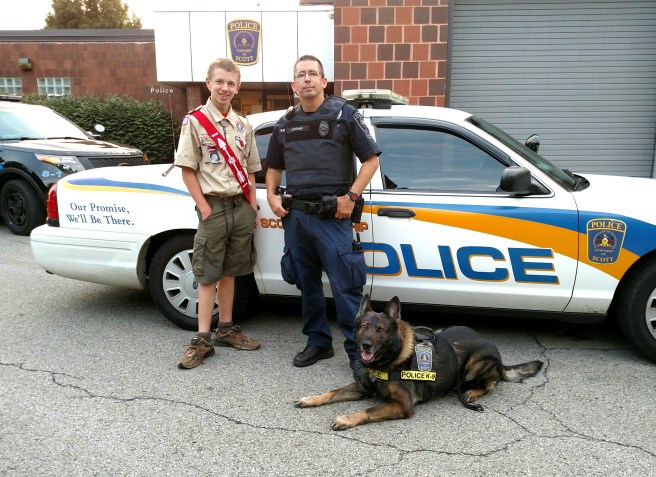
A junior at South Fayette High School, Noah is a member of Boy Scout Troop 248 in Oakdale and last year he organized a fundraiser as part of his Eagle Scout project. He collected more than $5,000 and used the money to purchase a protective vest for Lord, a K-9 officer at the Scott Township Police Department. Lord is an 8-year-old German shepherd who is trained to detect narcotics. The vest only cost about $800 so Noah also purchased a temperature control unit for about $2,100 that will alert Lord’s partner, Officer Shane McGrath, when it gets too hot in the patrol car. McGrath’s cruiser already had a control system, but the new equipment was an upgrade because it will send a text to McGrath’s cell phone and open the doors so that Lord can get out in an emergency. Even after buying the additional equipment, Noah still had about $2,200 left over, which he donated to the Scott Township Police Department to make additional K-9 equipment purchases in the future.

It took about a year to complete the project. The temperature control unit was installed in March, and in May, Lord received the vest, which will help protect him from being stabbed or shot. Noah hosted a pancake breakfast at St. Barbara Roman Catholic Church in Bridgeville last year and recruited volunteers to help cook pancakes. About 250 people attended and the event collected about $2,700. He raised the rest of the money by creating an online fundraiser at gofundme.com. He also posted fliers advertising his fundraiser at his church and other locations.

“I was expecting some support, but not this much,” Noah says.

He has stayed in contact with Lord and McGrath and says Lord wears the protective vest whenever he enters a dangerous situation. Noah also participated in the Scott Township Public Safety Day in June and helped demonstrate how K-9 officers neutralize suspects. He wore a bulky suit, which was hot and heavy, but protected him from Lord’s powerful bite.

“I was very nervous but excited,” he says. “Officer McGrath knows grown men who wouldn’t put the bite suit on. When Lord latched on, I could feel the pressure of his bite on my arm but no pain.”

Noah expects to complete all the requirements to become an Eagle Scout by October. He became a Boy Scout in the first grade and has wanted to become an Eagle Scout since he watched a friend’s induction several years ago. Scouting has taught him a lot of practical skills, such as survival and automotive maintenance. Noah also served as senior patrol leader and learned how to be patient when he was supervising younger scouts.

“Scouting is very beneficial for helping you learn and grow,” Noah says.

In addition to his passion for scouting, he is also interested in martial arts and being a firefighter. He’s been studying at the House of Martial Arts Karate Academy in Oakdale for two years and recently became a second-degree green belt. He plans to join the Marine Corps after graduating high school and wants to become a black belt before enlisting, then become a martial arts instructor in the Marine Corps.

Noah would also like to continue the family legacy of working as a firefighter after his enlistment in the Marine Corps is over. In April, he became a junior firefighter at the Presto Volunteer Fire Department. His great-grandfather helped found the department in 1947, his father is a captain and his uncle is an assistant chief. As a junior firefighter, he has attended more than a dozen calls, including a two-car accident near Trader Jack’s Flea Market on July 4. Noah helped direct traffic, carry tools and clean up debris.

“It’s an amazing rush when you get that call and you are going down the road with blue lights and everyone is moving out of the way,” he says. “You know you are going to help someone. It’s something I’ve wanted to do since I was six years old.”

SpiderHAM

IMG_6292.jpg

Published in IN Community Magazines – South Fayette Summer 2016

PITTSBURGH – When Steve Rudzinski began acting in low-budget horror films more than a decade ago, he never expected he would eventually shoot a movie in his hometown of Bridgeville.

Rudzinski finished filming his horror comedy feature, called “CarousHELL,” there in late May and early June. The film is about a carousel unicorn that goes on a bloody rampage.  The script is extremely funny, Rudzinski says, and he hopes to have a local premiere for the film. His wife came up with the name for the movie while she was in the shower.

“I said ‘honey that’s a great title,’ which is like 90 percent of a picture idea,” Rudzinski says.

He grew up in Bridgeville but has lived in New York, New Jersey and California while pursuing his career as an actor, writer, producer and director. Rudzinski’s wife is also from Pittsburgh and they moved back to the area after they were married.

“It’s interesting and cool to be back home after being one for so long,” Rudzinski says. “But part of me is also saying I went nowhere.”

The iconic horror comedy movie “Army of Darkness” drove Rudzinski to pursue a career in film.

“It was a movie that very much wanted to be its own thing,” he says. “It really spoke to me because it didn’t care about being a comedy or horror or fantasy film because it was all of these things. It was completely up my alley.”

Bruce Campbell, the star of “Army of Darkness,” also inspired Rudzinski with his expressive acting style.

“His entire being is expressed through his face,” Rudzinski says. “Emotions in a face can tell so much more of the story than almost anything else on the screen.”

When he turned 18, Rudzinski began acting in micro-budget films and he says it was a learning experience. Because the budgets were so small, there was a lot of pressure to get scenes right on the first shot. He also wrote and directed, and in 2010 he started producing his own horror comedy films.

“I am extremely lucky with what I have accomplished, because I can do it as a career instead of struggling to do it on the side,” Rudzinski says.

His advice to aspiring actors is to follow their dreams, but he also cautions them that it’s a lot of hard work.

“You have to keep practicing, even in your bedroom by yourself,” Rudzinski says. “Audition for as much as you can for whatever you can. You may not like the project or character but it’s a job as much as it’s an art. I don’t think people can be choosey in a very difficult industry.”

For aspiring directors, Rudzinski says they need to learn that nothing will ever be perfect.

“Sometimes you have to say it’s good enough,” he says. “The whole movie matters more than just this one shot right now.”

In addition to being filmmaker, Rudzinski works for Marvel Live Appearances and portrays Spiderman at parades, stage shows, and other events around the world. Rudzinski is a comic book fan and says the job has fulfilled his childhood dream of becoming a superhero. He loves meeting children and making their dreams come true. Some children love to ask questions but Rudzinski says he’s never been stumped. However, sometimes a child is too overwhelmed by the experience and it helps when the parents can step to make them feel more comfortable.

“It’s really fun when the parents are part of the fantasy,” Rudzinski says.

He also acts in stage shows where Spiderman and other superheroes battle a villain. The shows are very similar to professional wrestling because there are a lot of choreographed falls, leaps and hits. The events also teach children the importance of physical fitness or standing up to bullies, among other messages.

Rudzinski also had the opportunity to portray the Joker at the Shrine Circus in Pittsburgh in April. Although he usually plays heroes, Rudzinski says he also enjoyed being a villain.

“I jumped at the offer because it’s so nice to be the heel,” he says.

The Shrine Circus was very different from the Spiderman events because he appeared before a much a larger audience. He had to exaggerate his movements even more than usual. Plus, he had to avoid all the circus animals.

“The tigers act more like house cats but you still have to be very careful,” Rudzinski says.

In the future, Rudzinski says he would like to act in more films and direct projects with bigger budgets. He would also hopes to become a Power Ranger but says that will have to wait until “CarousHELL” is finished.

“I never worry about more than one major project at a time,” Rudzinski says.

For more information visit: http://silverspotlightfilms.moonfruit.com/

Taking it to the Streets

IMG_6425.jpg

Published in IN Community Magazines – Moon Township Winter 2016

PITTSBURGH – Paige Landay, an art student from Moon, says her first attempt at street painting with chalk pastels was a challenging and rewarding experience. She created the painting for the Central Pennsylvania Festival of the Arts in State College in July.

Landay graduated from Moon Area High School in 2014 and is a junior at Penn State University where she studies art education. After attending the arts festival for several years, she decided to participate in this year’s street painting event. Using chalk pastels and painting on the street surface were both new experiences, Landay says.

“Working on the street surface is not like canvas or paper,” Landay says. “You are on top of the artwork rather than having paper on an easel.”

She created a grid to help her map out the painting and create the proper perspective. Landay brought a gardening kneepad because she had to kneel for many hours while completing her painting.

“I was in many different awkward positions to try and work on the piece without ruining it,” she says.

Landay also had to contend with the weather and two rainstorms threatened to wash away her work. She had to use tarps and a tent to protect her painting. It took about 20 hours to complete the work and the weather was also very hot.

Landay and several other artists completed their works while the art festival was ongoing, so attendees could watch them work. Many passersby asked questions and offered compliments while Landay worked, and she sometimes took breaks to chat with onlookers. One observer told Landay she will be a great inspiration as an art teacher.

“It was a very interactive experience,” she says. “It was fun to get that immediate response rather than waiting until the piece is finished.”

Her piece was based on the painting “Girl with Sailboat,” which was originally created by artist Edmund Charles Tarbell in 1899. She chose that picture because it had a summer theme and incorporated lots of colors.

“Since the street surface is already dark, I wanted to make sure I could use very vibrant colors,” Landay says.

After the festival ended, the streets were washed and the paintings disappeared. Landay says she would have been frustrated if the rain had washed away her painting while she was working on it, but she was not disappointed that her painting was only on display temporarily.

“It served its purpose,” she says. “We also took lots of pictures.”

In the future, Landay would like to expand her artistic skills by exploring other media. She is enrolled in a studio art class this semester and is looking forward to trying her had at oil painting because many famous artists have worked in that medium. Landay says she has always wanted to be an art teacher and that art was her favorite class in school. Her family supported her artistic pursuits and encouraged her to attend different workshops and camps. Landay also enjoys studying art history and impressionists, such as Claude Monet and Vincent van Gogh, are among her favorite artists. Landay enjoys working with many different media but says painting and drawing are her two favorite pursuits.

“I feel more comfortable with a paintbrush or pencil in my hand,” she says. “But, you have to know how to do everything to be an art teacher.”

Landay says she has always wanted to be an art teacher and would prefer to teach either elementary school students or high school students. Working in an elementary school means she could help students develop a passion for art at a young age. On the other hand, she could also help high school students further develop their talents. She advises students of any age who are interested in art to continue practicing.

“Never stop doing it because you can do artwork as long as you live,” Landay says. “I don’t want them to be discouraged about doing art in their life.”

Since she was three years old, Landay has also been passionate about dancing.

“Using the body, lighting, and costuming means that dance is an art as well,” Landay says. “I like doing art with both my hands and my entire body.”

She is a member of the Penn State Ballet Club where she performs in many different styles, including lyrical and modern dance. She plans to continue pursuing her interest in dance when she begins teaching and would like to contribute to theatrical performances at her school, because she is also interested in special effects makeup. While attending Moon Area High School, she learned how to create different makeup effects by watching Youtube videos. She used her talents to help the school principal become the Grinch for a holiday assembly.

“It got a great reaction and he really got into the role,” Landay says.