Michael’s wife is of Jewish ancestry, so they were afforded the right to return to Israel and received a lot of assistance. They have been adjusting to life in Israel and seemed to be settling in for the foreseeable future. Michael says the Israeli schools are very good which is especially important for his autistic son Leo. Initially, I was a little hesitant since I knew a little about the long and brutal history of Israeli-Palestinian conflict (which began long before 1947). I knew that tensions could flare again at any time, but I had no idea that Hamas could slaughter 1,300 Israelis in a single day (Oct. 7).
Despite nearly being engulfed by war for a second time in 18 months, Michael plans to stay in Israel even though Nataliya has again invited them to the US. Michael says the Israeli army has reinforced their town and the fighting is still far away from their home. He wants to make sure Leo gets the best care available, and the Israeli schools have three teachers for only eight students in Leo’s special education class! That student/teacher ratio is unimaginable in the US. So once again, we are gritting our teeth and watching the news anxiously – especially Nataliya.
Ukraine
Back home in Ukraine, Nataliya’s mother Iryna spent several days in a rehabilitation center after she was briefly hospitalized for high blood pressure. That was another source of great anxiety, but eventually the doctors found the right medication. Her relatives also visited and Nataliya was able to call Iryna daily while she was recovering, which was comforting. However, even before the war Nataliya said corruption was common in the realm of healthcare, and a 2019 survey found that 63% of Ukrainian respondents had paid or received a bribe in exchange for medical care! The ongoing war will likely only exacerbate scarcity and drive prices for medicine and healthcare even higher, making our fund-raising efforts even more important!
Food Festival
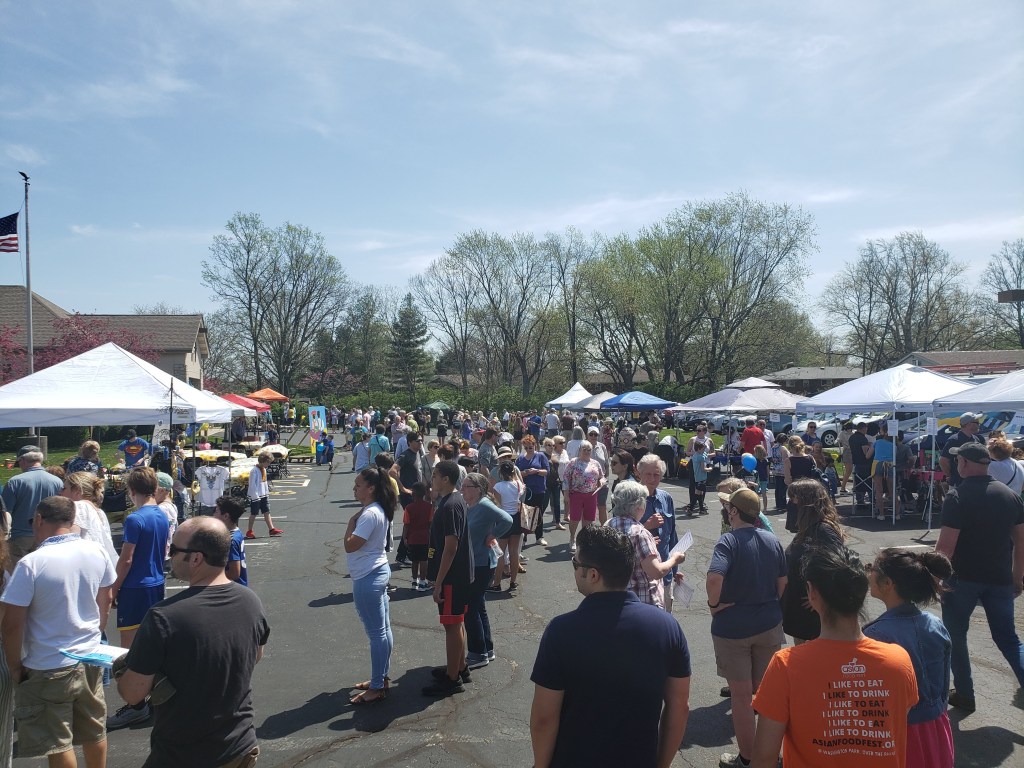
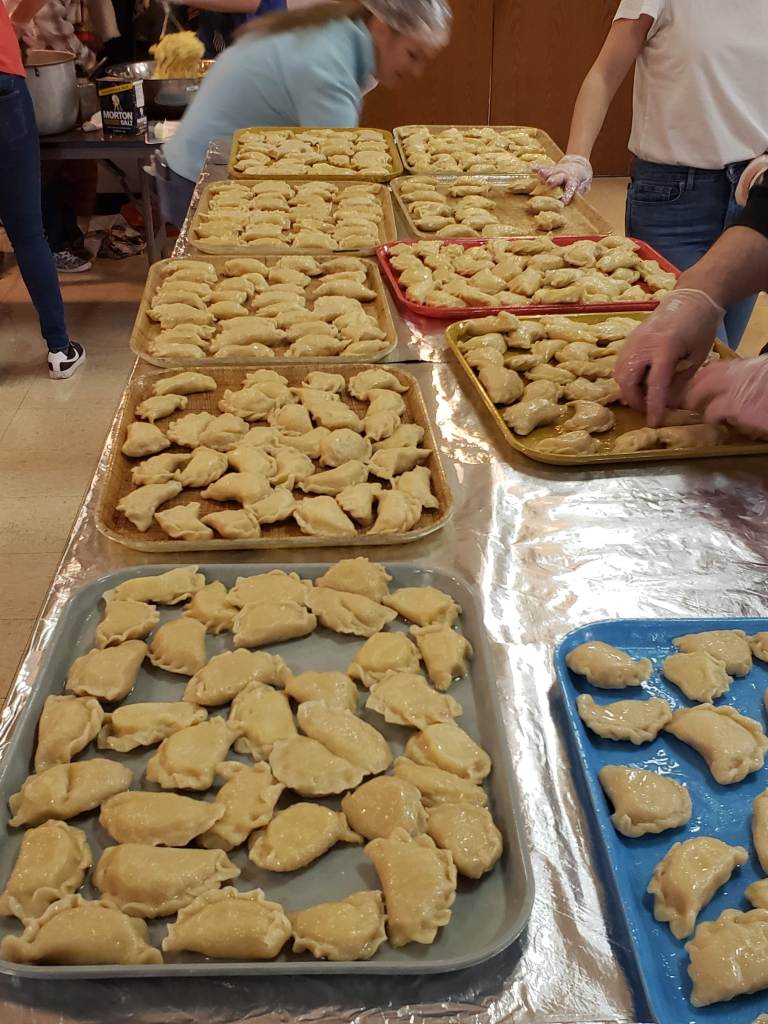
On a more positive note, our annual Ukrainian food festival in August was very successful again and we raised $24,000 for medical equipment in Ukraine. However, that’s down 33% from $36,000 last year! We learned a lot from our first endeavor last year, but we can still make improvements, such as adding more signage with better visibility. This year, I helped distribute thousands of pierogis (varenyky) with bacon, sour cream, and onions. The crowds were smaller than last year, but we were still busy all afternoon with hardly a break. I grabbed a couple bites of chicken shashlik (kebab) and Ukrainian coleslaw which were both delicious! We also offered bags of frozen pierogi for $20, and I grabbed the last two bags at the end of the day. They were a big hit and I hope to see more innovation next year.
Even if Ukraine wins the war tomorrow, we will still need to raise money to help rebuild for years to come. In the end, it will be worth it, and I look forward to visiting a safe and secure Ukraine.
A year after the Russian invasion of Ukraine (Feb. 24, 2022), every day is still an emotional rollercoaster for Nataliya. She listens to Ukrainian news on YouTube each night, which alternates between encouraging and discouraging segments.
The beginning of the war showcased heroic Ukrainian resistance and Russian incompetency. In recent months, the conflict has settled into a war of attrition in the eastern Donbass region with heavy fighting around the city of Bakhmut. One of Nataliya’s distant cousins was recently killed there while fighting in the Ukrainian army.
The Russians have mobilized 300,000 conscripts, but with poor training, equipment, and morale their deployment seems unlikely to achieve anything aside from further bloodshed and destruction (an estimated 150,000 Russians and 100,000 Ukrainians have been killed or wounded so far). The Russians have lost huge numbers of tanks and armored vehicles (up to an estimated 1,600) but are only able to replace them by transferring equipment from other active units or pulling them from warehouses (of which only 10% might be serviceable).
On the other hand, Ukraine has received new Patriot missiles, HIMARS rockets, and modern artillery as well as 60 modern tanks from western allies (American Abrams, British Challengers, and German Leopards). However, it will take time to deliver the tanks and train crews to use them. In addition, 60 tanks would reinforce perhaps one armored brigade at most, which is enough to blunt one Russian assault or launch one counterattack but isn’t enough to turn the tide of the entire war. The conflict boils down to a contrast of Russian quantity versus Ukrainian/western quality.
Unfortunately, it appears like the war will continue for the foreseeable future since neither side seems primed to achieve decisive victory. However, I certainly hope a combination of Russian stupidity and Ukrainian resolve will lead to Putin’s complete and utter defeat (including the liberation of Crimea).
Nevertheless, life in Ukraine has reclaimed a partial sense of normalcy. Nataliya is from Kharkiv in eastern Ukraine which experienced brutal fighting at the start of the war. Although a Ukrainian counter-offensive last year pushed Russian forces out of the area, the city is still subject to sporadic missile or rocket attack. Public transportation has been restored and businesses have reopened.
Nataliya’s parents are still at their home on the outskirts of Kharkiv and are still making the best of the situation. Her father can go fishing again, and her mother Iryna has resumed painting. We have been extremely fortunate that everyone is still healthy and safe. Normally, Nataliya and her son Alex would visit relatives in Ukraine each summer, but, if the war remains somewhat contained in the Donbass region, she might consider meeting her parents in Poland.
Nataliya’s brother Michael fled to Israel with his family last summer. They are adjusting to life in a small town (after having lived in Ukraine’s second largest city), learning Yiddish, and traveling to other parts of Israel on vacation. However, violence and tension, always simmering below the surface in Israel, have exploded in recent days.
An estimated 8 million Ukrainians have fled the fighting, but their future is uncertain since the war seems likely to continue for the foreseeable future. Eighty-one percent of Ukrainian refugees want to return home on the assumption that Ukraine eventually wins, but their host countries (mainly Germany, Poland, the Czech Republic) are struggling to accommodate them for what now seems to be a long-term basis.
The determination among the Ukrainian diaspora also remains strong. Kharkiv is Cincinnati’s sister city, and we hosted a candlelight vigil to commemorate the start of the war. It was a somber and emotional ceremony as participants named loved ones affected by the war. Mayor Aftab Purval also attended a press conference and affirmed support for Kharkiv and refugees who have fled to Cincinnati. We hope that local support continues to remain strong as long as is necessary.
Photo from Cincinnati-Kharkiv Sister City Partnership
A sizeable Ukrainian population had already emigrated to Cincinnati before the war, and they have organized numerous fundraisers throughout the last year. The events have collected tens of thousands of dollars as well as tons of supplies to assist Kharkiv and other Ukrainian cities. Although it may have only amounted to a few drops of relief in a sea of suffering, it felt good to do a little to help. Even if the war ended tomorrow, I would love to help host another Ukrainian food festival to showcase their delicious culinary heritage!
Unfortunately, some spineless Republicans, including our US Senator JD Vance, are arguing that we should force Ukraine to negotiate, thereby playing into Putin’s hands, rather than reaffirming our commitment to Ukraine. That’s an abrupt reversal for his earlier stance of disinterest in Ukraine. Thankfully, the Democrats still control the Senate and White House so our support for Ukraine will continue unabated for the foreseeable future. Even if the war ends in a complete Ukrainian victory, they will still require support for years to rebuild.
Don’t get me wrong, I would love for the war to end today but not because we abandon the Ukrainian struggle for freedom. I don’t want to be writing another summary a year for now, but hopefully the war will end in Ukraine’s favor. I admire the strength of all Ukrainians at home and abroad, especially Nataliya’s resolve!
Nataliya’s parents still live in a village on the outskirts of Kharkiv and did not celebrate in the usual manner this year since there are still sporadic missile or artillery attacks. The temperature has dropped to the low single-digits in degree Fahrenheit, and the electric power grid has been pummeled by Russian attacks. Although power is being rationed with frequent brownouts, the Nataliya can still communicate regularly with her parents. Nataliya’s parents still plan to stay since they have a larder of preserved food from their small garden, gas furnace, and a wood-burning stove for supplemental warmth. However, they have been using the gas heat sparingly in order to save money since fuel prices remain high.
After 10 months of war, the Ukrainian spirit remains resolute (both at home and abroad), and millions of Ukrainians on the front lines or around the world maintained their holiday traditions as best they can.
During the last three years, I’ve learned a little about the Ukrainian holiday traditions which Nataliya maintained in her home. Historically, the Ukrainians follow the Julian/Orthodox calendar which is two weeks behind the Gregorian/Western system. Recently, the Orthodox Church of Ukraine (which is independent from Moscow) gave permission to each congregation to decide whether to celebrate Christmas on December 25 or January 7. Since the Russian Orthodox Church is closely allied with Putin, many Ukrainians have opted to celebrate on December 25 since that aligns with Western Europe and the United States.
Nataliya hails from Kharkiv which is only 30 miles from the Russian border, so the region has a long history of Russian cultural influence. Although they have always spoken Russian at home, Nataliya says she wants her son Alex to learn Ukrainian to avoid incurring any suspicion when they visit in the future. Any sort of Russian influence has become toxic since the wars started.
Since arriving in the United States nearly 20 years ago, Nataliya primarily celebrates Christmas in her home on December 25 and New Years on January 1st, according to the Gregorian/Western calendar. We might have a special dinner or a few small treats for the Julian/Orthodox holidays two weeks later, but it is not the primary holiday. However, Nataliya has mixed feelings about the Ukrainian homeland shifting away from the traditional celebration towards the Western preference.
“Christmas on December 25th is all about gifts,” Nataliya said. “It doesn’t hold the same meaning.”
Although she is not very religious, Nataliya said she still wants to have the option to celebrate the traditional January 7th holiday if she chooses to do so (as she did while growing up in Ukraine).
In addition, Slavic traditions feature Ded Moroz (Grandfather Frost) – a mythical winter wizard who is frequently compared to Santa Claus or St. Nicholas. While Santa Claus has his elves and reindeer, Ded Moroz is assisted by his granddaughter Snegurochka (Snow Maiden) and horses pull his sleigh. But in 1928, the Soviets outlawed Ded Moroz for being too closely associated with the church, bourgeois, and other enemies of the revolution. The exile only lasted seven years, and Ded Moroz was rehabilitated in 1935 by none other than Joseph Stalin. Even though the Soviets banned religious services, Stalin needed to bolster his support in the wake of the disastrous famine of 1930-33. In recent decades, Ded Moroz has faced stiff competition from Santa Claus as Western influence has increased in the former USSR since the fall of Communism in 1989. A large Ded Moroz doll dressed in silver resides near the Christmas tree each year.
When it came to actual celebrations, Ukrainians also sing Christmas carols, called Koliadka. Nataliya recalls that youngsters would sing songs for their neighbors who gave them candy, fruit, or a few small coins (the rarest and most desirable reward). She says the tradition also shares some similarities with Halloween in that respect.
Faithful members of the Orthodox church fasted for 40 days before Christmas and ate little besides fish and vegetables. The first meal to break the fast on Christmas Eve started when the first star was visible and began with a traditional grain and berry pudding called kutya, which included sweet syrup, honey, nuts, dried fruit and either rice, wheat, or barley depending on regional traditions. A feast of sausages and other dishes followed the kutya.
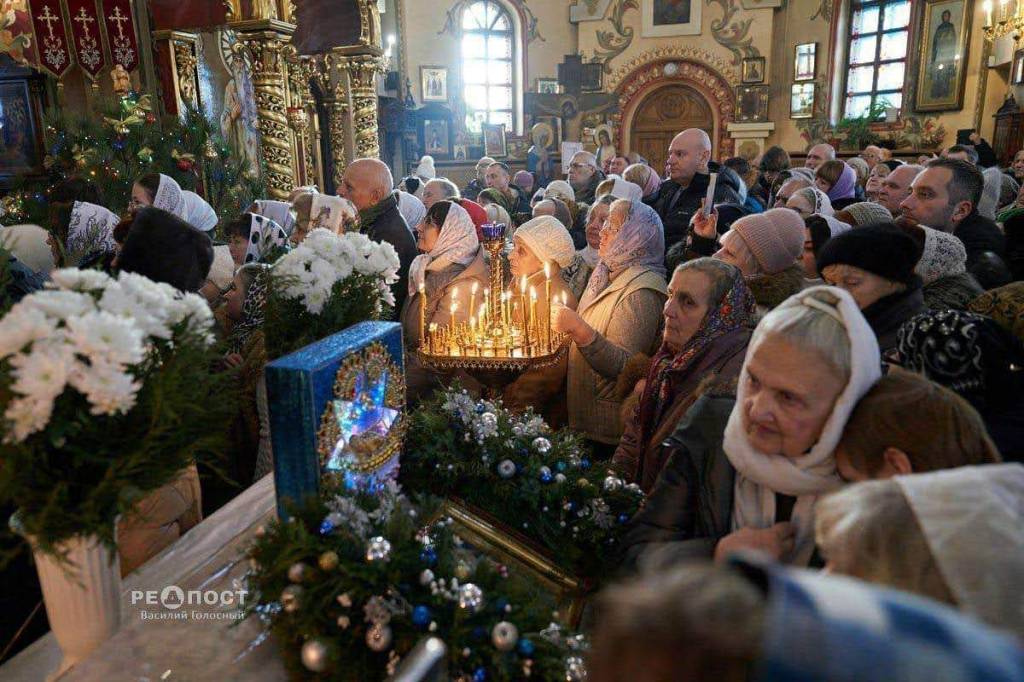
Kharkiv Christmas morning Orthodox mass, from Repost Telegram group (Vasylii Golosnyi).
Nataliya grew up during the economic instability of the late 1980s as Communism began to unravel in the USSR and the 1990s during the chaotic transition to capitalism. Inflation was more than 200% a month unemployment as high as 13%. Nataliya’s parents were both paid irregularly during this period, sometimes months or even years in arrears! As a result, Nataliya usually only received on Christmas Day a small bag of candy, nuts, and an orange (a rare commodity in post-Soviet Ukraine). Today, she limits Christmas to three gifts and a few stocking stuffers per person. In Ukraine, the rest of Christmas Day was spent visiting family and relaxing. It was considered bad luck to do any sort of housework, even cooking or washing laundry.
This contrasts sharply with my family’s Christmas traditions, so we have been harmonizing our different expectations during the last several years. For example, I grew up experiencing Christmas as a day-long marathon since both sets of my grandparents also lived in Cincinnati. Occasionally, we would visit both on Christmas Day after unwrapping numerous presents at my parents’ house. On the other hand, Christmas at Nataliya’s house is usually over in a few minutes since each person only had a few presents.
Joint Christmas (Dec. 25) with Nataliya and the Glassers.
Nataliya also grew up with some unique traditions for the New Year, but we haven’t retained them. The “old” New Year’s Eve (January 13) was another time for family to gather for a large feast but without kutya since that was specific to Christmas. Children and teenagers would also sing carols, called shchedrivka, on New Year’s Eve too. On New Year’s Day (January 14), Ukrainians have a traditional method (called malanka) of welcoming the New Year. To bring luck in the New Year, a male relative or neighbor must be the first person to visit each house while carrying grain in their pockets or in a small sack. Nataliya’s extended family lived on a plot of land together so her paternal grandfather would usually have the duty of visiting everyone. To have a woman visit first would instead bring bad luck, according to tradition.
Unfortunately, there don’t seem to be indications of a Ukrainian victory on the horizon in 2023. Nevertheless, Zelensky and the Ukrainian populace are maintaining their resolve. In addition, the Ukrainian diaspora around the world (including Cincinnati) continues to raise money and donate supplies to sustain the defense of their homeland. The local chapter of the Ukrainian Women’s League of America also hosted a Christmas celebration on the traditional date of January 8 at the Fleming Road United Church of Christ. The event included a potluck, Koliadka, a nativity performance, and an appearance by St. Nick which attracted a strong turnout.
$24,000 for a hospital in the Sumy region of northeastern Ukraine. The event included a showcase of different performances from around the world including ballet dancers and an opera singer. The event also included hors d’oeuvres and several raffle drawings. The concert ended with a dramatic and emotional unveiling of the Ukrainian flag!
Other fundraisers last year include the two food festivals which raised a combined $82,000. I am surprised and relieved by Cincinnati’s continued support for its sister city Kharkiv. I hope that the momentum continues for as long as necessary in 2023.
Ukraine became independent on August 24, 1991, after spending nearly 90 years as part of the USSR (created in 1922). August 24 is a national holiday in Ukraine, but celebrations were muted this year since the war with Russia is still ongoing.
Since August 24 was a Wednesday this year, the local volunteer group Hope4Ukraine hosted an end-of-summer festival on August 21 (Sunday) at the Kolping Center near Winton Woods. The festival included food, music, and kids’ activities. We hosted a similar event in May which was very successful, but the crowds created long lines. We hoped the Kolping Center could help us better accommodate even more people.
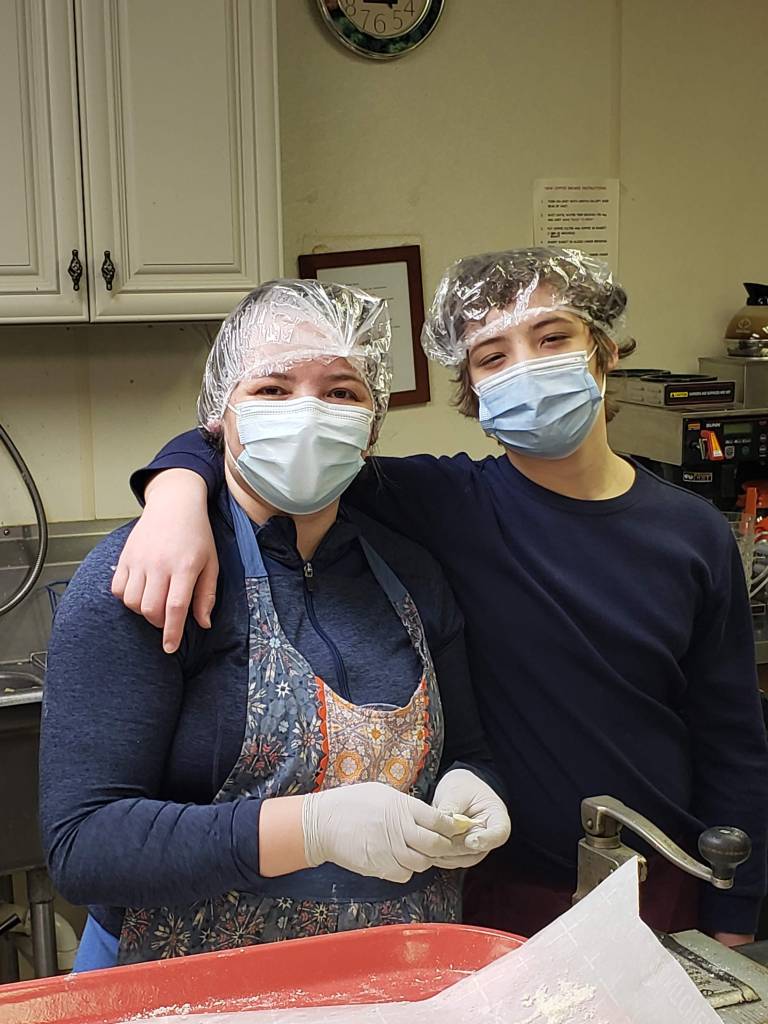
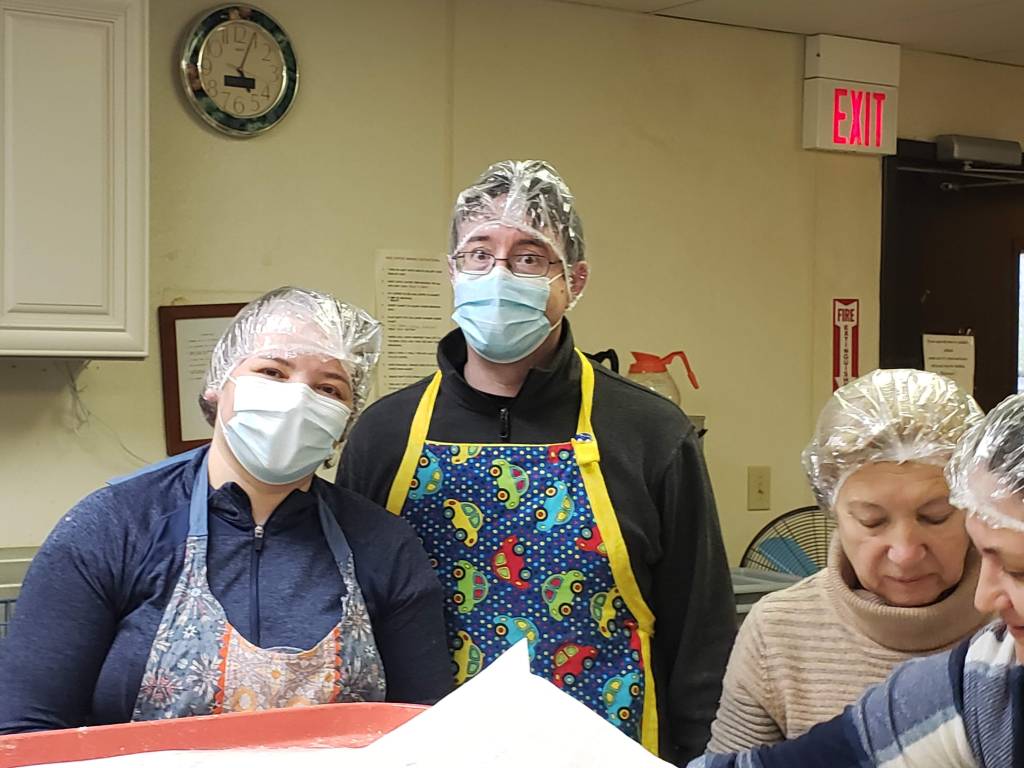
Again, Nataliya, her son Alex, and I helped bake hundreds of pierogis ahead of time. I was really looking forward to helping out again and volunteered to distribute drink tickets at the festival. However, I felt slightly ill the day before the event and felt even worse the morning of the festival. I took a COVID test at home and got a positive result! I made it more than 2 years without getting sick, but my luck had finally run out. I suspect Alex brought it home from school since he was also sick, despite testing negative twice.
My throat was extremely sore and was so painful that all I ate that day was Greek yogurt! My throat hurt so bad I thought maybe it was strep throat at first, which I had suffered several times in my youth. In addition, I had an ugly cough and was very tired. I spent most of the day watching TV and snoozing on the couch instead of helping at the festival! Since I am high risk for complications from COVID, I made a video appointment with my doctor on Monday, and she prescribed Paxlovid for me even though I was already starting to feeling better.
Unfortunately, the drug affected my sense of taste and made everything taste very bitter (a small price to pay for extra help). In addition, the Paxlovid could have had several ugly interactions with my other medications, so I had to carefully adjust my prescription regime. But by Tuesday I was well on the road to recovery, and I was almost completely recovered by the end of the week. Thankfully, I tested negative in time for my first and only adult birthday party (40th) which Nataliya thoughtfully organized. In the grand scheme of things, my bout of COVID was very “mild” indeed, but I am still very cautious since I wouldn’t care to repeat the experience or inflict it on anybody else. I’ll sign up for another booster soon as well. I can only imagine how much worse it would have been without vaccines or Paxlovid.
Even without my help, the Ukrainian festival was another big hit! We had raised $36,000 at the first fundraiser in May and hoped to meet or exceed that in August. But by this point, the war had dragged on for 6 months, and I wasn’t sure crowds would still appear like they had in May. I needn’t have worried! My aunt and uncle attended the August festival and said the lines were still wrapped around the Kolping Center. They bought a couple packages of frozen stuffed cabbage (holubtsi), which they later said were delicious. In the end, we raised another $46,000 which will buy vital medical equipment and supplies for hospitals in Nataliya’s hometown of Kharkiv.
Kharkiv is Ukraine’s 2nd largest city and is only 25 miles from the Russian border. The city was partially encircled and under constant rocket and artillery bombardment (including indiscriminate cluster munitions) for nearly 3 months. The city suffered extensive damage and more than 1,000 civilians were killed. The Ukrainians launched a counter-offensive in May that pushed weak Russian forces away from the northern half of the city, but the enemy still threatened the southern part of the region with sporadic bombardment throughout the summer. That was until Ukraine launched another quick and powerful counterattack last week (early September) that forced the Russians to beat another hasty retreat. The Russians were so surprised and demoralized that they reportedly dropped their rifles and fled on bicycles stolen from local residents.
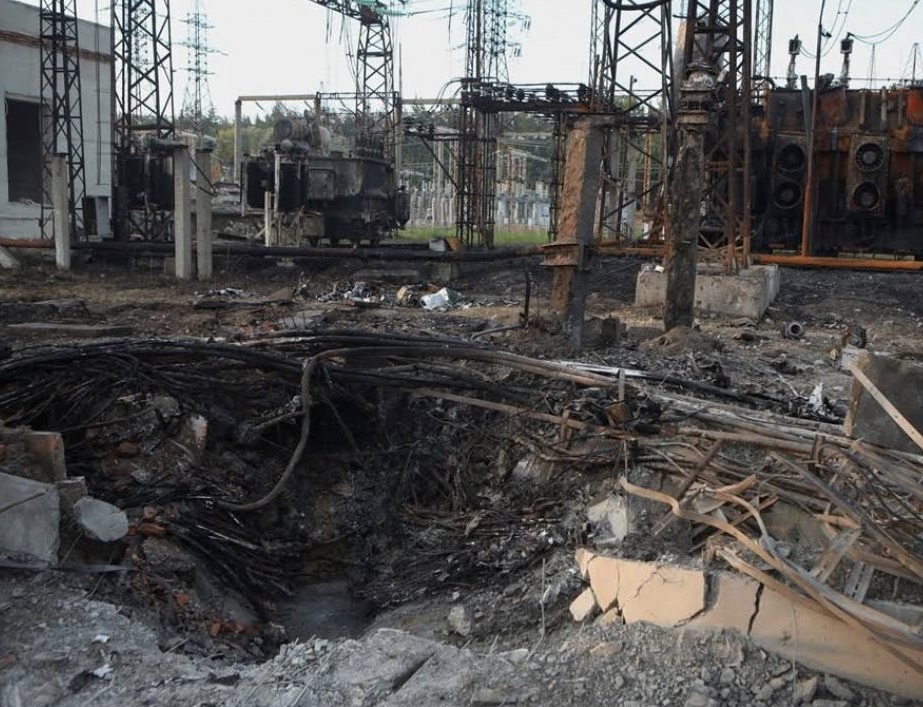
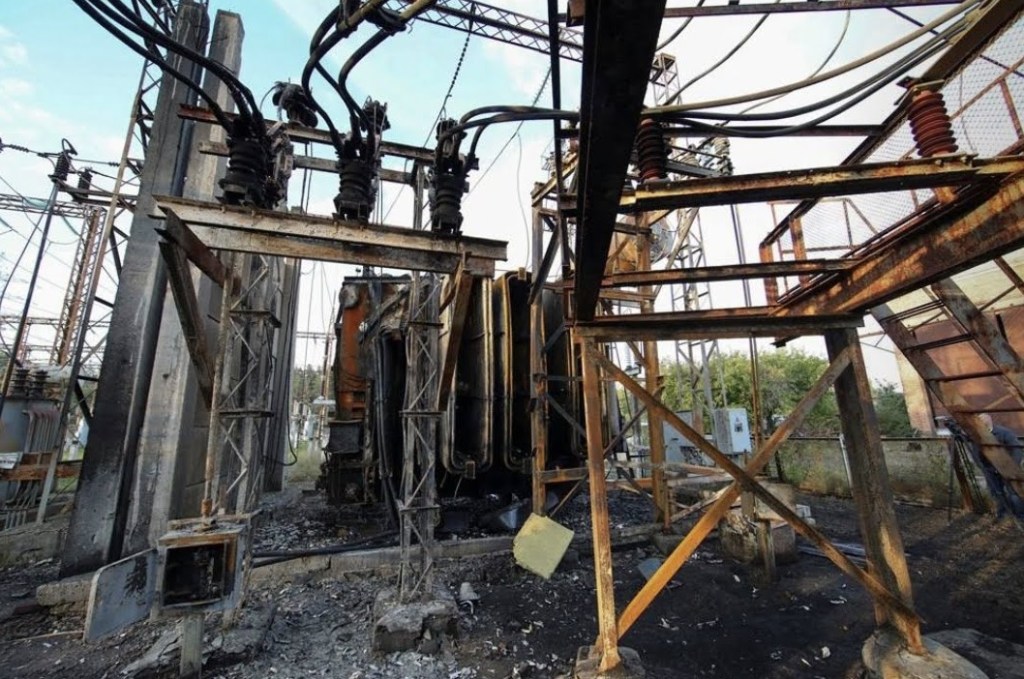
After yet another humiliating defeat (even if relatively minor in scope), the Russians retaliated against Kharkiv and destroyed numerous powerplants, water stations, and other infrastructure. Russia no longer even tries to pretend that they care about avoiding civilian targets. Nataliya’s parents still live in a village on the outskirts of Kharkiv and her mother, Iryna, says the local powerplant was damaged in the barrage. The station was so close that you can see the towers from her parents’ house. Firefighters battled a blaze for 12 hours at the plant, but the station is already back in operation. Nataliya’s parents have had several close calls before, but Nataliya said they remain resolute even after the latest attack.
On the other hand, her brother, Michael, seems to be settling down in Israel. They left Ukraine in June and went to Israel under the Right of Return since his wife has Jewish ancestry. Michael has a young autistic son, Leo, and they managed to secure a spot for him a special needs education program. A bus picks up Leo and there are only a couple other students in the class with him, so they get a lot of individual attention and help. Nataliya hopes to visit them in Israel over spring break next year.
Despite the good news and strong support, it will take a lot of time and money to rebuild what has been damaged or destroyed. Ideally, Putin and the Russians would be forced to pay reparations in exchange for sanctions relief, but that won’t happen any time soon (if ever). Kharkiv is one of Cincinnati’s sister cities, and officials from the Kharkiv Red Cross visited the region last month (August) to begin planning for the post-war future. The officials visited local mental health experts and physical therapists in search of advice about how to help injured and traumatized residents after the war. They also praised the local sister city association which helped raise $117,000 to buy food and medicine in Kharkiv.
Another local volunteer group, Cincy4Ukraine, continues to collect donations of clothing and medical supplies as well. We spent several hours sorting and packaging the latest round of donations which will easily fill another 1-ton cargo truck!
Our next major fundraiser is a gala concert at 6:30 p.m. on October 8. Tickets include a cocktail reception and hors d’oeuvres. The program includes opera, ballet, and various performers from around the globe.
Nataliya’s brother Michael finally left Ukraine last month and arrived in Israel several weeks ago after a brief stopover in Hungary. Since Michael was still young enough to be conscripted into the Ukrainian armed forces, he had to get special permission to leave after proving he was the sole breadwinner for his family, which includes his non-verbal autistic son. In May, Michael’s family fled to western Ukraine after withstanding rocket and artillery bombardment in the eastern city of Kharkiv for nearly 3 months. They went to Hungary in June and then sought permission to travel to Israel since his wife had Jewish ancestors.
Since the war began, more than 33,000 Ukrainian refugees have fled to Israel including Jews and gentiles. Michael’s family was eligible for several generous assistance programs since they were coming back under the Right to Return policy. The Israeli government gave Michael’s family some money and temporary housing until they found an apartment in a town in northern Israel near Haifa. Michael isn’t sure what their long terms plans are but is grateful for the generous suppport. He continues to work remotely for an American technology company.
However, that leaves Nataliya’s parents as the last holdouts in Kharkiv. They live in a small village on the edge of the city. Although the urban parts of Kharkiv may have borne the brunt of the Russian assault, rockets still destroyed several buildings, including the town hall, in her parent’s village. Nataliya’s aunt and uncle also lived on the same plot of land as her parents, but they also recently left for the Netherlands. Nataliya’s cousin lives there and just gave birth to a baby boy, so her parents came to help her and escape the fighting.
Nataliya’s mother Iryna feels conflicted about all the changes. She is happy for her relatives but now feels very lonely. In addition, Nataliya’s aunt and uncle asked Iryna to care for several animals they left behind. Iryna is happy to help but feels it’s an extra burden on top of everything else when life is still difficult, and the war drags on with no end in sight.
I am heartbroken that fighting continues in Ukraine, but I have also been pleasantly surprised by the ongoing generosity of Cincinnatians who continue to donate after more than 5 months of conflict.
I had hoped that Americans would not become totally desensitized to the war, but I wasn’t sure that they would continue to volunteer and contribute for months on end. Although the Ukrainian food festival in May was a huge hit that raised $36,000, there were some logistical problems that caused a shortage of parking and created very long lines. We have learned from our previous experience and are hosting our next event, a summer family festival, at the Kolping Center, a large event center in the Greenhills neighborhood. This time, the goal is to raise the heroic sum of $50,000 to buy medical equipment for hospitals in Nataliya’s hometown of Kharkiv which is still under Russian bombardment on a regular basis.
The event will be from 12-7p.m. on Sunday, August 21, since Ukraine celebrates its independence on August 24th. The event will include more food of course, as well as kids’ activities, arts and crafts, music, and a silent auction.
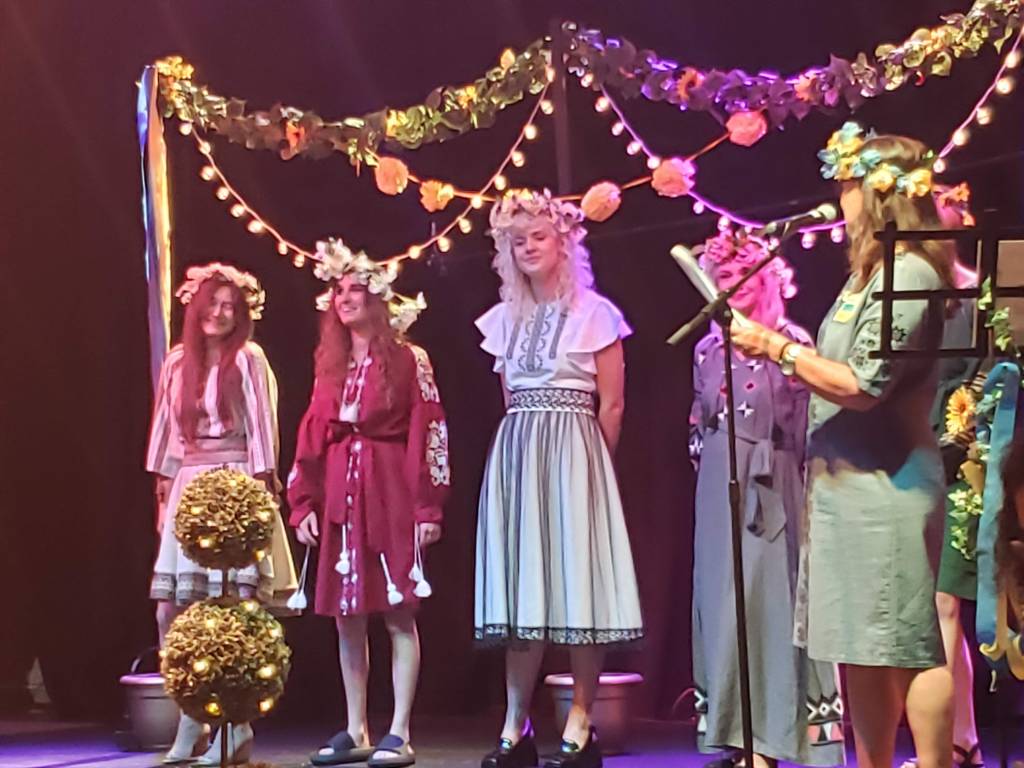
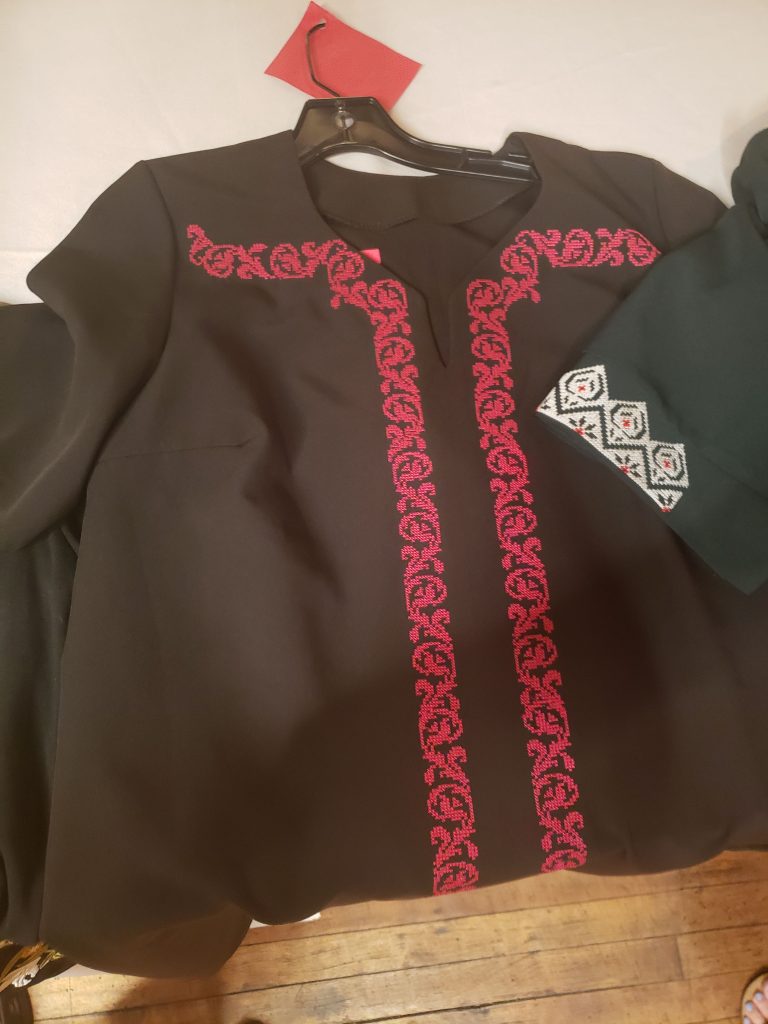
In addition, there have been several other successful local events that benefitted Ukraine, including a banquet and auction at the Woodward theater in Over-the-Rhine. Several dozen attended the event in June, which raised more than $14,000 for the charity Razom which provides humanitarian aid. The menu featured traditional Ukrainian dishes including borscht (stew), varenyky (pierogi/dumplings), and banyky (stuffed rolls). The event also included a silent auction and Nataliya and I won tickets to the Museum Center. However, the fashion show featuring traditional Ukrainian vyshyvanka (embroidered shirts) was the highlight of the fundraiser. Nataliya has been embroidering her own example, which is beautiful, but the event showcased dozens of examples that were also very intricate. The vyshyvanka at the fundraiser were also auctioned off to the highest bidder and Nataliya got one at a very nice price.
Finally, Yuriy Fedynsky, a Ukrainian-American composer and singer-songwriter performed at the Wyoming Fine Arts Center in June. He gave a very verbose and meandering lecture on the war in the Ukraine and the history of traditional Ukrainian instruments such as the bandura and kobza (both a type of lute). He also explained how the Soviets had purged and executed nearly all of the kobzars (itinerant blind musicians who played the kobza) during the 1930s. He also played a few songs, but I was expecting a little more music and less preaching (literally). Nevertheless, it was an educational event that helped raise money for Fedynsky’s efforts to promote Ukrainian culture. Slava Ukraini!
If the local Ukrainian food festival raised $5,000 or even $10,000, I thought that would be very successful. In my dreams, I hoped we could reach $15,000 or $20,000, but in the end, we raised an unbelievable $36,000!
The organizers, Cincy4Ukraine and Hope4Ukraine, bought and fully equipped a Mercedes Benz Sprinter ambulance which has already been shipped to Ukraine where it will help save lives. The remaining $7,000 will purchase additional medical supplies.
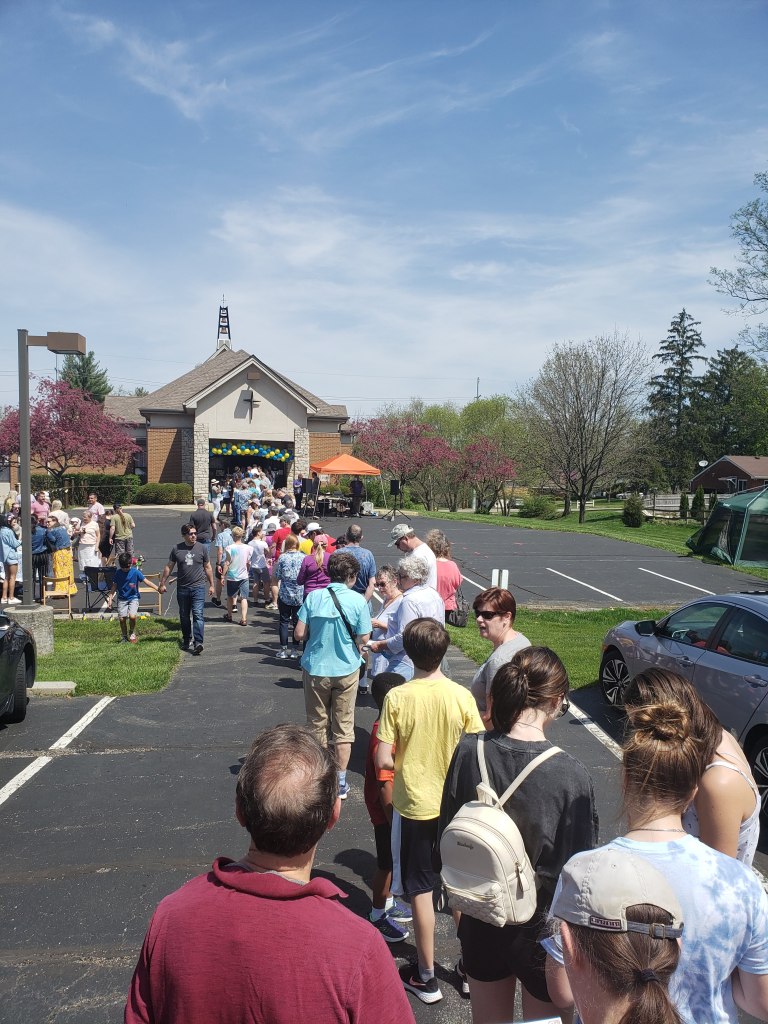
The event was held last month at the United Church of Christ on Fleming Road. When I arrived at about 12:30 p.m., the church parking lot was already full. A traffic jam quickly developed as cars started to search for parking on nearby side streets. A long line of eager supporters quickly formed and snaked across the parking lot. Unfortunately, the line moved slowly but most people were very patient despite the long wait. Despite the logistic problems, the day was a smashing success!
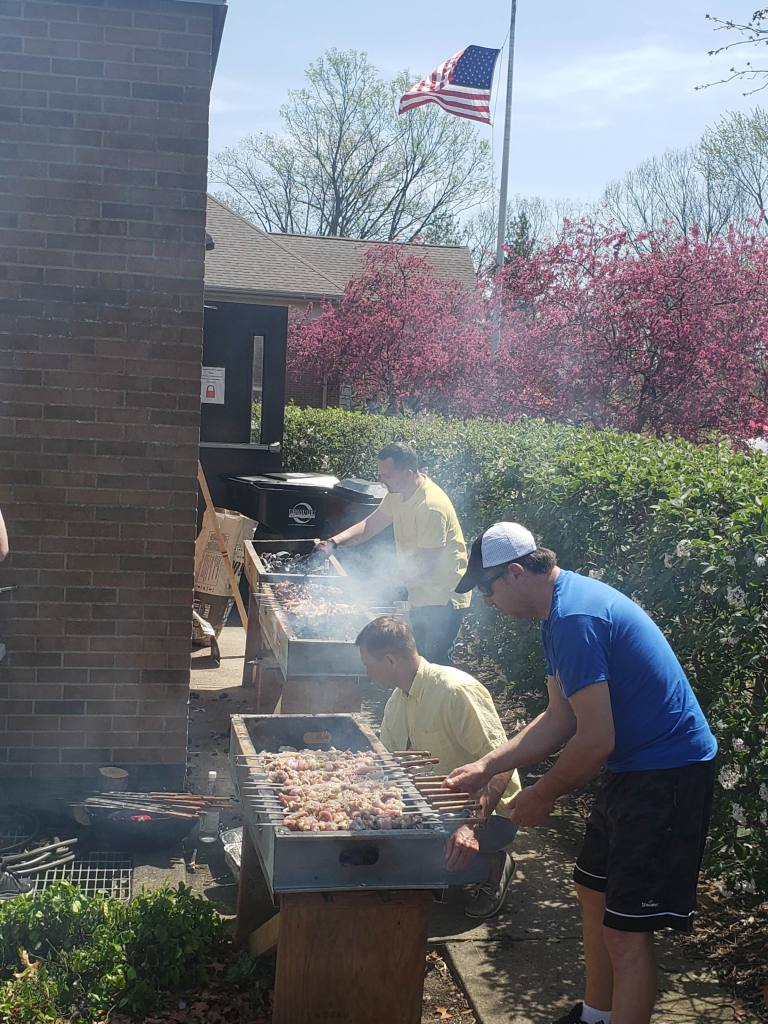
Grilling sashlik.Varenyky (pierogi)Nalesniki
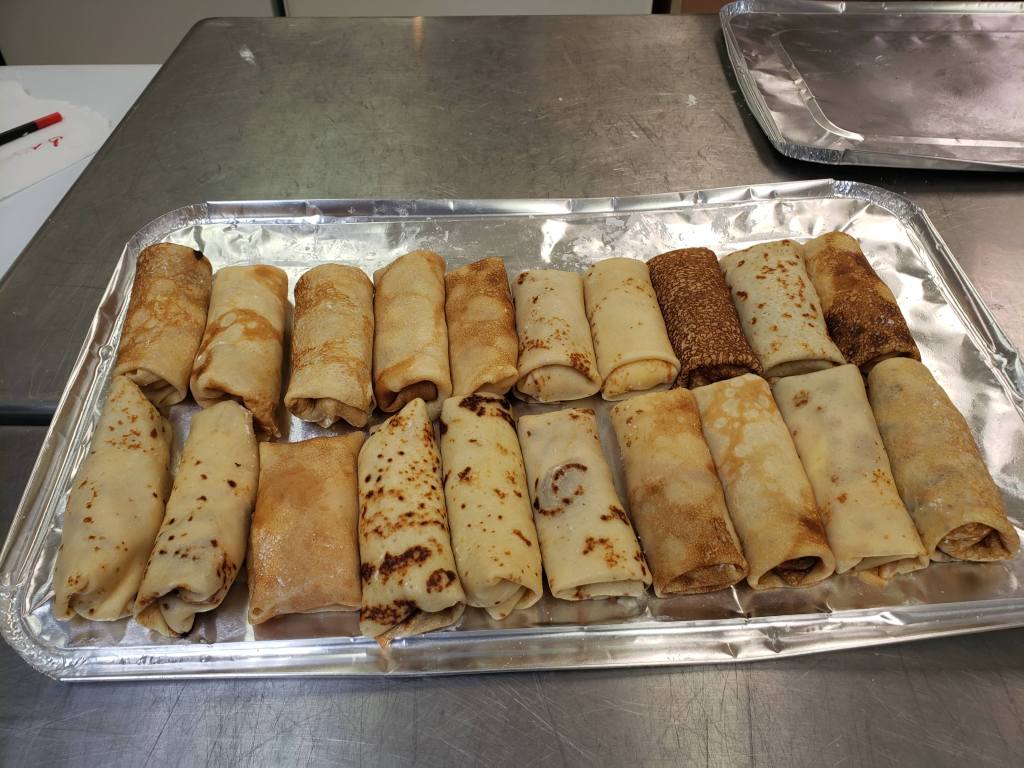
The menu included: grilled kebabs (sashlik), beet soup (borscht), stuffed cabbage rolls (holubtsi), dumplings stuffed with potatoes (varenyky also called pierogis), cheese crepes (nalesniki), and many other tasty treats! The preparations began weeks earlier, and Nataliya and I helped bake pierogis and nalesniki. The nalesniki were filled with lemon flavored cottage cheese which was delicious! Numerous desserts were also available.
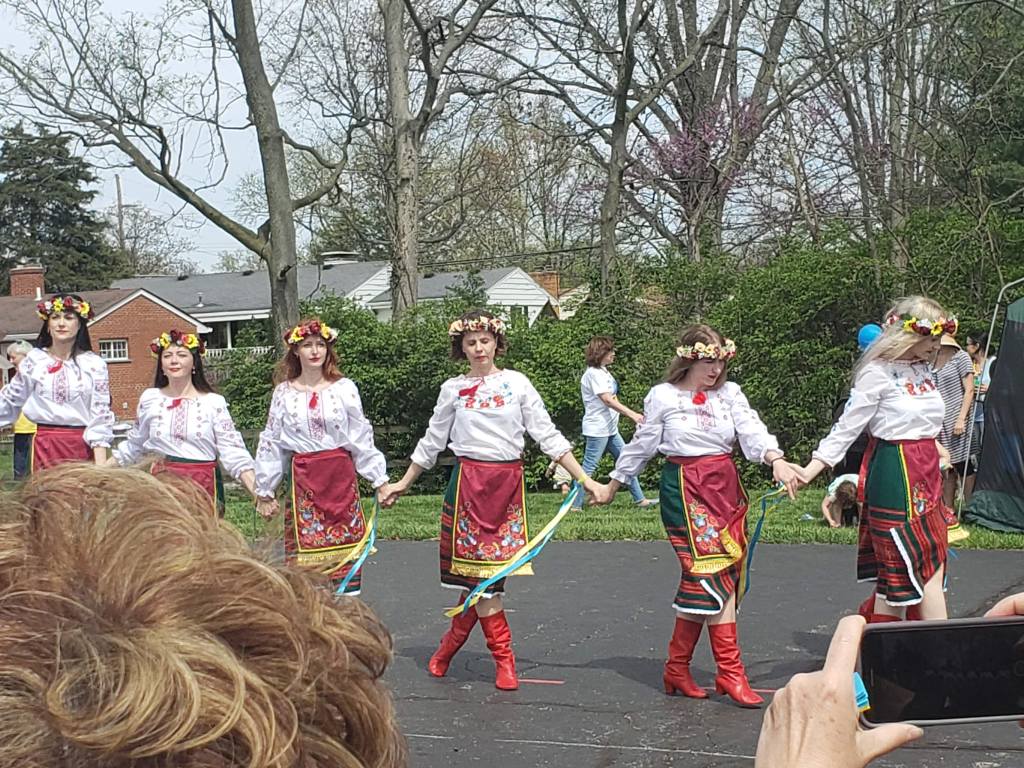
The event also included kids’ activities, a gift shop, and several different performances, including singers, dancers, and a musician with a bandura (Ukrainian instrument similar to a guitar)! It was very powerful and rewarding to see the community come together and make such a significant contribution to aid Ukraine. It also felt comforting to know that we could make a difference on an individual level to alleviate a tiny fraction of the suffering that Putin continues to inflict on innocent Ukrainians.
Indeed, Ukraine continues to suffer. But after nearly 3 months of fighting, Ukrainian forces recently launched a counterattack near Kharkiv, Nataliya’s hometown, that has pushed Russian forces all the way back to the border (nearly 30 miles) although some Russians remain to the east of the city. Russian troops attacked Kharkiv at the outset of the war but failed to capture the city and laid siege to it for nearly 3 months. The Russians never completely encircled the city either.
The successful Ukrainian counterattack shows they can still go on the offensive and retake significant territory. It also highlights the total incompetence and impotence of the Putin’s armed forces. By concentrating on eastern Ukraine, Putin seems to have left himself vulnerable on his flanks. Putin has only captured 2 major cities since the war began: Melitopol (150,000 pop.) and Kherson (289,000 pop.) , as well as the ruins of Mariupol (formerly 446,00 pop.). These meager victories have come at a staggering cost of up to 25,000 Russian and separatist casualties (killed, wounded, and missing).
Nataliya’s parents live in a village on the western outskirts of Kharkiv and say the Ukrainian counterattack has pushed the frontlines away from them. Their village had been subject to sporadic rocket or artillery fire when the Russians were closer, but now they only hear explosions in the distance. Previously, it had been very difficult to obtain food or money, but the bank and a few shops have reopened. We chatted over FaceTime recently and Iryna, Nataliya’s mother, said things were much better now.
Nataliya’s brother Michael fled Kharkiv a few weeks before the Ukrainian counteroffensive. He drove his wife, who has never lived anywhere outside of Kharkiv, and 5-year-old son to a small town in western Ukraine where they rented a condo. Nataliya and I were relieved, even though we thought they should have left long before then! Although the Ukrainian counterattack helped relieve some of the pressure on Kharkiv, officials have warned residents not to return. Nevertheless, as many as 2,000 residents a day are returning.
After nearly 3 months of continuous bombardment, the city has been devastated. Kharkiv is Cincinnati’s sister city and was Ukraine’s 2nd largest city. Once known for its museums and architectural heritage, more than 1,500 buildings have been damaged or destroyed, including dozens of historic landmarks. More than 600 local residents were killed by the barrage of Russian rockets and artillery, including indiscriminate cluster munitions (with which targeting cities is illegal and immoral).
It will take years to rebuild, and the Ukrainians will never forget or forgive the atrocities that have been committed. Restitution can begin by seizing Russian assets and forfeiting them to Ukraine (even though it may only amount to a drop in the bucket). Slava Ukraini!
Many other residents have not been so lucky: dozens of people are killed every day by the barrage of Russian missiles, bombs, and rockets that bombard the city. You can see comparative satellite photos of the before and after damage here. You can drag the slider left or right (link).
Only 25 miles from the Russian border, the Ukrainian defenders have delivered a humiliating defeat to Putin by holding on to Kharkiv for a month. Russian forces have only partially encircled the city which continues to hold out. The Russians launched an attack on Kharkiv at the outset of the war, but, after the initial attack failed, the Russians have decided to mercilessly pound the city with rockets and artillery. Hundreds of buildings have been destroyed (link). But, it seems unlikely the city will fall anytime soon, since Ukrainian troops claim to have recaptured a village outside Kharkiv.
To escape the shelling, many residents have sought shelter in the city’s subway system, and musicians have performed concerts to maintain morale (link). Denys Karachevtsev, a musician in Kharkiv, encapsulated the spirit of resistance when he performed Bach’s Cello Suite No. 5 amongst the ruined streets of the city (link). Contrast it with this beautiful 4k quality walking tour amongst the parks and landmarks of the city before the war. Imagine these were the streets of Cincinnati or Covington!
The Not-So Bad – Nataliya’s Family:
Despite a month of nearly continuous bombardment, Nataliya’s family is still in good health. While we are angry, tired, and tired of being angry, I can barely imagine what a month of terror and privation has felt like. Her parents and brother’s family decided to stay in Kharkiv when Putin launched the invasion a month ago. Nataliya’s brother Michael’s family has stayed in their apartment on the 7th floor of an urban apartment building. They lost water pressure for a few days, so Michael had to carry buckets of water up 7 flights of stairs.
Despite the frequent bombardment, some semblance of normal life continues amidst all the death and destruction. Michael continues to work as an applications developer for Oracle despite sitting in the middle of a war zone. We spoke briefly on via video chat recently and his energetic 5-year-old son Leo was cheerfully running around the apartment and screeching! Michael said people still sit on benches and walk in a nearby park when it seems safe.
“At some point things look like business as usual,” Michael wrote in text. “And sometimes it is not so much. A la guerre comme a la guerre” (French translation: “war is war”).
Nataliya’s parents live in a small village called Pisochyn on the edge of Kharkiv. Food has become scarcer as the fighting as continued. The nearest market is about 20-minute bike ride away and only accepts cash, but the bank only allows people to withdraw a modest amount of money each time. The lines at the bank and market can be 2 hours long.
“We hold on and believe in victory and peace,” her mother Iryna wrote in a text message.
Cincinnati has organized and will continue to host additional fundraisers and protests in support of Kharkiv, which has been our sister city for more than 30 years. This wonderful 18-minute video highlights the close personal connections between the cities (link).
Nataliya and I are eager to do as much as we can to support Ukraine. It may not seem like much, but we have to do what we can! Immanuel Presbyterian Church in Clifton hosted a beautiful concert with emotional performances by Ukrainian musicians. All Saints Episcopal Church will host another benefit concert on April 23rd at 4p.m. (link). Another protest is planned in Blue Ash soon, and a large fundraiser is tentatively scheduled for April 10. Several dozen volunteers will cook and bake traditional Ukrainian dishes and send the proceeds to Ukraine. I’ll post more details on Facebook as they become certain.
I work at Humana, and many of my colleagues are finding innovative ways to support Ukraine as well. At least one colleague has taken time off work to travel to Poland to assist some of the nearly 4 million refugees who have fled the fighting. We are also asking Humana to divest from any Russian assets or investments the company may have (if applicable).
America has finally agreed to accept 100,000 refugees and continues to send weapons and supplies. President Biden is also considering additional sanctions and has officially accused Putin of committing war crimes. However, we need to keep up the pressure in both DC and Cincinnati until the war stops! Putin must be punished and pay reparations for all the death and destruction he has wrought!
Despite the uncertainly at the moment, Nataliya’s brother Michael told me he feels like the situation must be more difficult for Nataliya and I as we watch powerlessly from far. He lives in Kharkiv, one of Cincinnati’s sister cities, in eastern Ukraine, and the city has been under Russian bombardment for more than a week. Neither Nataliya nor I have been sleeping well. However, we have been doing what we can to support Ukraine and the 1 million refugees who have already fled as well as bolster our own spirits.
Protest at City Hall on Feb. 28, 2022.
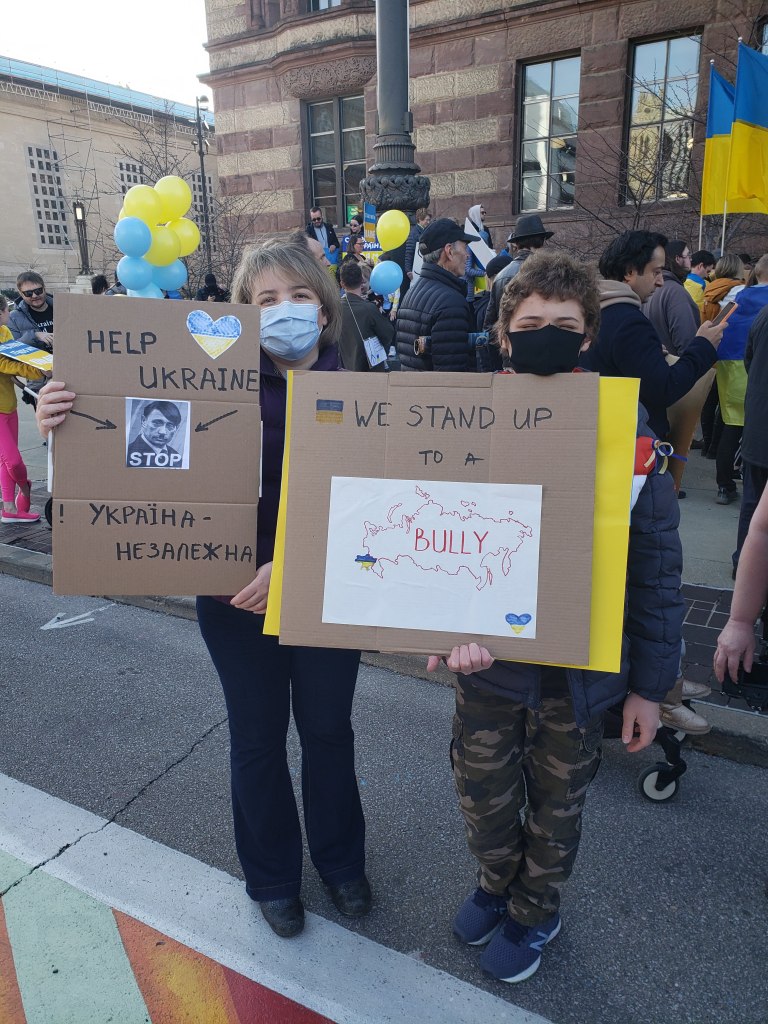
About 150-200 people attended a protest on Monday (Feb. 28) at city hall. There were many outrageous, poignant, and pointed signs. Protestors wore the national colors of blue and yellow and waved the national flag. I brought along some sunflowers which are the national flower. Cars honked their horn in support as they drove past. Mayor Aftab Purval spoke and pledged support to Kharkiv which is one of our sister cities. It felt great to be around so many other people who also cared so deeply about Ukraine. Several news outlets covered the event and Nataliya was mortified to later see her portrait in City Beat.
The slogans of Ukrainian resistance erupted loudly and frequently from the crowd:
Slava Ukraini (glory to Ukraine)!
Heroyam slava (glory to the heroes)! [This serves as a rejoinder]
An informal committee has been created at my employer, Humana. We had an initial meeting last week that generated more than 30 different ideas about how our company and coworkers can support the Ukrainian people. A second “shark tank” style meeting will turn the ideas into action later this week. Several of my ideas were selected, including a suggestion to divest from any funds or assets in Russia. Numerous other companies and funds have made a similar pledge; however, it may not even be relevant since I’m not sure Humana even has any assets in Russia. If we do, it won’t be feasible for the foreseeable future since MoEx (the Moscow stock market) will remain closed indefinitely due to the unprecedented sanctions that have been levied against Russia. (link) I’m not even sure how to send this suggestion up the corporate ladder or who would even make that decision aside from the board of directors.
5k participants at Corwin Nixon Park (Mason, OH) – March 5, 2022.
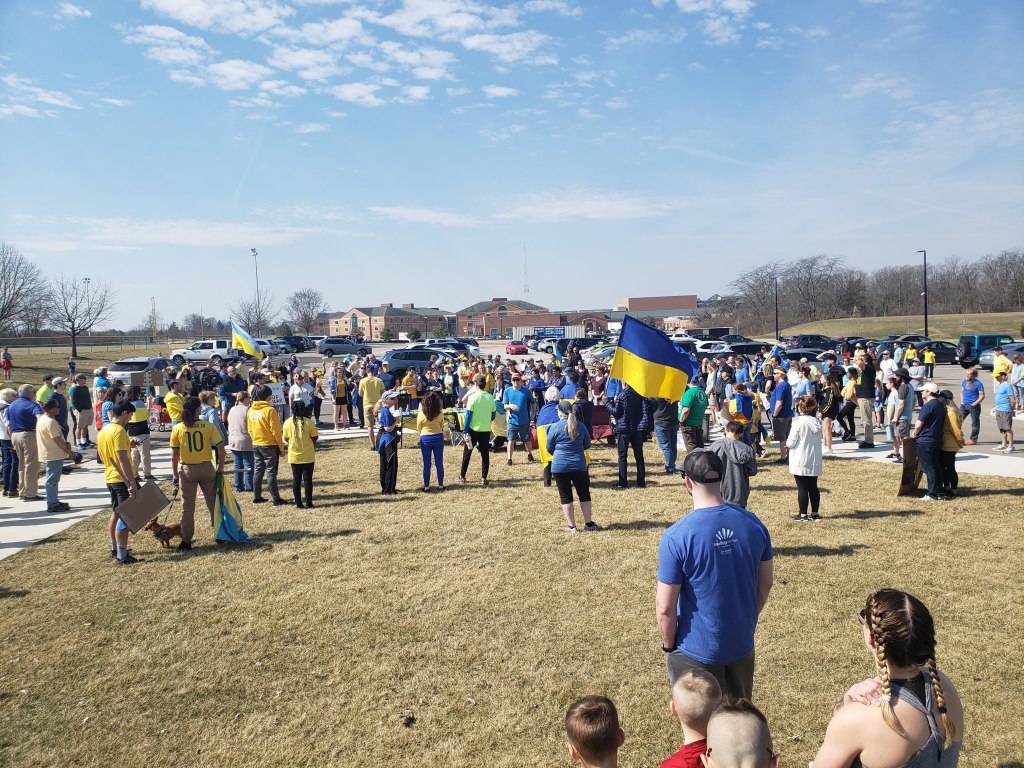
On Saturday (March 5th), I attended another protest and fundraiser in Mason. This time, it took the form of a 5k walk and fundraiser at Corwin Nixon Park. Turnout was again very strong with about 150 people participating. At first, we walked along Mason-Montgomery Road with many cars honking in support. Then, we walked across the park alongside a peaceful little stream. The weather was perfect – sunny and warm. I felt like maybe Michael and his family could live vicariously through me since they remain huddled in the apartment in Kharkiv.
Putin’s naked aggression has enraged me, and I will do everything I can to help. Because I’m not very busy at work currently, the war in Ukraine has given me new purpose. Nataliya and I urge everyone to act on their sympathy for Ukraine as well by donating to humanitarian organizations, writing a letter to Congress, attending rallies, or any other relevant activity. To stay up to date on local ways to support Ukraine, you can join the Stand with Ukraine in Cincinnati Facebook group.
The International Criminal Court has begun to investigate whether Putin has committed war crimes during the invasion of Ukraine. However, the evidence is obvious that he has. The Russians have used cluster bombs against the city, which drop a carpet of small bomblets over a wide area. (link) This is the definition of indiscriminate and exposes Putin’s lies about targeting only “military objects.”
On Tuesday (March 1st), Russian missiles destroyed Freedom Square in the city’s center, which housed local and regional government offices, as well as a concert hall and opera house. The city zoo is immediately adjacent to Freedom Square but does not seem to have been badly damaged. Nataliya took her son to the zoo on previous trips to visit his grandparents. However, the zookeepers were unable to evacuate the animals since the city is only 28 miles from the Russian border. The zookeepers have sedated the animals but say they only have 10 days of food left. Some animals have escaped but more than 4,000 remain. (link) I love animals, and they shouldn’t be overlooked. That’s not to downplay all the human suffering that’s occurring either. The European Zoo Association is accepting donations on behalf of all Ukrainian institutions (link).
I hope that one day I can see Kharkiv in all its peaceful splendor after Putin has been forced to rebuild it. Although I’m usually not a fan of jingoist slogans, I’ll sign off my blogs from now on with the following salute:
More than a week into the assault on Kharkiv, the people’s spirit remains unbroken. For the last 10 days, the Russian army has launched missiles, airstrikes and artillery against the city of 1.4 million residents – including my girlfriend Nataliya’s family. Dozens have been killed or injured and some parts of the city are without power, water, or heat. (link) Before the war, Kharkiv was a cultural and economic center renowned for its museums.
Her parents still live on the outskirts of the city and her brother Michael lives in the city itself with his wife Daria and young son Leo, who is autistic. There is some good news that Nataliya’s ex-husband, Vlad, managed to escape Kharkiv and should return to the US soon. He had been visiting his parents in Kharkiv when the war started.
Her parents have been hiding in their cellar to avoid nearby explosions that have caused their windows to rattle. However, the cellar is too cold for them to sleep in overnight. The pet cat and Nataliya’s father have been comforting each other during the bombardment and are inseparable. The power recently went out, but luckily their house is heated by gas.
“We pray every minute,” said Nataliya’s mother, Iryna, via text.
Thankfully, they live on the fringe of the city, so they have some chickens, rabbits, and a small garden. Otherwise, they haven’t been able to go shopping, but a truck delivered a few loaves of bread to the neighborhood one day. All the neighbors are working together to help each other survive. A younger resident goes to the pharmacy to obtain medication for older members of the community. People buy extra supplies and share with anyone who might be running out of essentials.
Michael and his family live in a large apartment building and half of the residents have already fled. They mostly stay indoors except for occasional brief excursions to a small park across the street when things seem quiet. Leo, who is non-verbal, has already started to crack under the stress, even though Michael tried to convince him the explosions were only fireworks. The family wants to stay together but avoids going down into the basement during air raids. Michael fears they might be trapped if the only exit is blocked by debris.
Despite all the difficulties, Michael remains grimly determined.
“There is no need to plan ahead,” he wrote via text message. “When you plan one day at a time, it’s sort of ok, no matter how horrible this sounds. There is joy when you wake up the next day and check for family and friends and you can hear from them. We have hope that…there’ll be enough spirit to break the Russians.”
Although the future remains uncertain, Michael says they plan to stay in Kharkiv since it seems more dangerous to travel by car, especially with a small child who has special needs. However, they do have a plan to evacuate, and their bags are already packed if the need to leave quickly. Daria, Nataliya’s sister in-law, has lived in the same neighborhood in Kharkiv her whole life, so it seems more difficult for her to admit they might need to leave.
I understand the reasoning and realize fleeing wouldn’t be easy. On the other hand, I’m very concerned that the situation could only get worse as Putin gets more desperate. Despite sustaining considerable losses (at least 500 killed, 200 captured, and hundreds of vehicles destroyed or captured) over the first week (link), Putin’s armies have only captured one major city, Kherson, along the Black Sea coast. Kherson is only the 13th largest Ukrainian city with about 280,000 residents before the war.
Although the Russians agreed to temporary local ceasefires in order to allow for civilian evacuations, the first such agreement in the port city of Mariupol collapsed after only a few hours (link). The Ukrainians say the Russians broke the agreement and continued to shell the city as civilians tried to leave.
I’m afraid civilians like Michael and his family will pay the price if Putin ratchets up the violence even more to eke out some meager victory. Putin set a precedent for brutality when he flattened the city of Grozny 20 years ago during the 2nd Chechen War. In doing so, he killed at least 5,000 civilians. (link) With the whole world watching, I hope Putin won’t dare to repeat the atrocity, but we can’t rule it out.
Only 45 km (28 miles) from the border with Russia, Kharkiv has been the scene of heavy fighting (link) since the beginning of the Russian invasion of Ukraine on Feb. 24 (Thursday). My girlfriend Nataliya and I have watched with anguish from afar as her homeland and hometown have been subjected to naked Russian aggression.
Nataliya has lived in the United States nearly 20 years, but all her family still lives in or near Kharkiv, including her brother (married with a young son with special needs) and her parents (both retired). Her brother lives on the east side of Kharkiv and says there has been fighting in nearby streets. Her mother and father live in a rural suburb on the west side of Kharkiv and say they can’t sleep at night because of all the explosions. Her mother, Iryna, says they don’t turn on the lights at night because they’re afraid to make themselves a target. Her ex-husband Vlad also returned to Ukraine only days before the fighting started to care for his mother and father who are both in poor health. His mother had surgery shortly before the invasion and was sent home prematurely to make room for anticipated casualties. Vlad has remarried and his wife and stepdaughter are very worried too since it looks like he won’t be returning to northern Kentucky anytime soon.
News reports indicate the Russians bombarded Kharkiv with missiles and artillery before sending in ground forces. A gas pipeline and the local airport were damaged. Fighting erupted throughout the city, but the Ukrainians claimed to have completely repulsed the attack by Feb. 27 (Sunday). But on Monday, Russian artillery has started to pound residential areas in Kharkiv (as seen in the video) killing dozens which flatly contradicts naked Russian lies that they target “only military objects.”
Kharkiv is a major cultural and economic hub and is the 2nd largest city in Ukraine. Founded in 1654, Kharkiv was the capital city before Kyiv rose to prominence in 1934.
Known for its beautiful churches and magnificent museums, Kharkiv is also a sister city of Cincinnati. Mayor Aftab Purval has offered assistance (link) to any Ukrainian refugees who may eventually arrive in Cincinnati. St. John’s Unitarian Universalist Church has already begun to raise funds to help as well. A rally is planned on Fountain Square at 3 p.m. Monday (Feb. 28) with Mayor Purval speaking at 4 p.m. More than 500,000 people have already fled the fighting in Ukraine. Please make a donation to any relevant humanitarian group if you are in a position to do so!
Kharkiv is 5,300 miles away and is separated from Cincinnati by 7 time zones, so the flow of information has been very slow. I had started to sleep much better in recent months after suffering from COVID-somnia but have had very little sleep the last few nights.
Nataliya and I had been planning a visit to Ukraine to spend time with her family in Kharkiv. I only met Nataliya’s mother briefly when she visited Cincinnati in 2019, but I say a few words whenever Nataliya chats with her over Facetime. I’ve been taking some rudimentary Russian language classes through the Babel app. Being so close to the border with Russia, Kharkiv is one of the regions in Ukraine where Russian is more common. Ukrainian and Russian are very similar (link), and both use the Cyrillic alphabet; as a result, many Ukrainians are bi-lingual. About 68% of the population primarily speaks Ukrainian while 30% speak Russian and the remainder speak other languages.
Nataliya’s son Alex speaks Russian at home and usually visits both sets of his grandparents every summer. Alex doesn’t understand the scope of the war and, in his youthful naivete, expects to return this year as soon as the shooting stops! Nataliya’s parents live on the more rural edge of Kharkiv, so they have a little garden, some chickens, and rabbits whom Alex loves! He was heartbroken when the furry matriarch recently died.
I have been awed by the dogged Ukrainian resistance in the face of nearly 200,000 Russian troops. But, there are suspicions that Belarus (a close ally of Russia) might send troops to fight alongside Russia (link) in Ukraine. So far, Belarus has only facilitated the invasion by allowing Russian troops to cross through Belarus in order to attack Ukraine.
My first interest in history arose was based in military history and especially World War II. That background makes me painfully aware of the suffering this war is causing. Therefore, I am an advocate for peace, which is one of the seven principles of Unitarian Universalism (link). So, I feel guilty when I take smug satisfaction after seeing videos of burned-out Russian tanks and armored vehicles on the streets of Ukraine. However, I realize this is Putin’s war and not a war the Russian people wanted.
As shown by recent massive peace protests in 48 Russian cities (link), many Russian people abhor war. Especially when thousands or perhaps tens of thousands of young Russians will die as result of an illegal and unjust war that Putin unleashed.
No major Ukrainian city has been captured yet and the tyrant Putin agreed to negotiate with Ukraine. I doubt that the diplomatic talks will lead to much progress, especially while Russian troops are still killing innocent civilians in Ukraine. It seems unlikely that domestic protests or international sanctions will topple Putin either, since he has weathered both before. Perhaps this situation is different?














 Freelance Writer Paul Glasser