Going the Distance

img_4555-2

Published in IN Community Magazines – Upper St. Clair Fall 2016

PITTSBURGH – The next time the Lapham family goes on a long-distance bicycle trip they will plan a less grueling schedule.

In June, the Lapham family rode more than 330 miles from Pittsburgh to Washington D.C. along the Allegheny Passage and the Chesapeake and Ohio Canal. They undertook the trip because 16-year old Joe Lapham is autistic and loves to ride bicycles. Joe will be a junior at Upper St. Clair High School this fall.

Joe was diagnosed with autism at age three and he has been in special programs since then in order to improve his social skills and intellectual abilities. The bicycle trip is an example of how Joe is full of life, his mother Lori Lapham says.

“Often, children with a disability are looked upon in the community as not having goals, interest, needs or a future,” she says. “We know that’s untrue.”

Joe first began riding a few years ago but was uncomfortable bicycling on city streets. So the Laphams bought several tandem bicycles and started riding together on trails. Bicycling together is an excellent opportunity for family bonding as well as exercise, says Laura Lapham, Joe’s 16-year old twin sister. Joe began asking to go for a bike ride more and more often after the Laphams purchased tandem bikes.

“It just exploded into this passion,” Laura says.

The Lapham started to take their bicycles on family vacations and based their itineraries on which bike trails where nearby. The Laphams prepared for the trip to Washington D.C. by taking progressively longer cycling expeditions, sometimes as far as 50 or 60 miles in a single day. They embarked on the trip on June 12 and left from Point State Park. Joe and his father Gary Lapham rode on a tandem bike together. Laura and several relatives from Texas rode the trails on regular bicycles. A security guard from St. Clair High School, who has known Joe for several years, also participated on the first day of the ride, which ended at Connellsville. Upper St. Clair High School also gave the cyclists t-shirts and rally towels.

Originally, the Laphams planned to complete the journey in five days but it actually took six to reach Washington D.C. The first several days were all steadily uphill as the cyclists climbed along the Allegheny Passage towards the Eastern Continental Divide. They climbed 1700 feet in about 130 miles. Although it wasn’t a steep grade, it was difficult on a tandem bike because it is heavier.

“You don’t get to coast on the way up,” says Laura.

Riding in tandem is also difficult because the two cyclists have to synchronize their pedaling. Tandem bikes are also less maneuverable than regular bicycles.

The family stayed at hotels along the way and Lori dropped all the bikers off at the trail every morning and packed up all the baggage. Sometimes the Laphams stayed in the same hotel for two nights in a row and that meant Lori could join Joe on the trail. They reached the Eastern Continental Divide on the third day and after that point everything was downhill.

“We didn’t have to pedal; that’s all that mattered,” Laura says.

Most of the trail was covered in cinder or gravel, which also made the cycling difficult.

Along the way, the Laphams encountered many different types of wildlife, including herons, deer, turtles, snakes and rabbits. Laura says a fox ran right across their path once and they frequently had to watch out for squirrels that ran between their tires. The scenery was also very rich and the Laphams encountered many beautiful landscapes. Laura says she enjoyed the bridges and especially tunnels that featured exposed rock. The Laphams also rode along the Chesapeake and Ohio Canal and Laura says she learned a lot about the history of the canal and its locks. However, because the Laphams tried to cover 50 or 60 miles a day, they did not have much time to stop and enjoy what they saw.

“We didn’t get to stop and smell the roses,” Laura says. “We started early and ended late every day. Next time we will try so spread things out so we can enjoy ourselves more.”

The Laphams had a few minor breakdowns but say they will definitely take another long distance bicycle trip in the future.

The Laphams rarely encountered other cyclists or hikers along the way until they approached Washington D.C.

“You break out of the trees and there’s DC,” Lori says.

The trails quickly became crowded with other people as well as dogs. It was hard to maneuver while moving slowly on the crowded trails – especially for Joe and Gary on the tandem bike.

Laura says she was excited and relieved to finally arrive. The Laphams spent the next day visiting museums in the nation’s capital. Joe and Gary went to the Smithsonian Air and Space Museum while Laura and Lori went to the Smithsonian Natural History Museum.

However, Joe wanted to go for a ride again only a day after returning home.

The Lapham’s trip also helped raise more than $1,000 for the Woodlands Foundation, which provides recreational and educational programming for adults and children with special needs or chronic illnesses. The foundation manages a 52-acre campus near Wexford. Joe has attended a summer camp at the Woodlands for several years where he enjoys playing games, hiking, and doing arts and crafts. His favorite part of the summer camp is the dance. Lori says the summer camp is fun for the participants and it also gives families a chance to rest and relax. Laura is also a volunteer at the Woodlands Foundation.

In addition to more family cycling trips, Joe and his family have other big plans. He’s excited about continuing his education after he graduates in two years. Lori Lapham says he wants to have his own apartment downtown and ride the trolley.

“He knows what everybody else has and is striving for the same things,” she says. “He just may need to take a few different avenues to get there.”

Snapshot of a Millennium

IMG_1088.JPG

Published in IN Community Magazines – Moon Fall 2016

PITTSBURGH – Sixteen years ago, a Moon Township family buried a time capsule in the backyard of their home on Wynview Drive. Although they hoped it would remain hidden for at least 50 years, they are glad someone found it.

“I buried it as a reminder of what the turn of the century was all about and also to pass along a little slice in time of Moon Township,” says Tony Bruno, who buried the capsule. “I had really hoped it would be found 50 years later, but I knew there was a good chance it would never be found.”

Tony and his wife Sheri Bruno bought the house at 107 Wynview in 1984, and when they moved to Spring City in 2000, they buried a large plastic box that contained a short message from each of the couple’s three young sons. The current owner, a retired librarian from Duquesne University, discovered the time capsule last year. Tony says he has always had an interest in history and time capsules.

“I was quite intrigued by the lead-up to the turn of the century,” he says. “I have thought about the time capsule occasionally over the years, wondering if it would ever be dug up. I am a little disappointed that it was found so soon, but certainly glad that it was found at all.”

At the time, A.J. Bruno was 14 years old and was a freshman at Moon High School. He enjoyed acting and had recently played Puck in “A Midsummer Night’s Dream.” He left a note in the time capsule that says he wanted to study drama at Carnegie Mellon University and become an actor on Broadway. By the year 2025 he predicted that computers will be fully interactive and that there will be a cure for AIDS and cancer. A.J. also predicted that the country would have elected a woman as president by then.

Instead of becoming an actor, AJ studied finance, economics and Italian at Penn State University. Today, he is working at a technology startup in Austin, Texas, that he helped create. He says, although he doesn’t perform any more, his acting skills have helped him succeed as a salesman. A.J. has also become a pilot, like his father. He doesn’t remember making any predictions about the first woman president.

When the time capsule was buried, Eric Bruno was in the eighth grade and listed “Harry Potter” as his favorite book and Limp Bizkit as his favorite band. He predicted he would become a sailor by the year 2025. By that date, he believed poverty and crime would have been eradicated and there would be colonies on the Moon and Mars.

Today, Eric works in the mortgage industry and enjoys kayaking. He is engaged and just bought a house in Philadelphia.

Mark Bruno was nine years old in the year 2000 and wrote that Pokémon was his favorite television show. He believed that by the year 2025 he would have graduated from Villanova University and would be playing for the Riverhounds soccer team.

Like his brothers, reality caught up with Mark who works at a healthcare startup. He is also engaged and lives in Brooklyn.

The time capsule also includes several newspapers and magazines from the turn of the millennium. One copy of “Entertainment Weekly” declares that 1999 was the “Year That Changed Movies” and praises films such as “The Matrix” and “The Blair Witch Project.” The Bruno family also included a copy of the Pittsburgh Post-Gazette that featured the final “Peanuts” cartoon by Charles Schulz in February 2000. They also selected several special editions of newspapers that celebrated the new millennium and allayed fears over the Y2K Bug. A headline in the Washington Times declared “Bangs Are Many Bugs Are Few.”

Tony says he Y2K Bug was a big concern that ended up being anti-climactic. He flew to Washington D.C. on Dec. 31, 1999, and captained another flight the next day.

“I remember all the hype,” he says. “There was some concern in the airlines about issues that could occur, but of course, nothing did.”

In 2007, Tony retired as a pilot for US Airways and now trains corporate pilots. Sheri is still a flight attendant for American Airlines. They recently moved into an apartment in Philadelphia and plan to relocate to Kitty Hawk, NC, next year.

Laverna Saunders bought the house at 107 Wynview in 2003 and discovered the time capsule last year when she was repairing some stone pavers. She retired from Duquesne University in 2014 and plans to give the capsule to the Moon Township Historical Society.

“The librarian inside me said this is a piece of history,” Saunders says. “It is a snapshot of Moon history. I understand the value of historical artifacts. If you don’t take care of your history it disappears and future generations won’t understand their heritage or legacy.”

The capsule also included a number of photographs of local schools and businesses, such as the West Hills Shopping Center, although moisture damaged some of them. The shopping center was demolished in order to build a Wal-Mart Supercenter which is still under construction. Saunders says the shopping center was a thriving commercial hub where she used to buy paint and shoes. There was also a bar that sold great fried zucchini planks.

“The time capsule documents the time before Wal-Mart,” Saunders says.

Other big changes have also occurred in Moon, and the closure of the US Airways flight operations control center in Moon last year created an economic crisis.

“That was a big cataclysm for Moon,” Saunders says.  “But Moon is always in some state of change and is still vibrant enough. There is a sense of community here.”

Saunders plans to sell the house at 107 Wynview next year and move closer to her son.

“My chapter here is nearing an end,” she says.

South Fayette Native Makes his Debut on “American Ninja Warrior”

img_3503

Published in IN Community Magazines – South Fayette Fall 2016

PITTSBURGH – Even though Mike Shuck’s first attempt to conquer the American Ninja Warrior obstacle course was unsuccessful, he’s already planning his next attempt.

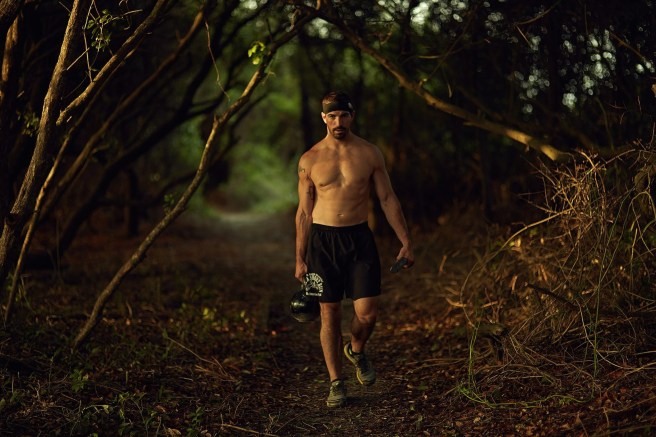
Shuck grew up in South Fayette and is a math, science and language arts teacher at Aiken Elementary School in Greentree. He appeared on the June 27 episode of NBC’s American Ninja Warrior. The episode was filmed in Philadelphia in May and Shuck was eliminated when he slipped on the fourth obstacle and fell into the water. Shuck was climbing up a series of vertical metal bars when he lost his grip and fell.

“I knew I could have done it,” Shuck says. “I was very hard on myself. I took a few days before I was not constantly replaying that and asking what I could have done better.”

Shuck says he would have been less disappointed if he encountered an obstacle he knew he couldn’t complete. He wants to try again next season to prove he can do better. Shuck is already planning his next audition video although there’s no guarantee he will be picked again next season.

“I went out unsatisfied and I couldn’t leave it at that,” he says.

In addition to teaching at Aiken Elementary School, Shuck is also an instructor at Pittsburgh Kettlebell & Performance in Greentree. He trained for a year before he was selected to appear on American Ninja Warrior. He built different obstacles at the kettlebell gym but says he wants to get more practice on actual objects from the American Ninja Warrior course before he submits his next audition tape. If he is allowed to compete again, Shuck says he hopes to complete the course. If not, he won’t try a third time.

“If I don’t make it to the top of the warped wall that will be it,” he says. “I need to do substantially better in order to meet my own expectations.”

Shuck has always been interested in physical fitness and been very competitive. His parents were both body builders and met at a gym. From an early age, they taught Shuck the importance of physical fitness and healthy eating. Shuck participated in football, soccer and wrestling as a youngster. He hopes to someday open his own gym. He started watching American Ninja Warrior about three years ago and was impressed by the level of athleticism the contestants displayed. Many of the athletes also have very inspiring stories.

“Some people have battled through unbelievable circumstances,” Shuck says.

After watching American Ninja Warrior for several seasons, Shuck began to wonder if he could compete on that level. While most people wouldn’t give it a second thought, Shuck says he was looking for a new challenge. He decided to audition and began to train about a year ago. Grip strength is very important to succeeding in the American Ninja Warrior obstacle course so Shuck began to build different obstacles that focused on climbing and hanging.

Shuck submitted his audition tape online in November 2015 which portrayed him training for the competition, working with his students at Aiken Elementary School and leading classes for kids at Pittsburgh Kettleball & Performance. After he submitted his audition, his students asked him every day if he been selected.

“They thought it was the coolest thing,” Shuck says. “They were a part of the process from the very beginning.”

However, Shuck didn’t find out he had been selected until May.  As the weeks of waiting turned into months, Shuck says he gave up hope, especially after he learned that filming had begun for an episode in Atlanta in March.

“I didn’t think it was going to happen,” he says. “I told myself I had missed the boat.”

Finally, Shuck received a phone call in early May while he was leading a class at Pittsburgh Kettleball & Performance. He didn’t recognize the number and let the call go to voicemail. But then Shuck realized the area code was a California number and when he ran outside to check his messages he learned that he had been selected to compete in the Philadelphia episode only two weeks later.

“My head was spinning,” Shuck says. “I had already given up. My mind had already moved past it and the phone call brought everything back. It took a day or two to really sink in.”

Shuck says he’s not as athletic as some of the contestants who have appeared on American Ninja Warrior, but he thinks the producers picked him because they liked how he was involved with kids and fitness.

“TV shows want a good story,” he says.

With only two weeks’ notice, Shuck says there wasn’t much he could do to prepare and he was extremely nervous. For the next two weeks, students at school and people at the gym asked him questions and encouraged him every day.

“There was a constant knot in my stomach,” he says. “I felt a whole lot of pressure not to let people down. They had high expectations of me.”

Before he left, Aiken Elementary School organized a pep rally to honor Shuck. Everyone assembled in the gym where they played a fight song, and several students read aloud letters that described how Shuck had inspired them in different ways.

“That’s worth the price of gold,” Shuck says. “That’s all a teacher ever wants. That will always stay with me.”

Shuck drove to Philadelphia the day before filming began so that producers could interview him and about 60 other athletes who had been selected to compete. Shuck was one of only a few rookies while most of the other contestants had competed in American Ninja Warrior before. Many of the veterans had trained at special gyms that specialized in preparing athletes for the American Ninja Warrior obstacle course.

“Some people dedicate their lives to this and some guys quit their jobs to train specifically for this show,” he says. “They’ve been here before and they know what they are doing. I felt I was at a disadvantage.”

He was very nervous and didn’t sleep well the night before the competition. Because the episodes are filmed at night, Shuck spent the next day in nervous anticipation of what he would face since details of the obstacle course were not released until the last minute. He read some of the letters his students had written in order to try and find some extra motivation before the competition began.

“I wanted to relax but I couldn’t,” Shuck says.

The episode was filmed at an old industrial power plant outside of Philadelphia. After checking in, the contestants finally saw the obstacles they would be facing. The producers allowed the contestants to walk through the course and then let them watch as an expert tackled each obstacle. Shuck was not called to the starting line until about 11:30 p.m., and he says walking out on to the platform was an out of body experience.

“It really hit me that I’m about to do this,” he says. “When the horn sounded my senses shut down. My brain went into tunnel vision. I didn’t hear a single thing.”

Each contestant is allowed to have a team of supporters walk beside the obstacle courses and cheer them on. Although he couldn’t hear them, Shuck says his family were very supportive. His wife, author Ashely Boynes-Shuck, was especially supportive, he says.

“She helped me get my name out there and has been my stability,” Shuck says. “When I was driving myself crazy with doubts and fears she brought me back to earth.”

He completed the first obstacle which was a series of large quintuple steps that were angled at 45 degrees. Successfully navigating the first obstacle helped calm his nerves a bit. At the second obstacle, Shuck grabbed a swinging log and held on tight as it tried to dislodge him.

The third obstacle caused most contestants to fail, Shuck says. It was a series of staggered steps that would tip over as soon as a contestant put any weight on it. The key was to move quickly to avoid being dumped off, Shuck says. He thought he might fall on this obstacle too because he had never really trained for it, but once he reached the other side he felt like he could make it to the end.

However, he lost his grip on the next obstacle and fell into the water. Shuck says he was surprised that all the other contestants cheered and supported each other.

“It was eye-opening to see the closeness between the other competitors,” he says. “I wasn’t expecting that.”

Even though he was eliminated, the producers sent a film crew to Greentree a week later to shoot a segment about Shuck’s background.

American Ninja Warrior is growing in popularity and Shucks says he thinks it might become a legitimate sport. Shuck suggests that anyone who is interested in competing on American Ninja Warrior create a daily plan and focus on grip strength. It’s also important to stay calm and be persistent even when in doubt, he says. The best way to prepare would be to train on actual obstacles from the American Ninja Warrior course and get advice from experienced contestants.

“When you have a passion you have to commit all the way,” Shuck says. “Everything looks easy on TV.”

Treasure in the Attic: Local Author and Teacher Discovers Civil War Letters

Published in IN Community Magazines – Keystone Oaks Summer 2016

PITTSBURGH – Shortly after Carleton Young found a wooden box full of letters from two brothers who fought in the Civil War, he knew he had to write a book about his discovery.

“We immediately realized that this was an amazing collection that we had stumbled upon,” Young says. “We had a story to tell.”

He discovered the letters after his parents died and he started to clean their house in Churchill in 2004. However, it took almost 12 years to complete the project. Young self-published “Voices from the Attic:  The Williamstown Boys in the Civil War” late last year and it is now available on Amazon.com and Barnes & Noble.

Young was surprised to find the letters because his parents had never said anything about them.

“At first I was quite confused,” he says. “I had expected to be familiar with just about everything in the house in which I had grown up.”

Young taught history at Jefferson High School for 37 years and speculates that his parents never told him about the letters because they didn’t know what was inside the box. He says there’s no evidence the box had been opened before he uncovered it. After discovering the letters, Young put them in his sister’s garage in Dormont while he got ready to sell his parents’ house.

After he had a chance to examine the letters Young immediately called his friends Edd Hale and Bill Lutz who taught history at Keystone Oaks High School for decades. Lutz is the true Civil War expert in the group.

“I’ve been a big Civil War buff since the fifth grade,” Lutz says. “I drove over in 15 minutes. I couldn’t believe it. I was flabbergasted.”

The letters were well preserved because they were written on acid-free paper and were jammed into the box so tightly that no light or air could get in. Hale says the letters were written in red, black, blue and green ink and the soldiers’ penmanship was beautiful.

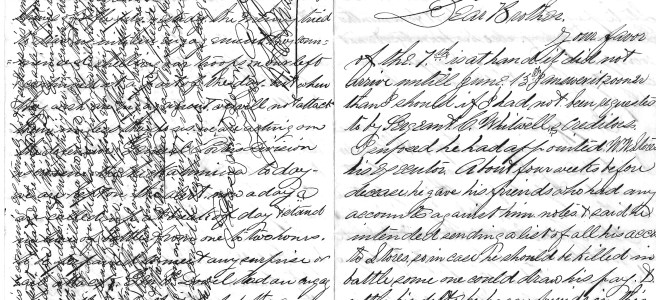
Hale, Young and Lutz began meeting on a weekly basis to sort, organize and transcribe the letters. Hale’s wife Nancy and Young’s wife Carole also contributed to the efforts. However, the group found it difficult to read the documents because the letters were cross written. The soldiers turned a letter 90 degrees and then wrote across their words in order to save paper and postal fees.

Each week the group would meet and examine one or two letters but progress was slow. In addition to cross writing, the group had to deal with misspellings and archaic vocabulary. For example, one letter referred to a stoop which in the 19th century was a covered porch or walkway. Lutz helped fill in other details because he recognized the names of generals and battles. However, there were still moments when everyone struggled to understand a passage.

“There were lots of times when the whole group stared at a letter and mumbled to ourselves for several minutes,” Young says.

It took two years go through all 250 letters and then the group read all the letters a second time to fill in the gaps. They finally finished the transcription in 2008, but the group also conducted research to discover who the letter writers were and what happened to them.

Two brothers, Henry and Francis Martin, from Williamstown, Vermont, were the authors. Henry Martin wrote most of the letters and joined the 4th Vermont Infantry at the start of the Civil War in 1861. His unit was part of the Vermont Brigade which Hale says was an excellent group of soldiers.

“They stood and fought in the worst conditions,” he says. “They didn’t retreat.”

Henry Martin fought in a number of different battles in the eastern theater of the Civil War, including Antietam, Chancellorsville, Fredericksburg and Gettysburg. He was wounded several times and eventually advanced to the rank of lieutenant. He died after being shot in the chest during the Battle of the Wilderness in northern Virginia in May 1864.

His brother Francis Martin joined the Union army as a private in 1863. Hale says at the time nobody thought Francis Martin would be a good soldier because he frequently suffered from depression and was often very ill. Francis Martin was also very pious and published newspaper articles about his experiences during the Civil War. Bill Lutz says none of Francis’ friends or relatives thought he would survive in the Union army.

“Nobody thought he could go and be a soldier,” Lutz says. “But all of the sudden he just sprouted. He wrote home about how healthy he felt.”

Francis Martin was wounded at the Battle of Cedar Creek in northern Virginia in October 1864. He was trying to help another wounded soldier when a bullet hit him just above the ankle. His left foot was amputated, but part of the bone was exposed so doctors had to operate again. Francis Martin was discharged and went home to the family farm that produced willow for baskets, wagons and carriages.

The brothers described battles in a very straightforward manner to each other but were more subtle when writing to their parents, Hale says. The letters often arrived only a few days after were they posted and the soldiers’ family often sent care packages of perishable food, such as butter and pies.

“We were shocked by that,” Hale says. “Today you can’t get a letter in two days.”

The letters included a lot of mundane information, such as how the soldiers constructed their winter quarters, but also provided unique insights. One letter recounted an execution one brother witnessed, and another letter described how Union soldiers burned corpses after the Battle of Antietam instead of burying them. Young later visited the battlefield and showed the letter to a park ranger.

“He told me that he had heard of this occurring but that he had never before seen a firsthand account confirming it,” Young says.

Young eventually discovered a very distant connection to the Martin brothers through his father’s side of the family that came from Vermont. Young and the other members of his team visited the Martin family farm and located the family cemetery as well, although it’s unclear if Henry Martin’s remains were reinterred there. During his research, Young also located a cousin who had some additional letters and Henry Martin’s personal saber. They also went to the battlefields where the two brothers fought and explored archives in Vermont. In one archive they found a number of important documents including the original order form for Francis Martin’s artificial leg and a picture of him after his leg had been amputated.

Young’s wife Carole also found a newspaper article that described what happened to Francis Martin after the war. Carole says the discovery was stunning but her husband says he wants to save the surprise so that readers will find out what happened when they read his book.

“They felt like family,” Carole Young says. “It felt like you knew them.”

Her husband began trying to publish the book in 2010 but he says it was very difficult to find a company that was interested in his manuscript, because more than 50,000 books have been written about the Civil War.

“About one book per day has been published since the Civil War was over,” Young says.

Eventually, he decided to self-publish the book and has given presentations at local libraries, book clubs and historical societies about his work.

“Rather than just walk away from it, I am left with a desire to keep telling the story,” Young says.