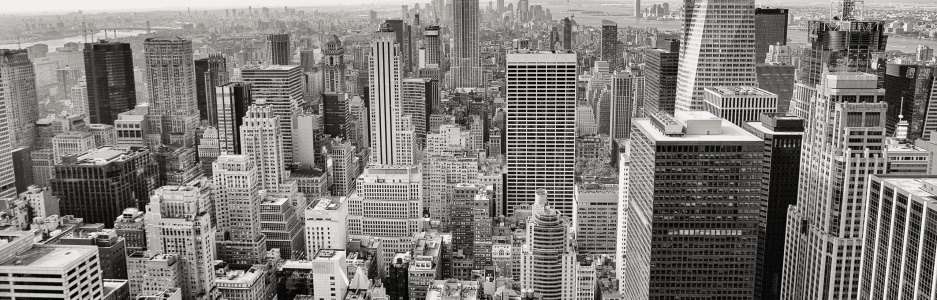
Instead of just letting the good times roll in New Orleans during our holiday vacation, we almost overcommitted ourselves with a full itinerary! At my new job, I can only carry over sick time from one calendar year to the next but not any vacation/PTO. I had a few days left at the end of 2022, and Nataliya wanted to go somewhere warm for a few days while Alex was with his dad for the holidays.
There aren’t many direct flights from Cincinnati anymore and most of the southern destinations are in Florida (which we had visited earlier in 2022).New Orleans seemed like the best fit, and Nataliya had never been (although I had visited in 2017 after I was diagnosed with cancer). We were able to squeeze a three-day trip in between Christmas and New Year’s.
Monday: December 26, 2022
We caught an early morning flight with Allegiant (about $300 per person round trip), and we had to run for it once we got through security! The flight itself was timely and smooth, and we landed around 8 am local time so could enjoy an entire day in New Orleans (several pronunciations are correct but NOT “Nawlins” although it is common in pop culture).
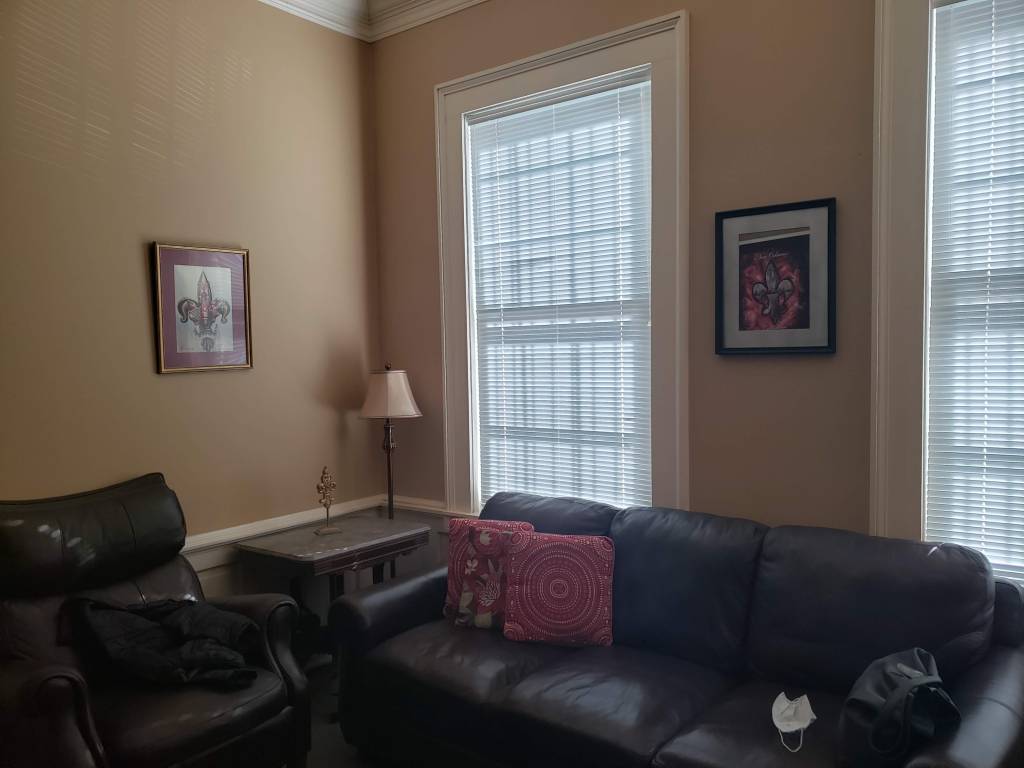

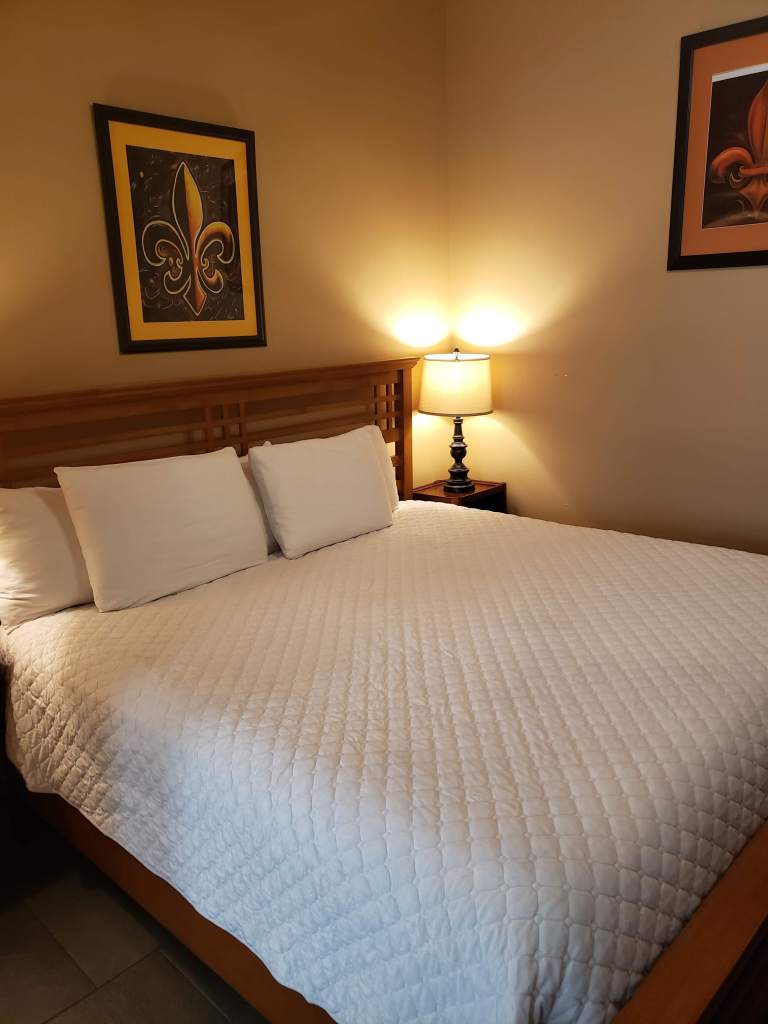
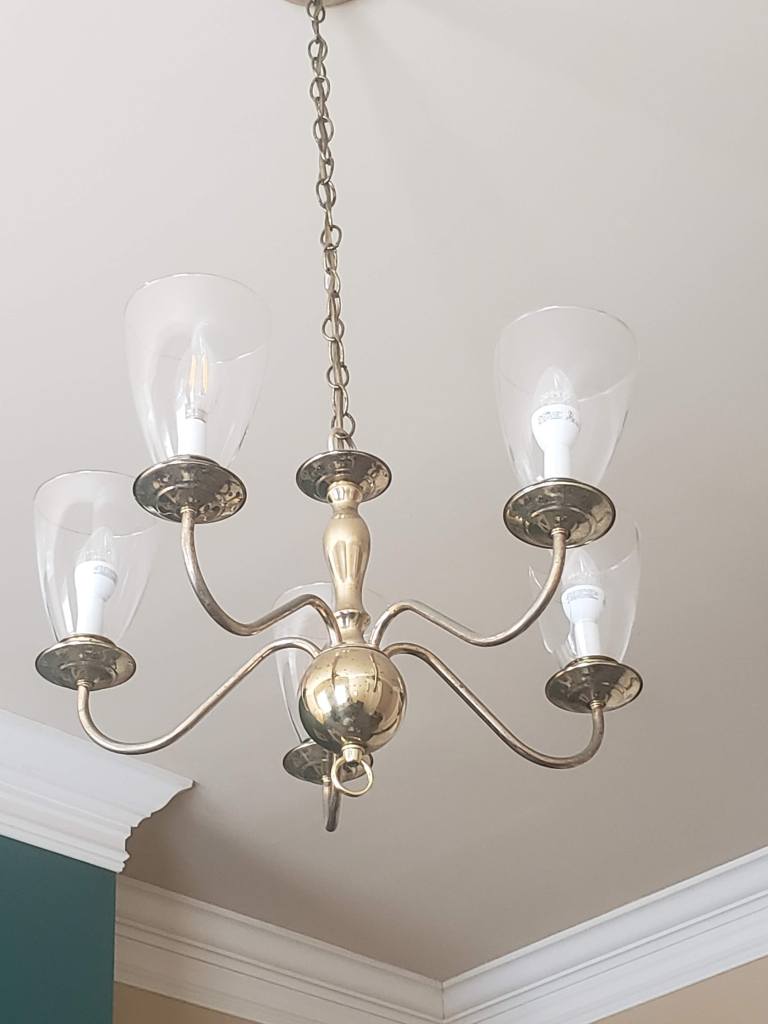
We hired a Lyft ride to our room at the Grenoble House on Dauphine Street in the French Quarter ($150 a night). We were a block away from the infamous Bourbon Street, so it was relatively quiet at night. I though it might be less busy since it was in between Christmas and New Year’s, but boy was I wrong! Even though the official check-in time was 3 pm, the concierge let us put our bags in the room when we arrived at 9 am. Our room had a picture by local artist George Rodriquez of his famous “Blue Dog” (also known as the Loup Garou – French for werewolf), which we later encountered at the art museum’s outdoor exhibit. The room was spacious, quiet, and well appointed. The Grenoble House also has a “European” policy that requires you to turn in your key whenever you leave and pick it up from the concierge when you return.

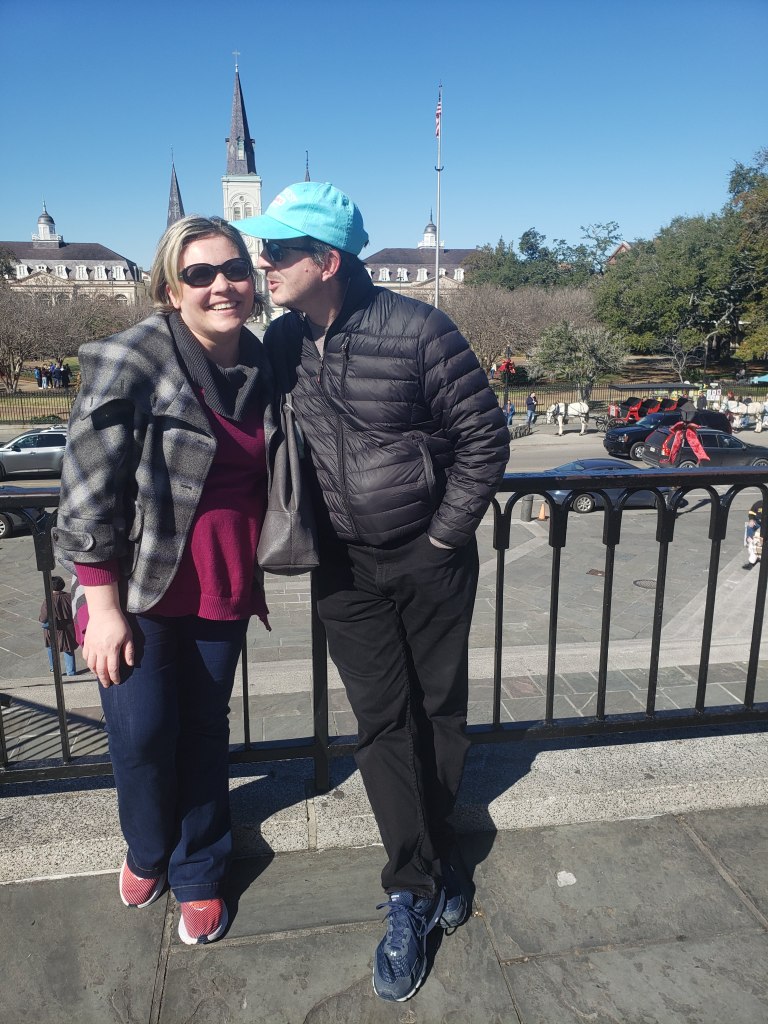
We immediately headed out towards Jackson Square and posed for some pictures at Washington Artillery Park, which was still adorned with a large Christmas tree. Jackson Square is the site of the former military parade grounds during the colonial era and is named for the statue of President Andrew Jackson (who was made famous by his victory at the Battle of New Orleans in 1815) located there. The statue weights 15 tons and was cast in 1852. The square also includes four Spanish cannons captured by American troops. The square hosts various performers and vendors. Since the line was very long every day, we skipped the famous Café du Monde until right before we boarded our return flight to Cincinnati.
Other important landmarks at the square include the Cablido, Presbytere, and St. Louis Cathedral. Built between 1795 and 1799 during the Spanish colonial era (1762-1803), the Cabildo (translated as “town hall”) was the seat of government. After the Louisiana Purchase, it housed the state Supreme Court until it became a museum in 1908 (admission is $10).
The St. Louis Cathedral was originally constructed in 1727 but burned down in the devastating fire of 1788. The current church was completed in 1794 and survived another devastating fire that year.
Construction of the Presbytere began in 1791 as a residence for Capuchin monks but the second floor remained incomplete until 1813. It became a courthouse in 1834 and also became a museum in 1911 (admission $7). New Orleans is home to a number of other interesting museums, including the famous National World War II Museum (which I had visited previously).
After Jackson Square, we explored the French Market, which houses various food stalls and artistic vendors, and ate lunch. The site has served as a market since 1791, but the oldest buildings date to 1813 after becoming American territory (1803).

In the afternoon, we took a French Quarter walking tour organized by the Friends of the Cabildo, a non-profit group that supports the Louisiana museum system. Our tour lasted about two hours and focused on the varied architecture of the French Quarter. Tours are available at 10:30 am and 1:30 pm daily at a cost of $25 per person. The Friends also offer many other tours that focus on the Battle of New Orleans and other neighborhoods, such as the Tremé (featured in the HBO series of the same name from 2010-2013). The Friends also host film screenings, lectures, and concerts. I joined the Friends after my previous trip since many of their lectures are also available over the internet. The fee is $55 per year for a family and includes free museum admission and tickets for a walking tour. It’s a great deal and helps support the museums.
I’m not much of an architectural expert, but the French Quarter walking tour was very informative. Our guide was very personable, and he explained that, due to the fires of 1788 and 1794, there are hardly any original French colonial buildings left in the French Quarter. In fact, most of them were built during the Spanish and American eras. The highlights include Creole Cottages (a single-story blend of Caribbean and French-Canadian design), Creole Townhouses (multi-story mixed use structures built in the Spanish style after the fires), and shotgun houses. We stopped for our first of several beignet tastings at Café Beignet. The beignets made a good first impression (drizzled with chocolate sauce), but we still had several competitors to sample.
Tuesday: December 27, 2022
We woke up and had an early breakfast at Café Conti around the corner (located in the Prince Conti Hotel). It has a full brunch menu on the weekends but a more limited selection on weekdays, such as muffins, yogurt, etc. However, it was quick and convenient which makes it an excellent option in the north/western part of the French Quarter.
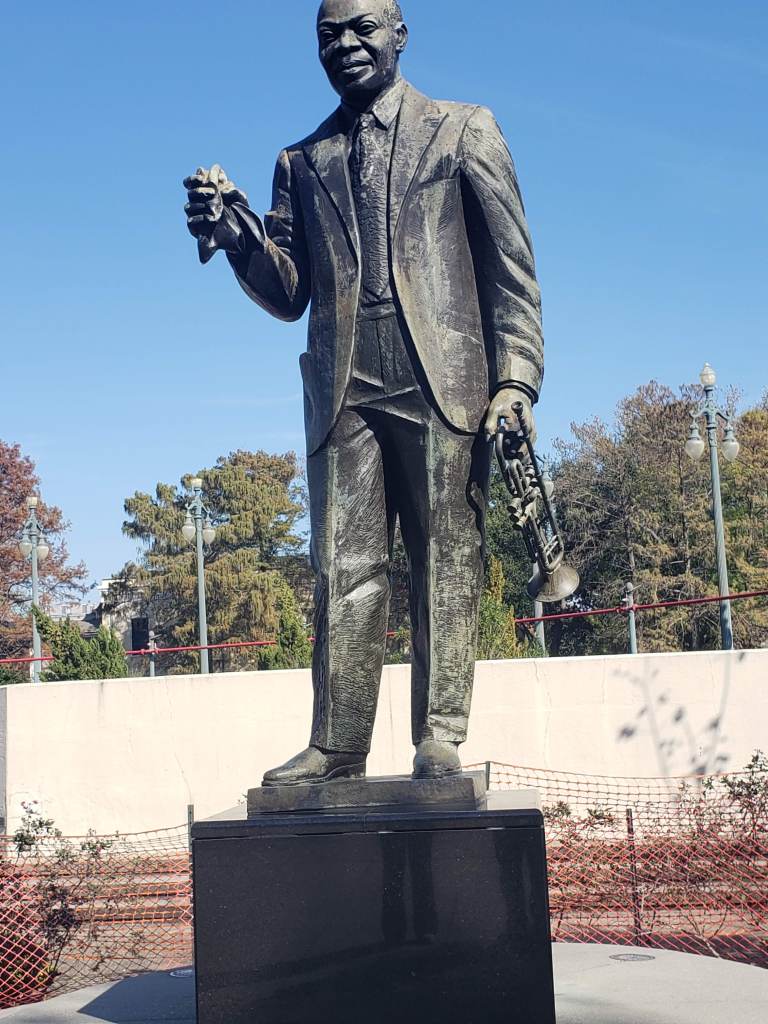
Our first destination was the Louis Armstrong Park (Congo Square), which was only four blocks north. It contains some very interesting sculptures that honor Louis Armstrong and the musical heritage of Congo Square. The site is known as the “birthplace of jazz” thanks to the cultural influence of African slaves who met there to dance and play music during the colonial era and afterwards. The park was created in 1980 and includes the Municipal Auditorium, Mahalia Jackson Theater, and the New Orleans Jazz National Historical Park.


Built in 1930, the Municipal Auditorium seated 7,850 and was a popular venue for concerts and sporting events. However, it was badly damaged by Hurricane Katrina in 2005 and has never reopened. It’s a shame to see such a majestic structure become covered in graffiti. However, there is a $47 million plan to restore the auditorium to its former magnificence which is long overdue!
The theater is named for gospel singer Mahalia Jackson and opened in 1973. It seats 2,100 and was also damaged by Hurricane Katrina. However, it reopened in 2009 and is hosts ballet, opera, and Broadway productions. Unlike the old Municipal Auditorium, the Jackson theater’s architecture is rather plain and unappealing.
The Jazz National Historical Park was created in 1994 and the centerpiece is Perseverance Hall No. 4, a Masonic lodge from the early 1800s. Perseverance Hall is historically significant since it hosted dances where early jazz bands performed to both white and black audiences. It was placed on the National Register of Historic Places in 1973, but has not seen much use since 2018, which is also a shame! WWOZ 90.7 FM, a non-commercial jazz and blues station, also broadcast from the former Perseverance Hall commissary from 1980-2005. The building became known as the “treehouse studio” since it was surrounded by oak trees. After Hurricane Katrina, WWOZ relocated near the French Market.
The Jazz National Historical Park hosts concerts periodically, but I’d like to see the city do more to preserve its cultural legacy besides just letting the building sit empty most of the time! The beautiful Municipal Auditorium deserves to be more than an eyesore as well. It seems hard to believe that the damage from Hurricane Katrina still lingers nearly 20 years after the disaster.
Next, we boarded a New Orleans Regional Transit Authority (NORTA) bus towards the New Orleans City Park, which includes the art museum. We had purchased a three-day Jazzy Pass for $8 through NORTA’s Le Pass mobile app. It’s a great deal and easy to use. You can also use it to ride the trolley which Nataliya eagerly anticipated!
The 1,300-acre City Park offers numerous attractions and activities including: a botanical garden, amusement park, and a putt-putt golf course. A secret tip for tourists is that the park also features a Café du Monde location which is rarely busy (as opposed to the Jackson Square location).
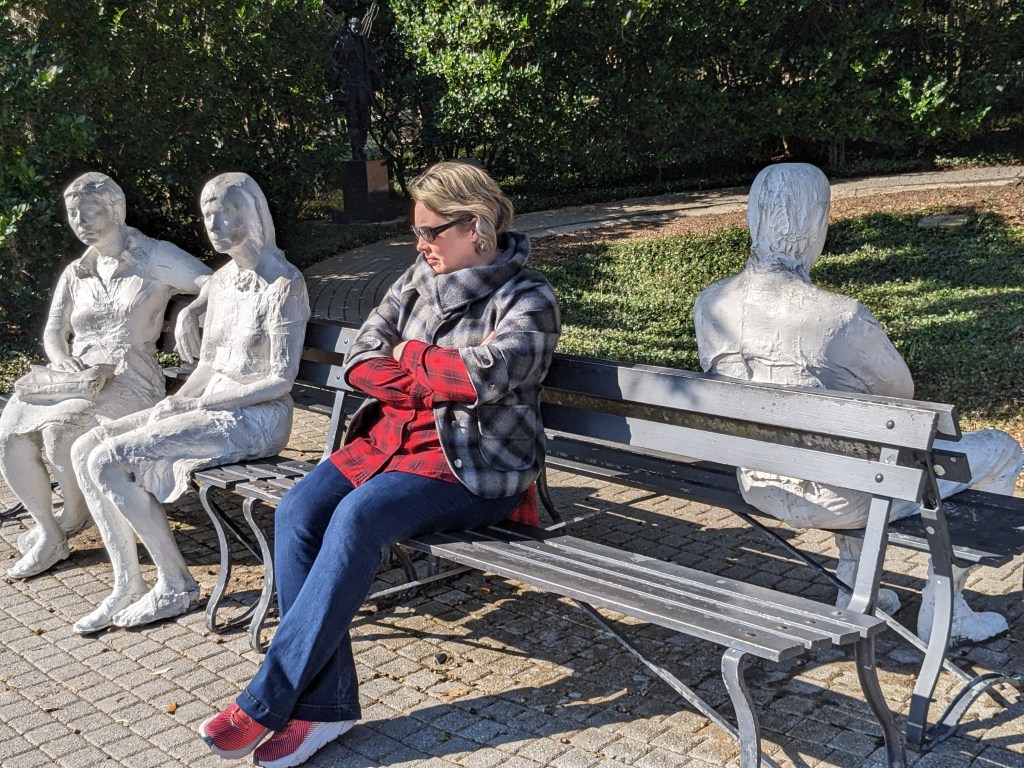
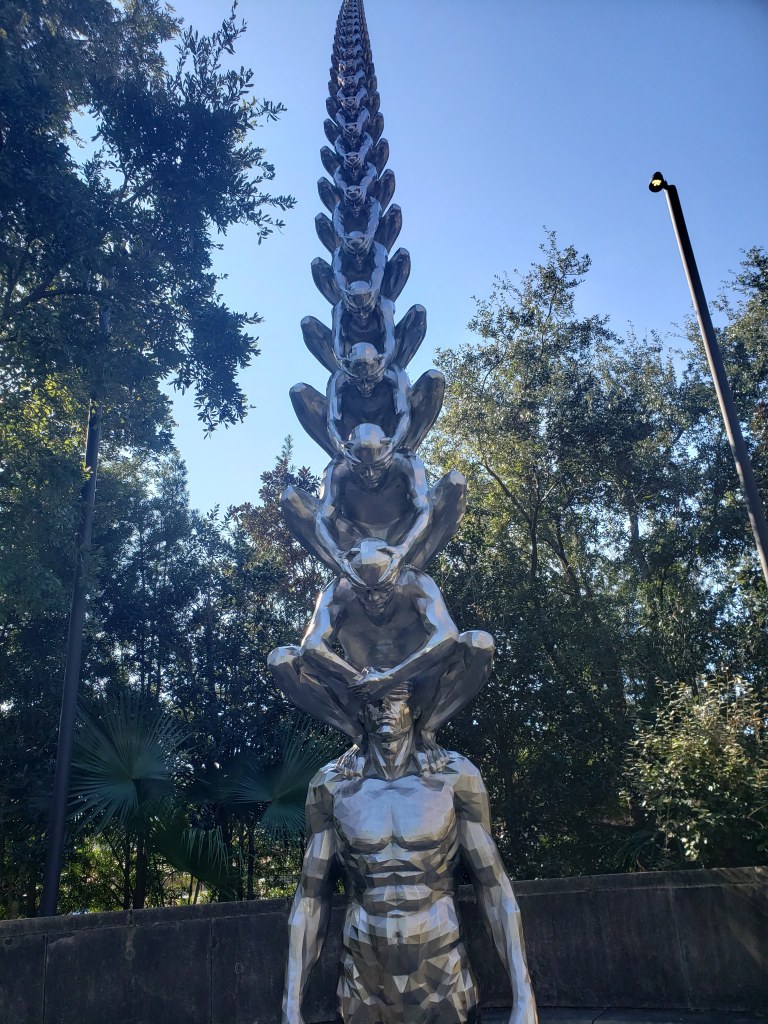
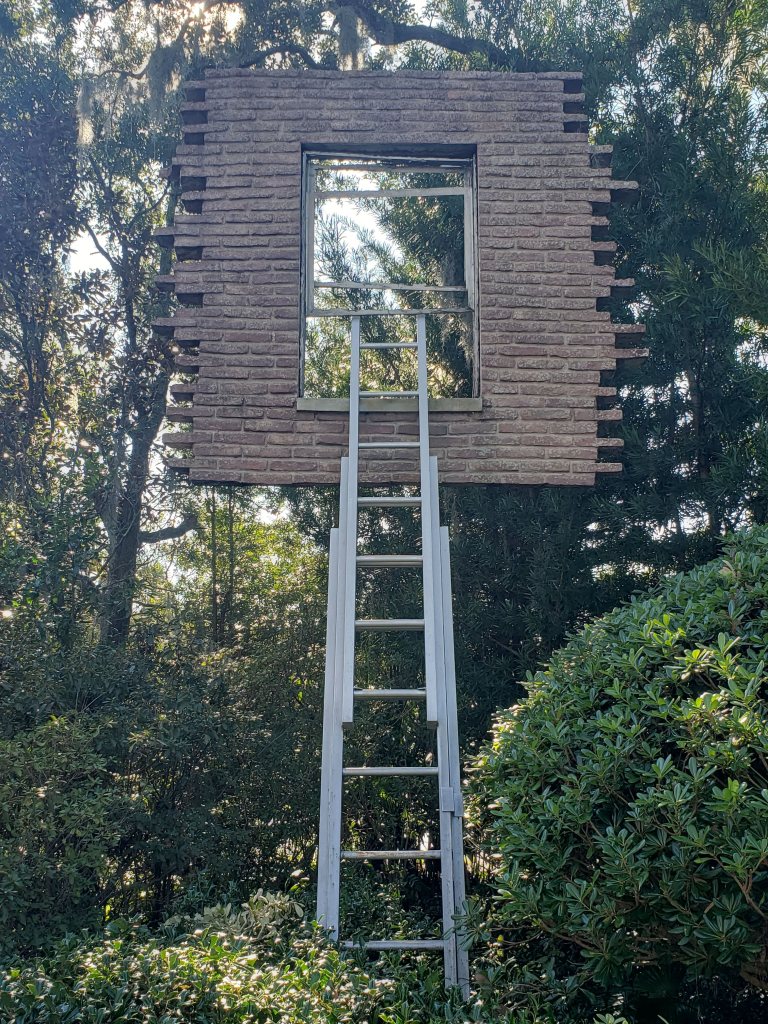
We toured the sculpture garden but didn’t visit the museum since we already had a full itinerary. The garden features a wide variety of sculptures from artists around the world, including the ubiquitous Blue Dog. If you can escape the French Quarter, I highly recommend a visit to City Park, with the aptly named Big Lake.


We grabbed lunch at MOPHO, a Vietnamese fusion restaurant near the park. The menu includes Paprika curry shrimp and grits along with Vindaloo barbeque, but we opted to share a huge bowl of chicken pho (soup). Although I love our local Cincinnati Pho Lang Tang, MOPHO’s broth was very flavorful!
We headed back to the French Quarter for our first chance to slow down and take a nap back at the hotel. This ended up being our only real chance to rest and relax during our fun-filled trip!

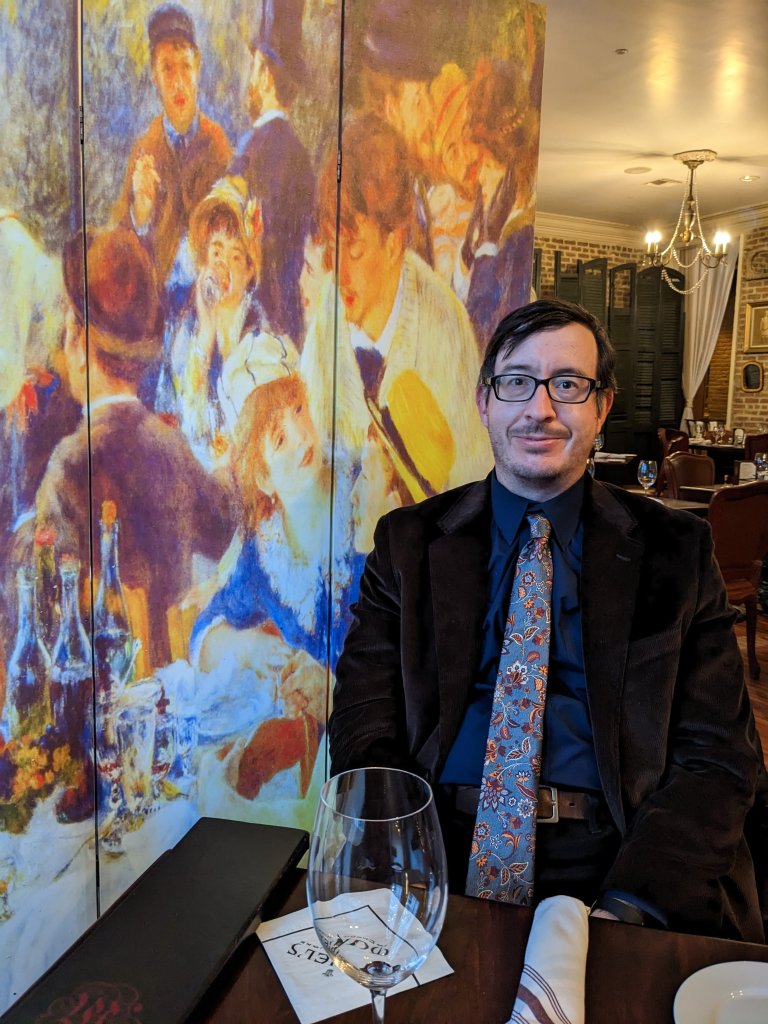
After some much needed R&R, we had a very nice dinner at Muriel’s on Jackson Square (recommended by our tour guide on Monday). The building has served many different functions during the last 200 years, and the restaurant opened in 2001. The building is said to be haunted by the ghost of a man who killed himself there in 1814 after gambling away his house. The restaurant has a room called the Séance Lounge where the ghost is thought to reside and always keeps a table reserved for him (set with bread and wine). The ghost has been said to knock on walls and occasionally throw glasses into the air. For dinner, Nataliya and I shared the roast duck with rice pilaf, haricot verts, and a deliciously tart cherry sauce.
Wednesday: December 28, 2022
Today was the six-year anniversary of my cancer diagnosis, although we were so busy that I don’t think I realized it until we arrived back in Cincinnati the next day. I have been extremely fortunate to be mostly in good health for the last six years and doubly fortunate to travel so much with someone I love!
On our last day in the Crescent City, Nataliya checked several of her top priorities off our list of activities. Since we began planning the trip, Nataliya was eager to ride one of the streetcar trolleys, which were similar to the trams in her native Ukraine. The first horse-drawn streetcars date in New Orleans date back to the 1830s, and the first electrified trolleys were introduced in 1893. After the 1920s, buses began to replace the streetcars, and they had nearly disappeared from New Orleans by the 1960s. Preservationists lobbied to reintroduce the historic streetcars during the 1980s and four transit routes currently use trolleys. Nataliya and I got to ride on one of the historic green 1923 model streetcars as we headed to the Garden District for another architectural tour. Beware, the trolleys are extremely popular with tourists so there can be long lines. Sometimes trolleys are too full to accept new passengers, as happened on our return trip.
The New Orleans streetcar system was made famous by author Tennessee Williams’ 1947 play A Streetcar Named Desire which became an acclaimed movie in 1951. The title came from a streetcar line that existed at the time in the French Quarter but is now defunct.

Nataliya was eager to see some of the beautiful homes of the Garden District and also wanted to visit an iconic cemetery. Tours by Steven seemed to offer just the right thing ($30 per adult) by combing both. However, in the small print the website explains that the cemetery is closed to the public so we could only see it from the gate.
Our tour guide was again very knowledgeable and charismatic. It was an informative and interesting tour that highlighted the architectural history of the elegant neighborhood.


A couple of the most interesting locations include the mansion of Colonel Short and the home of author Anne Rice. Colonel Short built his Italian Renaissance style mansion on Fourth Street shortly before the Civil War. It was seized by federal forces when they occupied the city in 1862, and it underwent a decade-long restoration from the 2000s to 2010s. One of the mansion’s most famous features is its cornstalk themed iron fence, supposedly to placate the colonel’s wife who pined for her native Iowa.
The Brevard-Rice House on First Street was built in the Greek Revival style in 1857. Anne Rice bought the house, which is said to be haunted, in 1989 and lived there until 2004. Other notable locations included houses owned by the Manning family (of football fame), actor John Goodman, and actress Sandra Bullock. The Garden District is home to many other famous properties.
At the end, we learned a little about the history of Lafayette Cemetery No. 1 and peered in through the gate, although Nataliya was a little disappointed we couldn’t go inside. There are about 1,100 family tombs in the cemetery and 500 wall vaults. The cemetery was originally located in the suburban town of Lafayette which was eventually annexed by the City of New Orleans. The vaults can house the remains of several generations of family members. The cemetery served as the inspiration for Anne Rice’s Mayfair witches in her novel The Witching Hour (1990) and has been featured in several films, including Double Jeopardy (1999) and Dracula 2000 (2000).

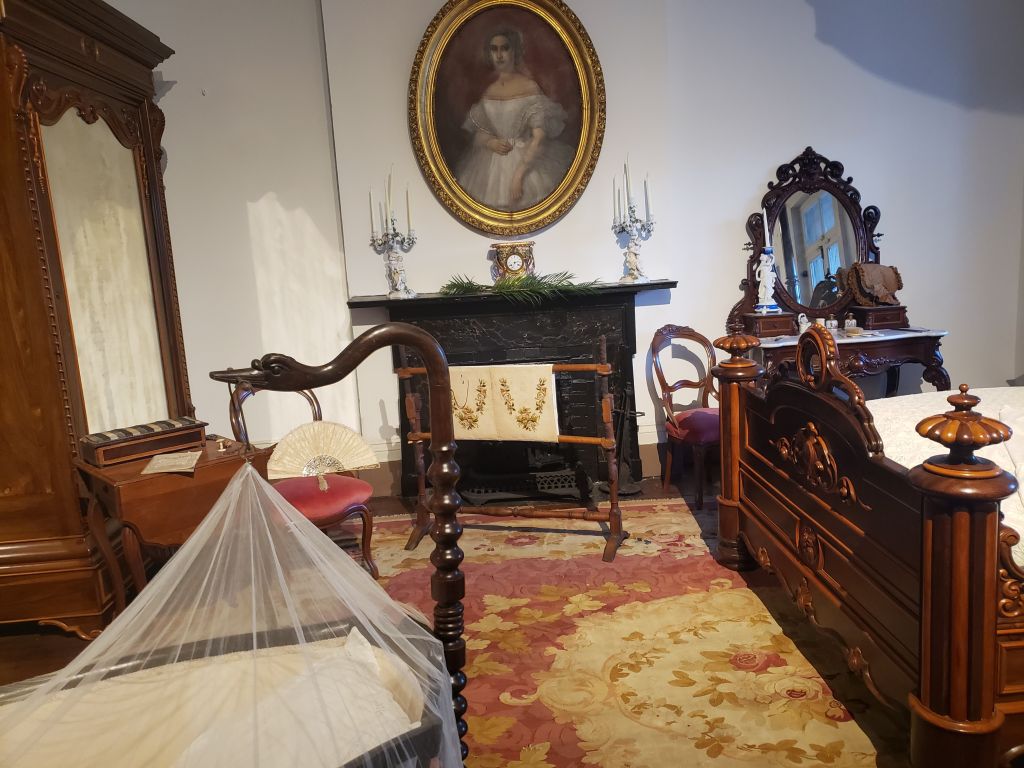

We went home for a brief lunch and siesta before visiting the 1850 House museum on Jackson Square. Admission is normally $5 per person, but we received complimentary tickets as part of our French Quarter walking tour package on Monday. The building was constructed in 1850 by the Baroness Micaela Almonester de Pontalba, and it eventually became a museum in 1948. It is furnished to represent how an affluent upper-middle class family would have lived in the decade before the Civil War. When we visited, there were several knowledgeable historical interpreters who were dressed in period clothes and provided thorough answers to Nataliya’s questions. It wasn’t very busy and provided a lot of interesting information about the Pontalba family’s influence on the history of New Orleans, including their sponsorship of the St. Louis Cathedral, Presbytere, and Cabildo. It’s certainly easy to overlook it but there’s no excuse to pass it up if you’re already at Jackson Square.

The museum only occupies a portion of the Pontalba building on Jackson Square which includes a number of apartments owned by the city. Author Truman Capote describes the apartments as “the oldest, in some ways most somberly elegant, apartment houses in America” in a short story titled “Hidden Gardens.” Although they rent for between $2,800 and $4,650 per month, it’s easy to see why there is a long waiting list of 150+ applicants eager to live there.
We stopped for a snack Loretta’s Pralines in the French Market for another beignet sample. Loretta’s offers a variety of stuffed beignets, but some types are seasonal and a few others were out of stock. We decided to try the chocolate filled beignets which were tasty but quite different from traditional beignets since they are usually on the lighter and fluffier side. Loretta’s were much denser since they use wet dough as opposed to the traditional yeast dough. However, if you’re not a beignet purist, I suggest you give it a try. Next time, I’d like to try some filled with peanut butter or blue crab!

We finished off the night with a dinner cruise on the Creole Queen paddleboat ($95 per person). The Creole Queen departs at 7 pm, so we had tried to book an earlier cruise (6 pm) on the rival steamboat Natchez. But it was already sold out so don’t wait until the last minute. The Creole Queen offers daytime cruises ($59 with lunch or $39 without lunch) and Sunday jazz brunch options too ($65 per person). The dinner menu included salad, gumbo (which Nataliya eagerly anticipated), jambalaya, baked chicken, roast beef, red beans and rice, various other side dishes, and white chocolate bread pudding for dessert (unfortunately I only had a small bite since it was soaked in whiskey sauce). There was a jazz band that played throughout the night which was our first musical experience in the trip. The performance was pleasant and included New Orleans staples such as “When the Saints Go Marching In.” The food and music were both enjoyable, but I’d love to time for more live music on our next trip!
Thursday: December 29, 2022
We managed to squeeze in one last taste of New Orleans (literally) before heading home: the airport terminal location of Café du Monde. We saved the most iconic for last with a traditional order of light and crispy beignets. Overall, Café du Monde won our taste test.
However, one of my aspirations this trip remained unattainable: seeing the iconic Preservation Hall jazz band perform! Since 1961, the venue has worked to preserve the musical traditions of New Orleans and has become one of the most famous music halls in the Crescent City (so named because of the city’s location on a sharp bend in the Mississippi River). Preservation Hall features three house bands: the brass, All Stars, and Legacy groups. Even on weekdays in between to major holidays, the tickets were sold out ($25-40) for all four nightly shows (5, 6:15, 7:30, and 8:45 pm). Hopefully, I’ll be back soon and get another chance!
I’ve also never experienced Mardi Gras in New Orleans – the closest I’ve been is the Mardi Gras parade at Universal Studios. Unless a new medication is discovered to treat my cancer, I’m resigned to the fact I’ll be sober every time I try to laissez le bon temps roulez. But it still might be fun to see New Orleans at its most vibrant! New Orleans is still one of the most exciting cities in America – the food, music, culture, and history are all outstanding!
Postscript

We also had fun a few weeks later at the Alliance Francaise’s Mardi Gras Celebration at Brew River. The event included a buffet and live music by local New Orleans jazz band Lagniappe (translates as “a little something extra”). The jambalaya and chicken were both flavorful although not overly spicy. Nataliya enjoys the Left My Heart in Nola cocktail with pineapple juice, lime juice, simply syrup, vanilla vodka and a marshmallow heart as garnish. I also had the chance to partake in a non-alcoholic “mocktail,” which are becoming increasingly popular. It had cranberry juice, pineapple juice, and Sprite, which made it my ideal drink, since I also try to avoid caffeine late at night. For the last few years, Brew River has been one of our staple date night destinations since they frequently host one of my other favorite local musicians, pianist Ricky Nye. The chefs worked under Emeril Lagasse in New Orleans, and they have really captured the flavor and attitude of the Crescent City (in some ways better than a water-down version at a tourist trap).

 Freelance Writer Paul Glasser