Brown County, Indiana – October 2022

Originally, I had planned to visit Paris in the fall with my dad (long delayed by COVID), but it has been rescheduled yet again until 2023! Since I already had an October vacation scheduled at work, I took a short hiking trip to Brown County, Indiana, instead. Brown County has been billed as the “Little Smokey Mountains,” and, although I discovered the comparison is not really apt, I still enjoyed myself.

Nataliya also had some time off during the week, so she joined me on the first leg of the trip to Versailles State Park in southeastern Indiana (about an hour west of Cincinnati). We arrived at lunchtime and ordered takeout from the Hong Dragon in Versailles. The food was inexpensive with very large portions and lots of vegetables (just as Nataliya prefers).

The park admission fee is $9 for out-of-state visitors, and the park has several hiking, biking, and horseback trails. The hiking trails are relatively short and easy, so Nataliya and I actually hiked one of the mountain bike trails (#6, about 4 miles long and moderately difficult). We didn’t encounter any bikers since we visited on a weekday, and only a few other hikers. Overall, the trail wasn’t too challenging but didn’t offer any scenic views either.

Afterwards, we stopped to rest on a park bench near the picturesque Versailles Lake. We spotted several fascinating herons on the Fallen Timber Creek. In the summer season, fishing and boat/canoe rentals are available. The park also includes a swimming pool and campgrounds.

Since Nataliya works on the weekends, she drove home separately while I continued on to my Airbnb rental in Nashville (not to be confused with its more famous namesake in Tennessee). Nashville was 90 minutes west of Versailles and about 2.5 hours from Cincinnati. I stayed in an apartment in Franklin Square which was quiet and comfortable, aside from the futon/couch. After a long day of hiking, I tried to grab a quick bite to eat at Brozinni’s Pizza; but, much to my dismay, I waited nearly an hour for a carry-out order for a single calzone! The chicken, bacon, and ranch calzone was tasty, but it wasn’t worth to wait!

Nashville only has a permanent population of 1,200 but has a long history as a haven for artists. Numerous artists are still active, and you can visit dozens of galleries exhibiting paintings, stained glass, and sculptures, among many other creations. However, I didn’t have time to visit any galleries since I was only interested in hiking. But I would certainly diversify a little if I were in town again in the future for more than just a couple days. Bloomington is on the western side of Brown County Park and about 30 minutes west of Nashville. It’s a little further away but also offers more amenities and housing options since it’s the home of Indiana University.

Day 2: Brown County State Park

I tried to get up early and grab a bite to eat at a coffee shop so I could maximize my hiking time, but I was thwarted! Although there are several coffee shops in town, none of them opened before 9 a.m., not even the brunch diner! After a brief, fruitless search in the cool crisp autumn dawn, I settled for a cup of instant protein oatmeal back at my rental unit.

On the other hand, I was relieved to discover that the famous Brown County State Park is open at 7 a.m. (also a $9 fee). I started off with a short and easy hike around Ogle Lake ((trail #7, 1.5 miles). I added on a short, steep climb up to the camping grounds (trail #5, .75 miles, rugged). The lake was very quiet and scenic, with only a few other hikers. I was a little early for the full autumn foliage color, but it was still very pretty. My only complaint was that some of the wooden plank platforms around the lake were a little uneven.
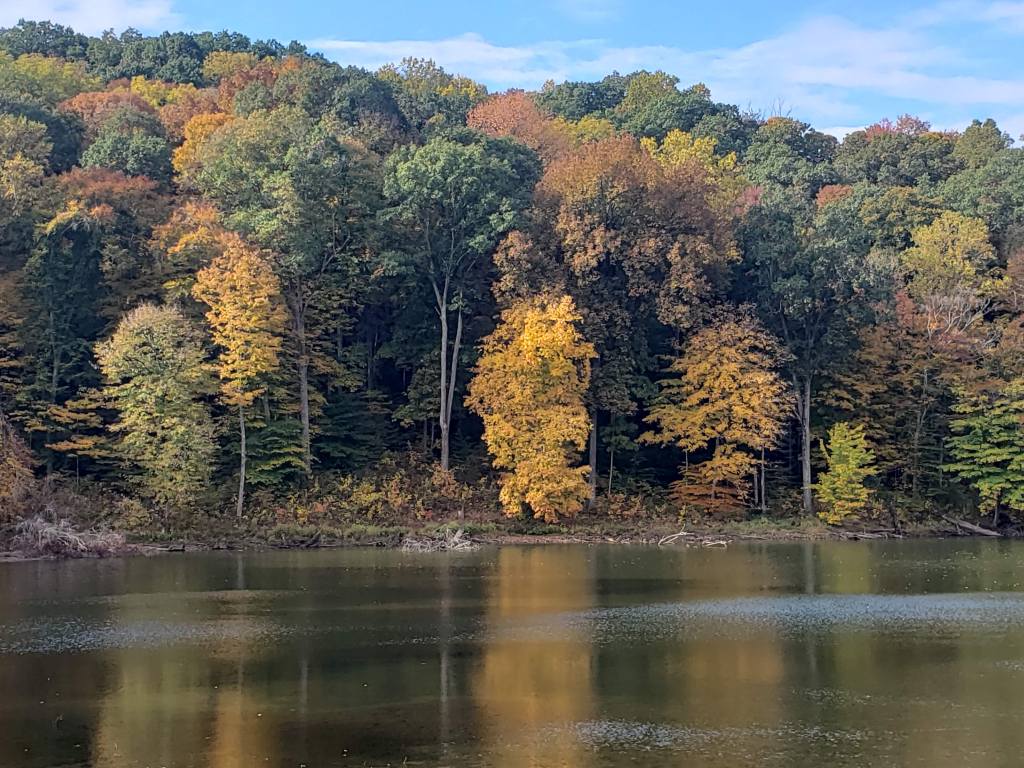
Next, I took another hike around Strahl Lake (trail #6, 1.5 miles, rugged). The trailhead is located at the nature center and begins with an extended descent down to the lake. The lake was also peaceful, but the wooden plank platforms were even more decrepit than those at Ogle Lake. However, the lake does over a good view of a pine tree plantation planted by the Civilian Conservation Corps (CCC) to stop erosion in the 1930s. Be prepared for a long, steep climb back up to the nature center with numerous staircases along the way!

I arrived back at the nature center in time for a short presentation about local Indiana snakes by the park naturalist Eli, who was very knowledgeable and enthusiastic. He also organized an autumn foliage tour on the short (1/2 mile) Discover Trail, which was very interesting as well. Eli also explained some of the history of the CCC in the park and pointed out the location of the remains of the nearby CCC barracks.

The ruins are located across the street from the nature center but aren’t marked on the map. The “trailhead” for the path is hidden at the back of a nearby picnic area but isn’t marked by any signage. The path is nearly indiscernible and heavily overgrown, but intrepid hikers can find the ruins about 100 meters into the brush. It’s unfortunate the barracks (including a recreation hall and dining facility) were demolished in the 1960s, but the ruins are still an interesting and hidden attraction. But I wish they were more accessible to the public!

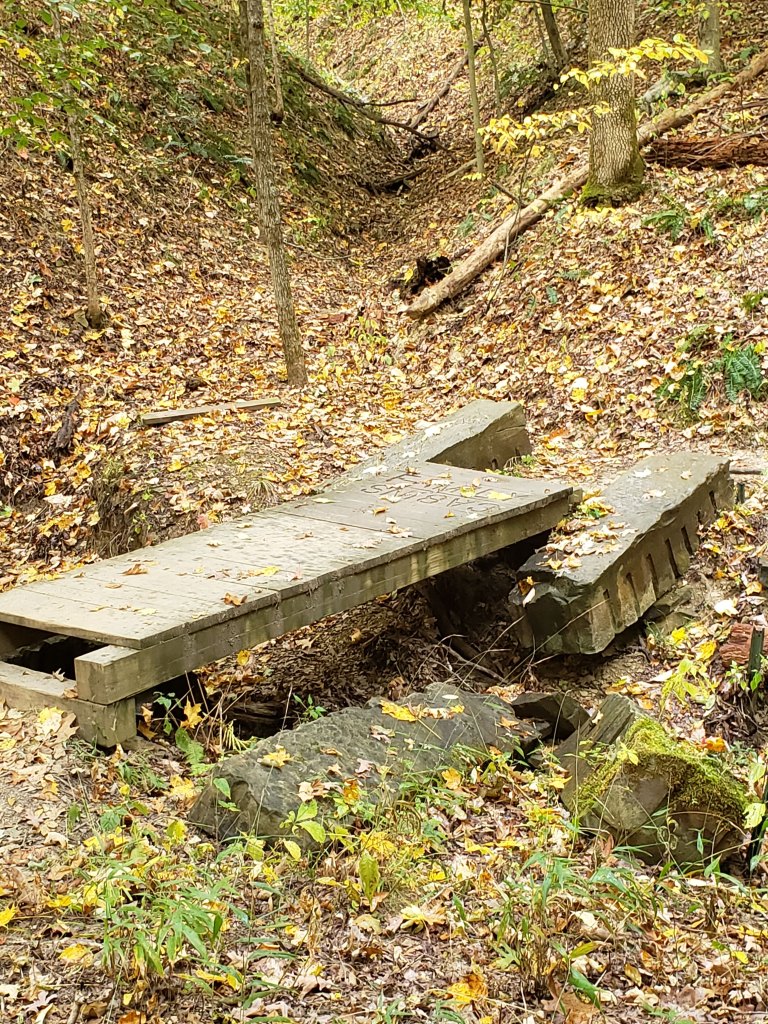
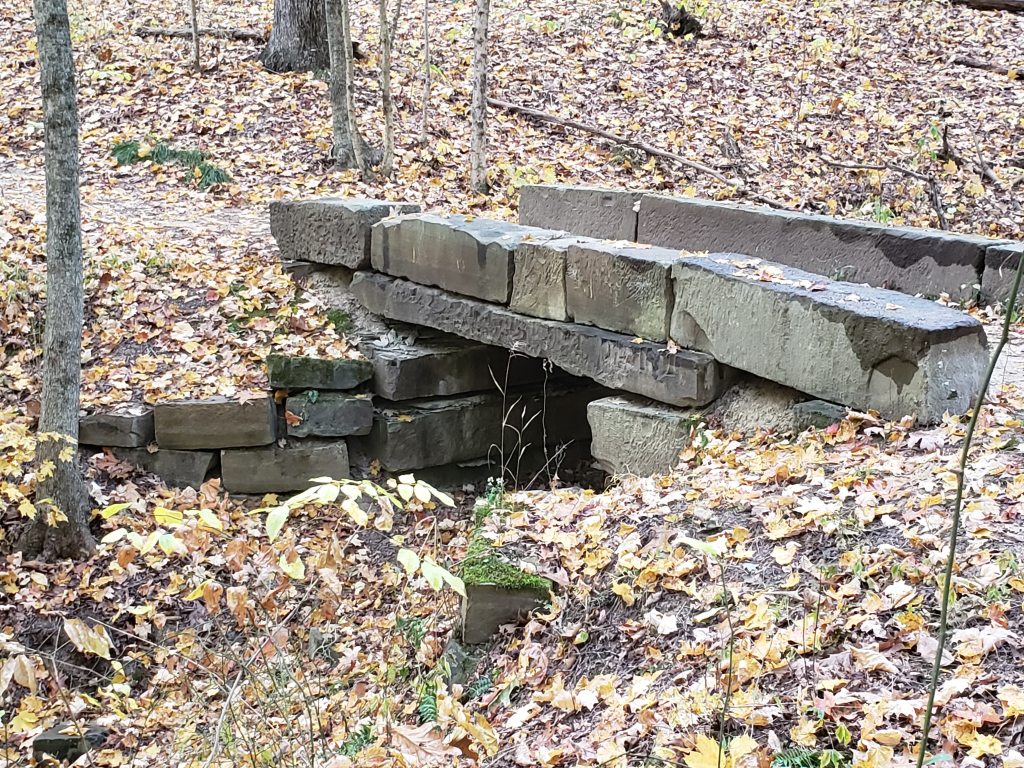
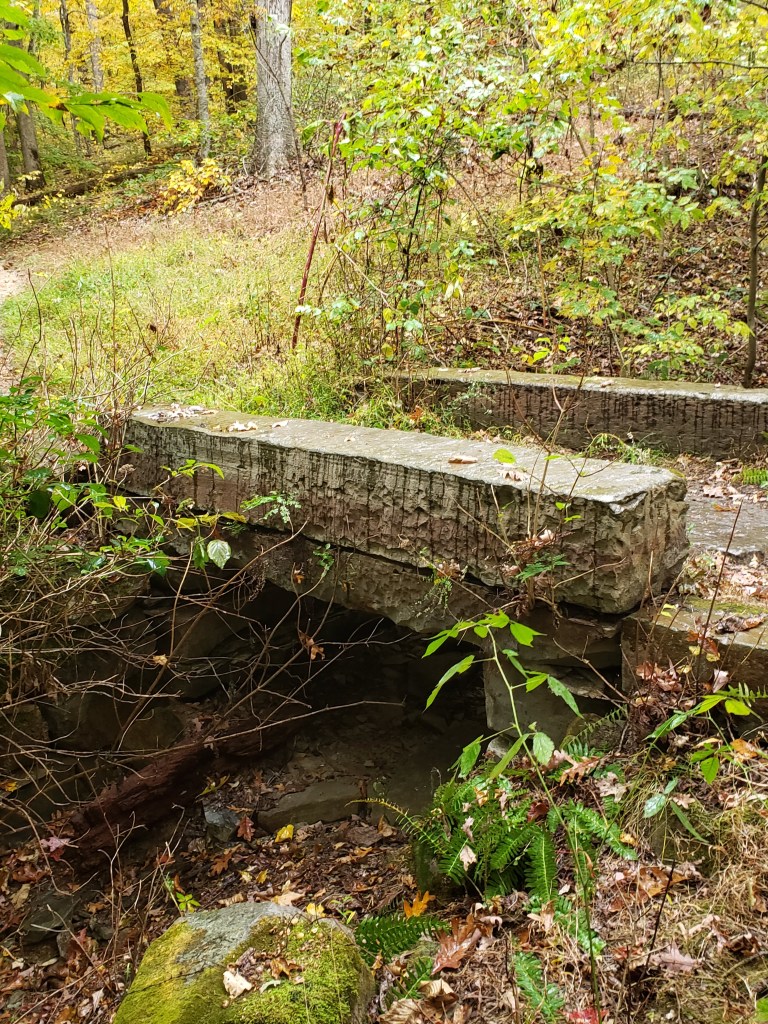
I finished off the day on trail #2 (2 miles, moderate) which features several stone bridges also built by the CCC. The trail loops around several clusters of cabins near the Abe Martin Lodge and passes by the northern lookout tower. However, several of the stone bridges are near collapse and one already has! It was disappointing to see the state of disrepair, especially when the parks charge an admission fee! The parks should do more to maintain and preserve the legacy of the CCC in Brown County.
I stopped to try and catch a scenic sunset at Hesitation Point but was thwarted by heavy cloud cover.

On my way back to my rental, I stopped at the Chocolate Moose for an enormous bowl of s’mores style ice cream. It was tasty, but the graham cracker crumbs were too sparse to add much flavor.

Overall, Brown County State Park was just that – a state park in need of maintenance. There are certainly some hills in the area, but they aren’t even in the same league as the Smokey Mountains. Someone could only make that mistake if they’ve never left Indiana….

Day 3: Yellowwood State Forest

For my last day of hiking, I decided to visit Yellowwood State Forest instead of going back to the Brown County State Park, since I felt like I had seen the main highlights there. The forest preserve did not charge an admission fee and was nearly deserted! The forest is named for the rare native Yellowwood tree which is native only to Brown County.

I started out with a short, easy hike on the Resource Management Trail (trail #2, 1 mile). The trail features lots of educational signage which also tries to justify logging as a way of “managing” the forest.

I spent the rest of the day on another loop around Yellowwood Lake (trail #1, 4.5 miles, easy). The 133-acre Yellowwood Lake was dammed in 1938 by the Works Progress Administration (another New Deal program to create jobs and improve infrastructure). The forest was nearly deserted, and I was pleasantly surprised to find two garter snakes sunbathing on the path! You can also add on a steep climb on the High King trail (1/2 mile, rugged) with a view of the lake from the peak.

The Scarce O’Fat trail connects with the much longer Tecumseh Trail which stretches 42 miles north to the Morgan Monroe State Forest. The Tecumseh Trail also passes through many other parks and nature preserves in the region, so it’s a good option if you’re up for a longer backwoods trek.

Overall, my Indiana hiking trip was a great respite from packing up my belongings in order to relocate by the end of October. The clean air, rustic quietude, and natural beauty were refreshing. I also enjoyed being mostly unplugged for several days. I’m only sorry Nataliya couldn’t accompany me the whole time!

However, the “crown jewel” of Brown County State Park was nice but hardly the must-see destination that it’s been made out to be by influencers on Instagram. A longer stay would also give me more time to explore the art scene and the numerous other nature preserves and forests in the region. Brown County may not compete with the Smokey Mountains, but it’s a good alternative if you’re looking for something different besides Red River Gorge and Hocking Hills.

Ukrainian Cleveland – June 2022

When I was laid off in June, a friend suggested that I take a vacation before looking for a new a job. He suggested that I go drink Mai Tais on a beach in Thailand, but, since the quickest flight to Thailand is 24 hours one way, I opted for non-alcoholic beer on the shores of Lake Erie instead.

I had taken a quick trip to Cleveland several years ago before the pandemic, and I had wanted to go back and visit a couple of things I had skipped the first time around. Nataliya wanted to go back to Michigan, but we settled on Cleveland since we only had a couple days off before I started my new job.

On the way north, we stopped for lunch at the Brown Bag Deli in Columbus. Both our sandwiches and the cranberry apple salad were delicious with generous portions. The salad had tons of dried cranberries with crisp juicy apple slices. I had Leroy’s Smokin’ Sandwich with pastrami, smoked ham, smoked cheddar, sauerkraut, and 1000 island dressing on grilled rye. Nataliya had the Molly’s Favorite with turkey, sundried tomato pesto, mozzarella, and spinach.
Before checking in at our AirBnB rental, we explored the Cuyahoga Valley National Park. Originally designated a national recreation area in 1974, the area was later redesignated as a national park in 2000, despite complaints that area did not meet the standards for such status. Unfortunately, I tend to agree; although the Cuyahoga Valley is very pretty, it isn’t even in the same league as Mammoth Cave, Death Valley, or the Grand Canyon. It would be perfectly adequate as a state or local park. Nevertheless, it does have a lot of history and offers lots of hiking opportunities.

The park contains a section of the old Ohio and Erie Canal, which stretched from the Ohio River to Lake Erie. The canal was built during the 1820s and 1830s, but only operated until 1861 when it was surpassed by the railroad. After the 1860s, the canal decayed due to neglect and flooding. The canal is the “backbone” of the national park and nearly 20 miles of the original towpath, where horses pulled barges along the banks, have been restored as a hiking trail.

The Blue Hen Falls trail was our first destination which was a 2.5-mile round trip. The path was moderately difficult since we climbed and descended several hundred steps. In addition, the trail crosses a road and approaches the interstate as well, which brings a lot of traffic noise. However, the falls were very quiet and calm, although the final descent to the falls was very steep and muddy.

A park ranger suggested several other destinations and we stopped at the Everett Covered Bridge next. Originally built in the 1870s, the reconstructed bridge is the only one remaining in the area. A flood destroyed the bridge a century later in 1975, but it was rebuilt in 1986. There are some trails nearby as well as the small village of Everett. It was a cute location, but we only stayed for a few minutes to wander and take a couple pictures.

We made one more stop before calling it quits for the day – Beaver Marsh, which encompasses the old Lock #26 from the Ohio and Erie Canal. After the canal was abandoned, nature began to reclaim the wetlands. Beavers built a system of dams that reflooded the area and volunteers cleaned up garbage that had been dumped there, including car parts and bed springs. We didn’t see any beavers while we were visiting, but we did spot a turtle and a Great Blue Heron!

There are a number of other attractions and good trails in Cuyahoga Valley, but it was time to head out for our Airbnb. However, one notable feature that I’d like to try on our next trip is the Cuyahoga Valley Scenic Railroad! Built in 1880, the railroad went into decline, but was renewed in 1972 as a non-profit venture. The railroad operates diesel-electric and steam trains on 26 miles of track. The group hosts various special events including Christmas rides, a dinner train, craft beer excursions, and murder mysteries. I bet the train offers a great foliage tour in the autumn!

We finally arrived at our Airbnb rental, which was located above the Rowley Inn – a bar and grill in the Tremont neighborhood. I was a little skeptical at first since I still have trouble sleeping and was a little worried about noise filtering up to the apartment. However, Nataliya thought it was an ideal location since it’s across the street from the Christmas Story house from the iconic 1983 movie. The house was renovated in 2004 and became a tourist attraction with daily tours and rooms to rent overnight. However, Nataliya was content with a picture in front of the iconic house and a quick trip to the gift shop where she posed with the famous Leg Lamp. The Bumpus family home is right next door too.

We carried our bags upstairs to our rental and settled in. Some noise did filter up into the apartment from the restaurant but only in the living room where there were several air vents that connect directly with the bar downstairs. In addition, the restaurant closed at 11 p.m. and opened at 7 a.m. so there weren’t any late-night parties downstairs.

Day 2: Art Museum & Downtown

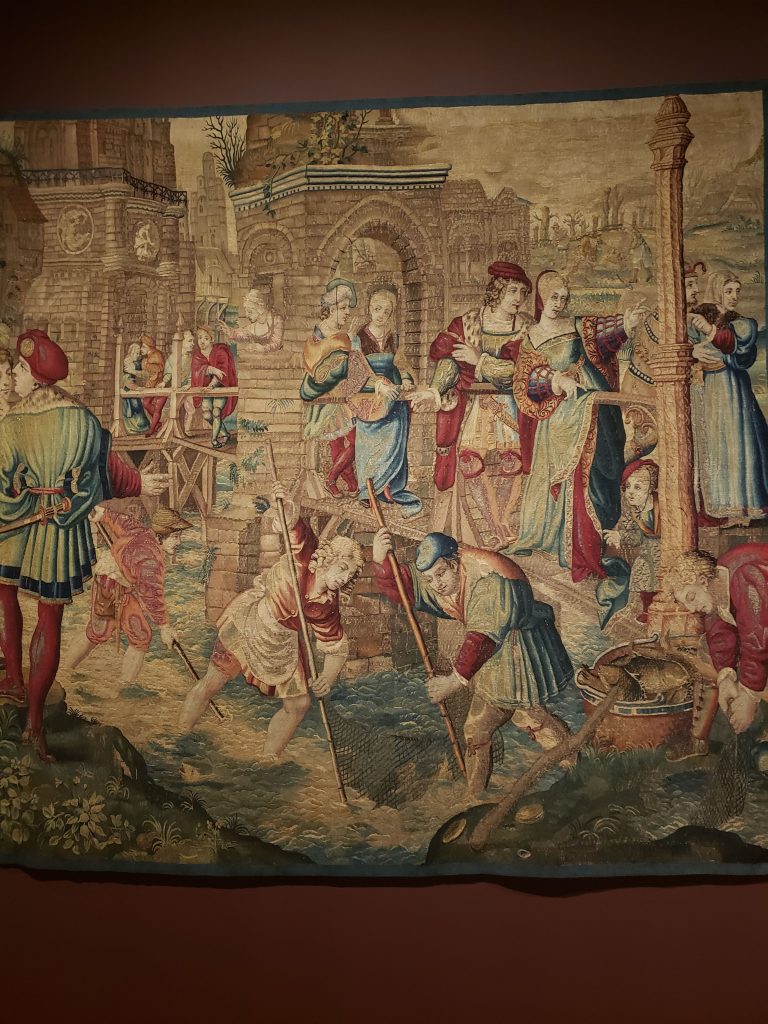
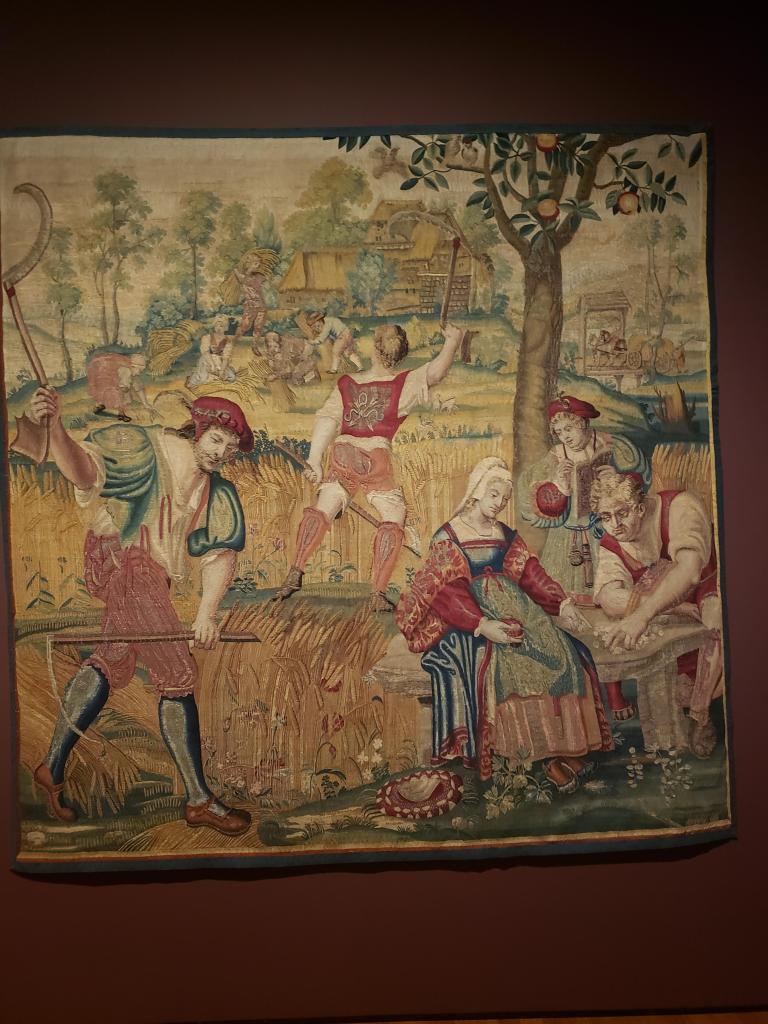
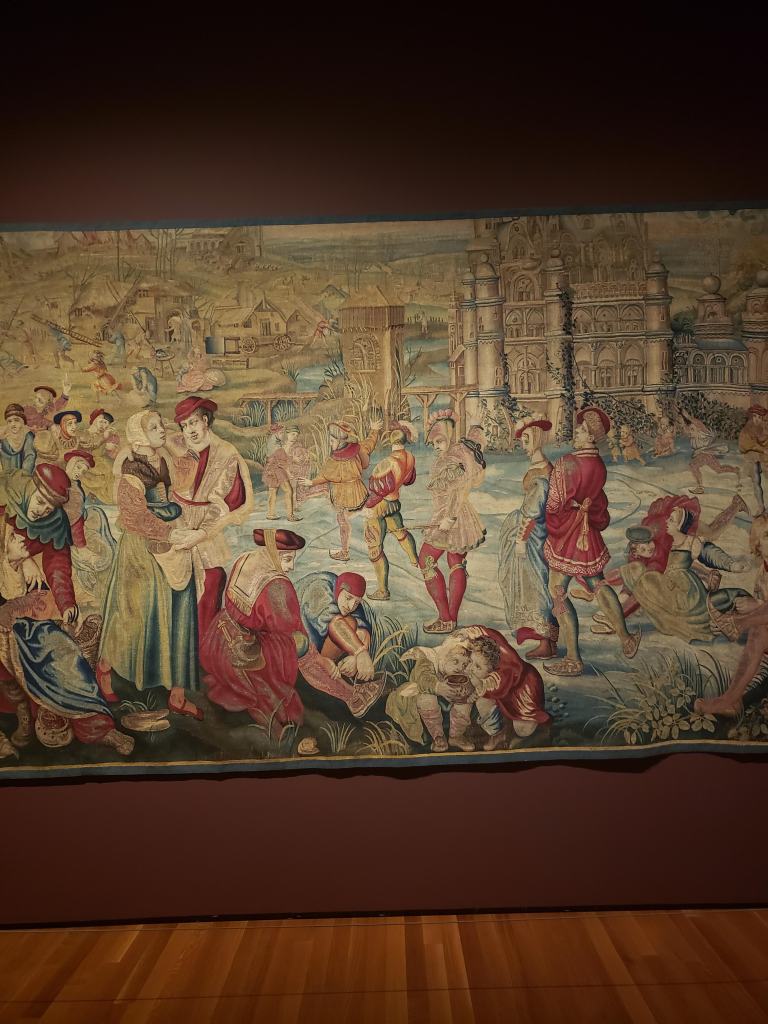
I had visited the Cleveland Museum of Art on my previous trip and was eager to go back again since I didn’t even see half the collection last time! We visited several exhibits, including the Native American artifacts and a recently restored collection of tapestries. The tapestry exhibit included a video about how Belgian specialists cleaned and restored the textiles which was very interesting. The set of four tapestries depicts the early modern life during the four seasons: spring (gardening and fishing), summer (grain harvesting), autumn (wine making), and winter (ice skating). This set of tapestries are notable since it is one of only four copies known to include silk threads wrapped in silver and gold. This means the patron who commissioned the tapestries was very wealthy. The tapestries might have been woven in Paris during the 1600s based on a Flemish design created in the 1535. The tapestries were donated to the museum in 1952.

The cafeteria was also impressive, and Nataliya and I both ordered sushi roll boxes. Again, we only saw a portion of the collection and we could easily spend several days there exploring it all!

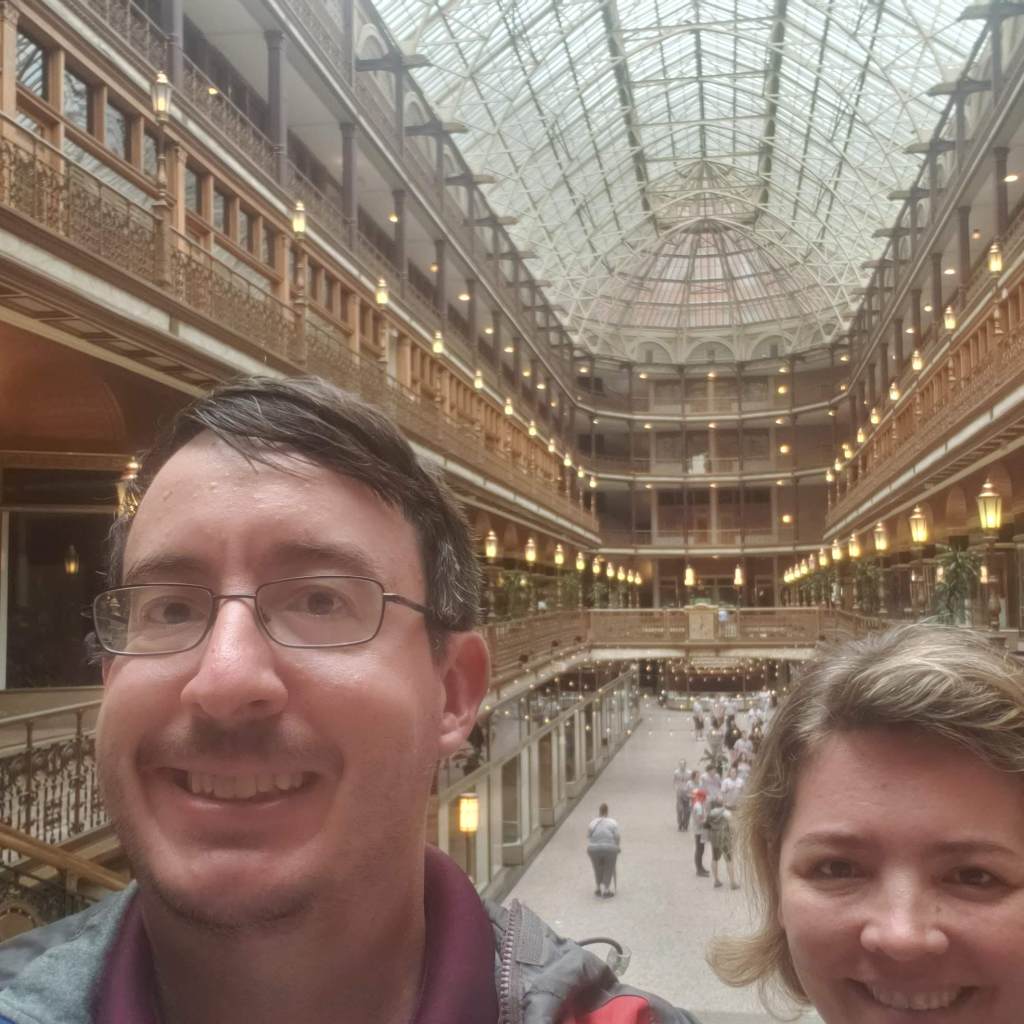
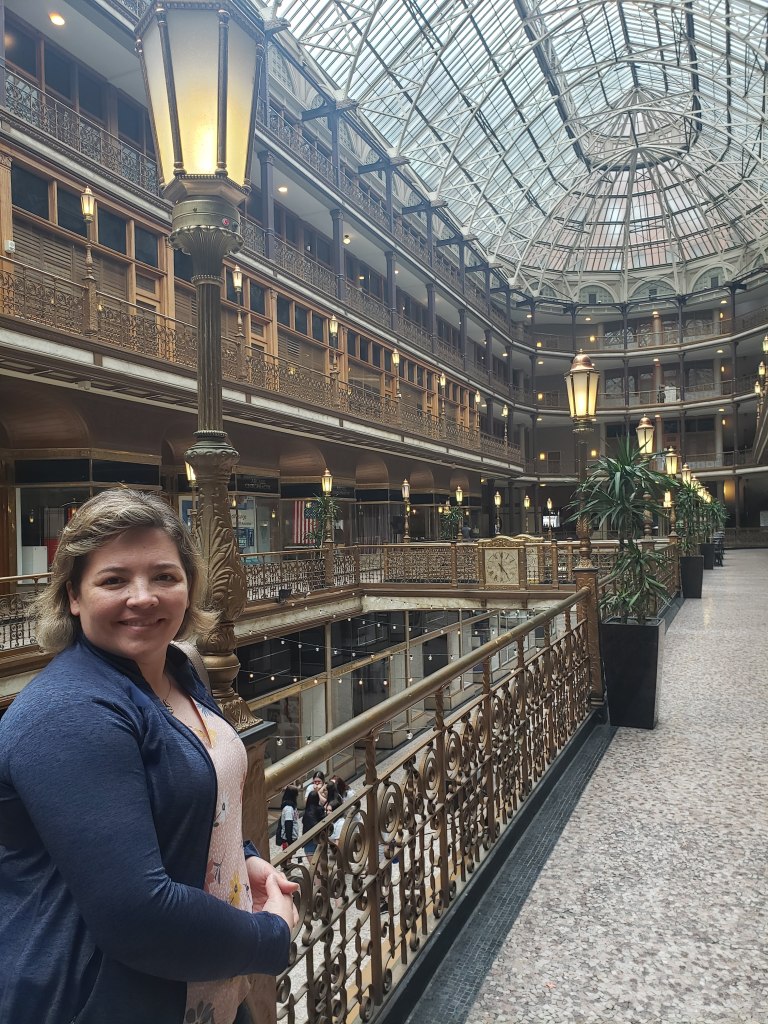
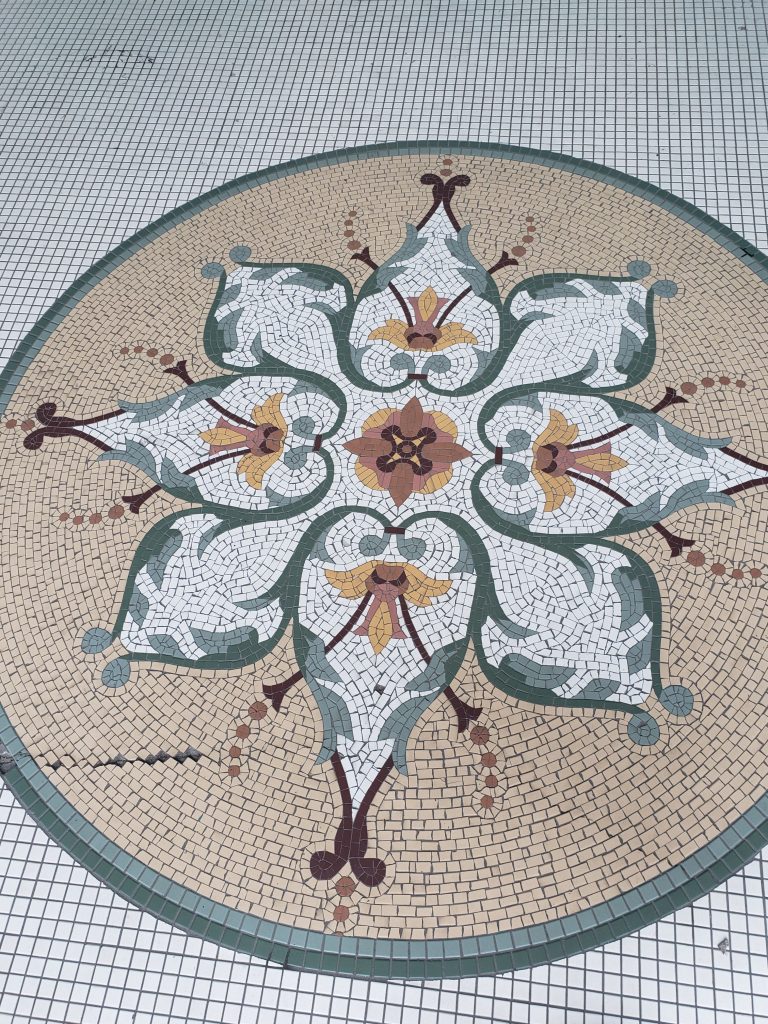
The historic Cleveland Arcade was our last stop of the day. Built in 1890, the arcade’s design was influenced by a Milanese gallery. It reminded me of the Musee d’Orsay in Paris with all its steel and glass, hence the nickname “Cleveland’s Crystal Palace.” Over the decades, it fell into disrepair as the downtown district began to crumble. But the Arcade was the first building in Cleveland to be placed on the National Register of Historic Places in 1975. Threatened with demolition, the Arcade was saved after a massive $60 million restoration project in 2001. Now a large part of the Arcade has been converted into a Hyatt Regency Hotel so you rent the old storefronts overnight. When we arrived late in the afternoon, most of the other businesses were closed but we did grab a bite to eat at Pizza 216.

Then we strolled around downtown a bit more, which was much cleaner and more vibrant than downtown Cincinnati usually is (except for festivals and other events). We immediately discovered another historic arcade right across the street (5th Street Arcades). It’s comprised of two separate arcades, the Colonial Arcade (built 1898) and Euclid Arcade (built 1911), which were connected in 2000. Although smaller and less famous, the 5th Street Arcades were also very beautiful and had a greater diversity of tenants, including numerous shops and restaurants.

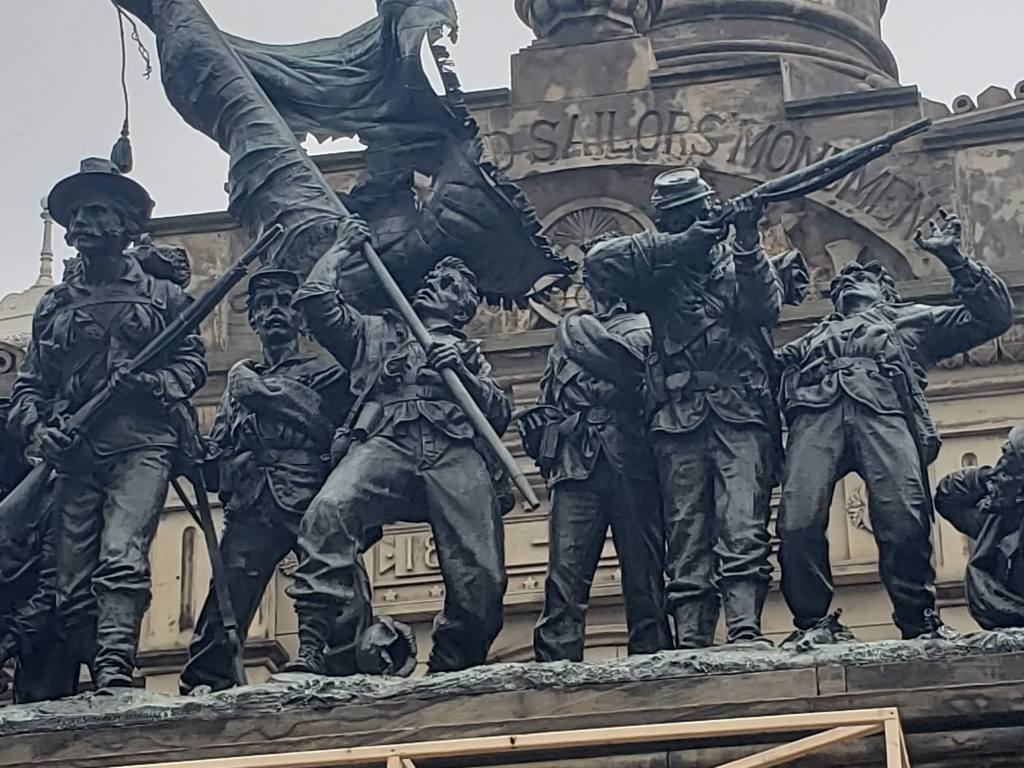
Our final stop for the night was the Soldiers and Sailors monument which honors veterans from the Civil War. Built in 1894, the monument was restored in 2008, and in 2019 the names of black soldiers were added to the monument after being initially excluded. There is a small exhibit space inside of the monument, but it was closed when we visited. 

Day 3: Put-in-Bay

We started our morning with breakfast at the Terrapin Bakery, only two blocks from the Rowley Inn. The bakery has a great selection of pastries and several large and tasty breakfast sandwiches. That gave us the fuel we needed for a full day of adventure at Put-in-Bay. This popular tourist destination is located on South Bass Island in Lake Erie, which is about an hour and 15 minutes west of Cleveland. The ferry provides inexpensive and frequent service to the island.

I had first visited the island about 30 years ago on a school field trip to northern Ohio, but I haven’t been back in more than 25 years. You can rent a golf cart or bicycle to get around the island, but Nataliya insisted on walking. It’s feasible, but I certainly exceeded my daily step count goal! We stopped for lunch at Joe’s Bar which only offers basic bar food, such as burgers and hotdogs.

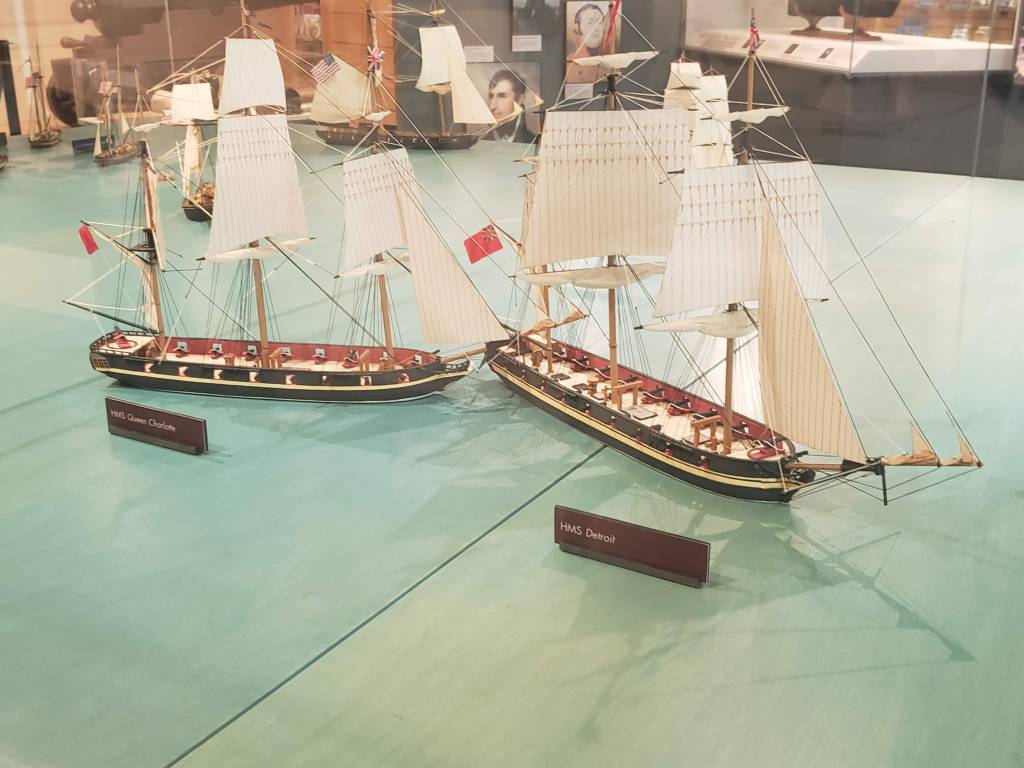
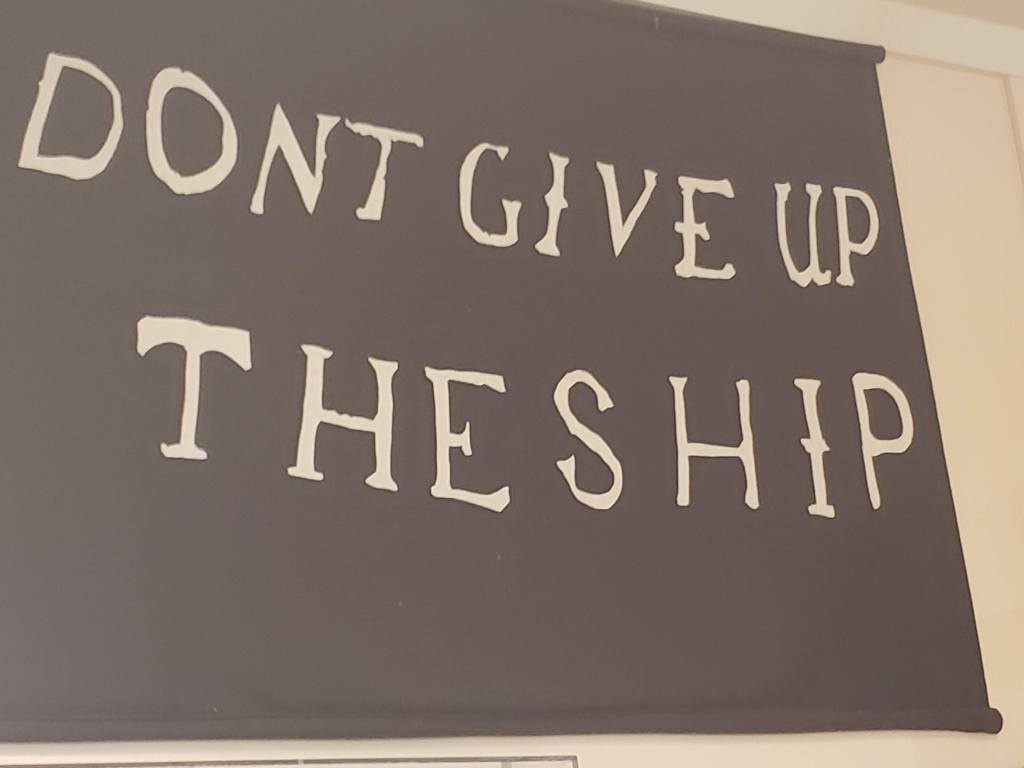
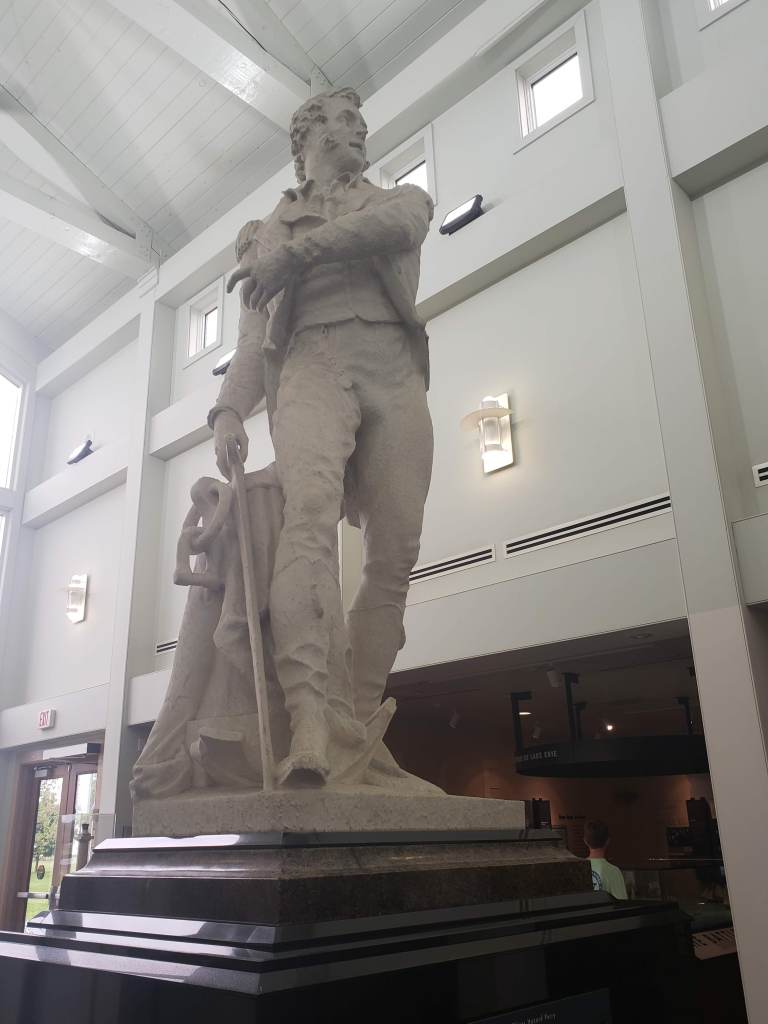
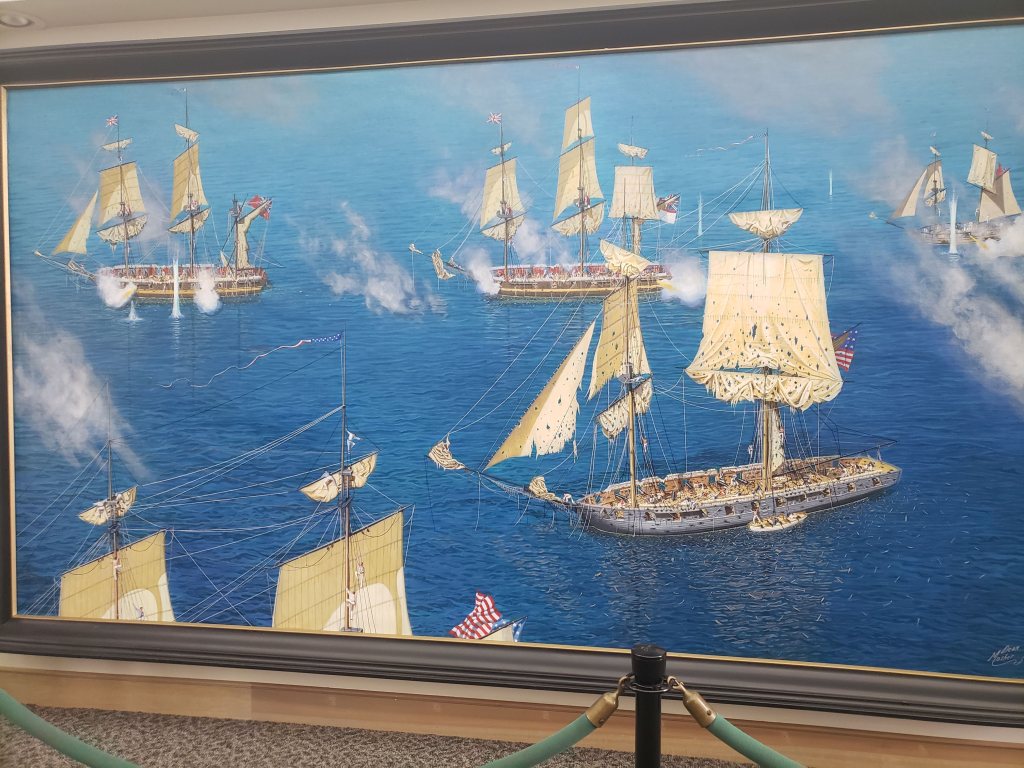
We strolled along Put-in-Bays boardwalk but weren’t interested in any of the restaurants or gift shops. However, I looked forward to returning to the monument to Commodore Oliver Perry’s victory over the British fleet in the War of 1812. I had first visited more than about 25 years ago and was pleasantly surprised to find a visitor’s center had been built in the interim. The facility features lots of historic artifacts as well as a scale model reproduction of the battle.

However, the main attraction is the immense (352 feet tall) Doric column monument to honor Perry’s victory and also pay tribute to the lasting peace between Britain, Canada, and the USA since the war. The monument is the tallest Doric column in the world and was built in 1915. It features an observation deck ($10 fee), but neither I nor Nataliya felt like making use of it.

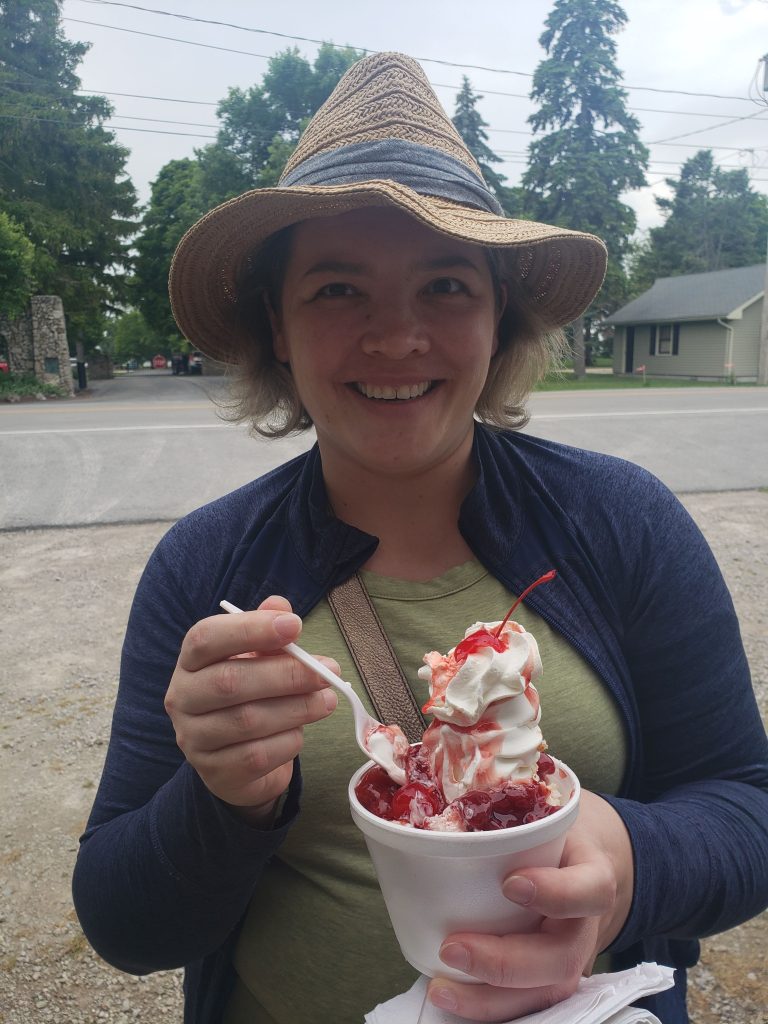
We made one last stop at Dairy by the Docks after taking the ferry back to the mainland. This unassuming ice cream stand served the largest, most decadent bowls of ice cream we’ve ever had! We easily shared one dish between us.

Day 4: Waterfront & Parma

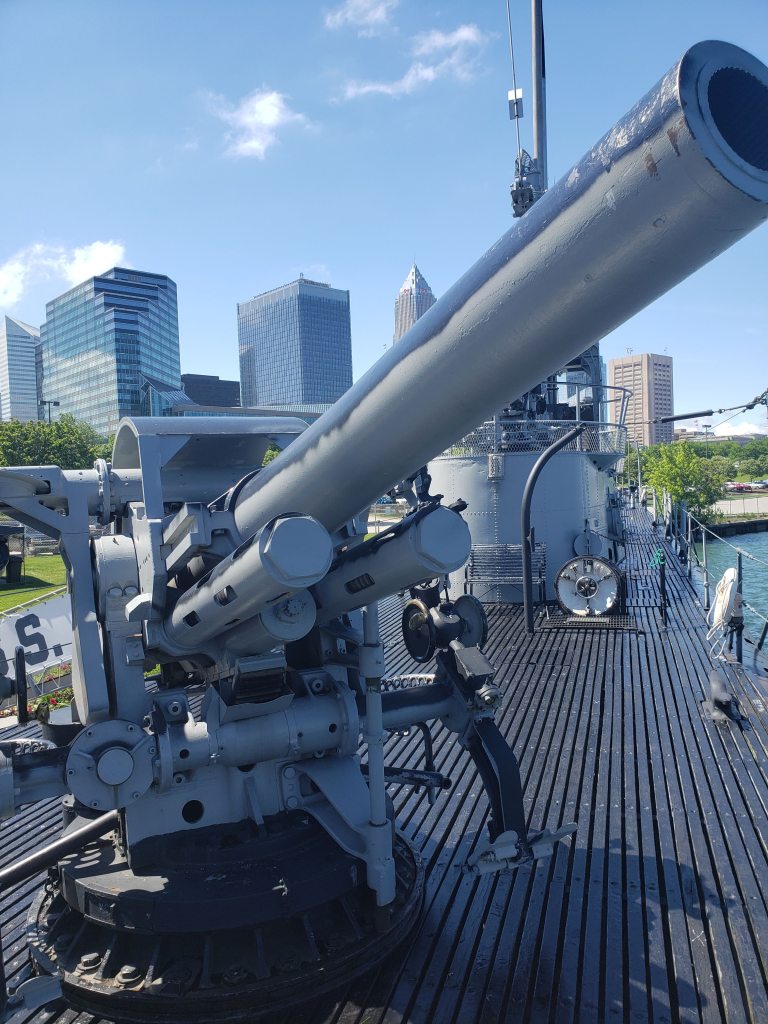
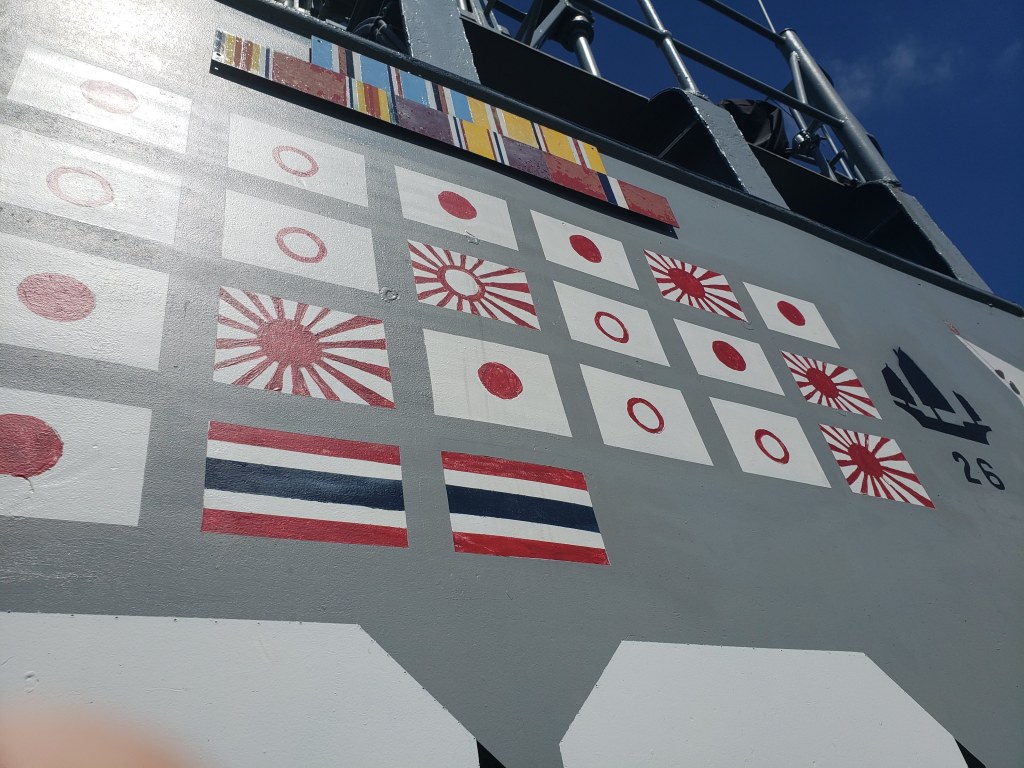
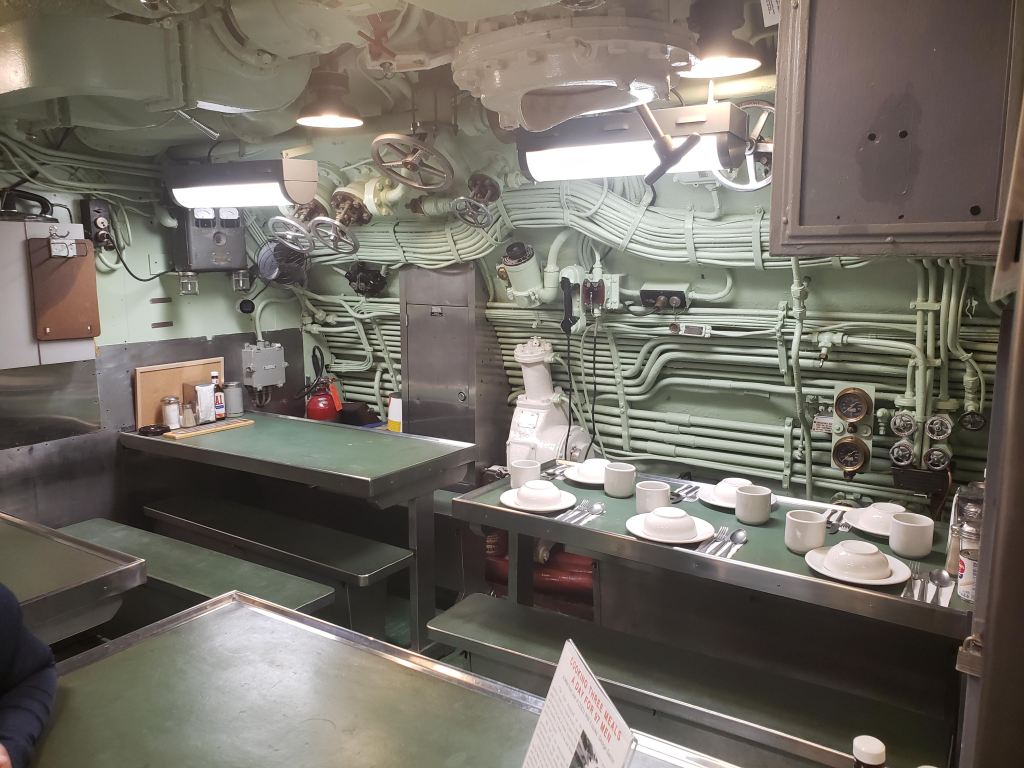
We had a few more stops to make on our way out of town, including one of my highest priority attractions that I had overlooked several years ago: the USS Cod, a WWII submarine turned museum ship! The USS Cod conducted seven combat patrols in the Pacific Ocean between 1943-45 and sank 12 Japanese ships. The Cod also was the only submarine to rescue the crew of another submarine during WWII when the Dutch submersible O-19 ran aground on a reef in 1945.

After WWII, the USS Cod became a training ship on the Great Lakes and then volunteers took over when the ship was finally deactivated. It was designated a historic landmark and became a museum ship in 1976. The ship underwent extensive repairs in 2021 at a cost of $1.4 million, which was well worth it!

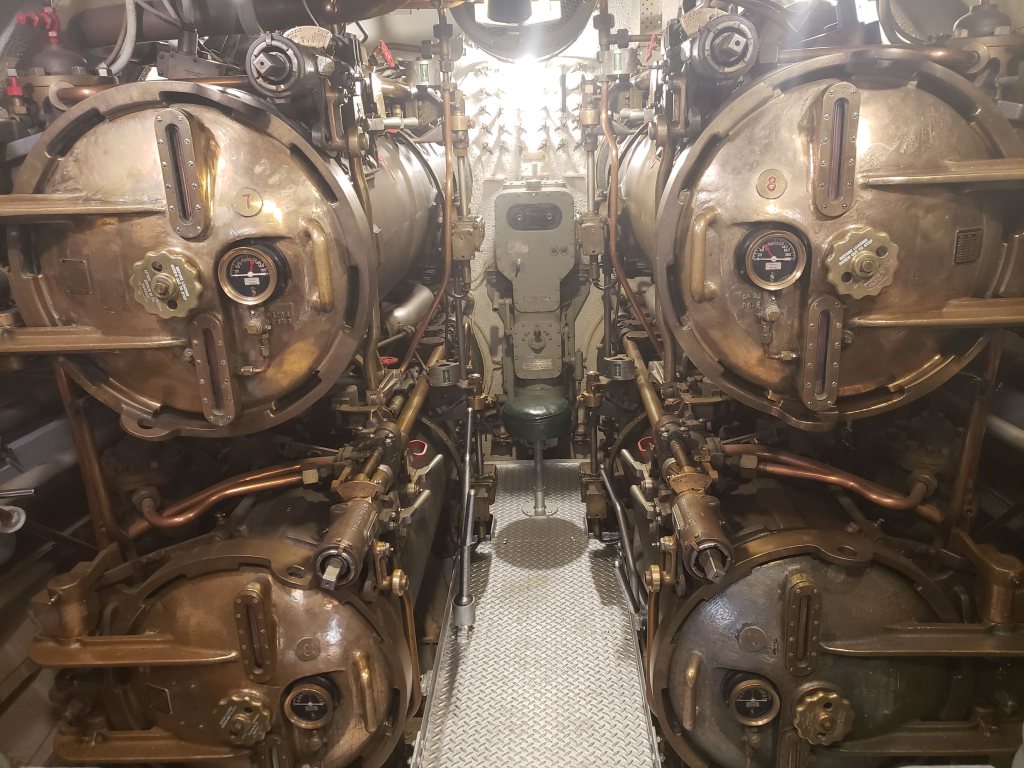
For being nearly 80 years old, the ship was in excellent conditions after the renovations. Nataliya and I explored nearly every nook and cranny on the ship, which features an interesting audio tour. I even sat in the deck gunner’s position! The volunteers were also very informative and helpful. I highly recommend a visit, even if you’re not a history buff like me ($12 fee)!

Afterwards, we strolled the lakefront promenade. The weather was perfect, and the lake was beautiful, if a little windy.

Our last stop in the Ukrainian stronghold of suburban Parma was particularly important for Nataliya since the war against Russia had been underway for 3 months by this point. Due to chain migration, Parma became home to more than 35,000 Ukrainians in the 1970s. The USSR had long restricted emigration but eventually allowed people to travel more freely after signing the Helsinki Accords in 1975.

Parma is still home to thousands of Ukrainians who own many small businesses in the area. There are several Ukrainian churches, and the community has hosted numerous fundraisers in recent months to support their distant homeland. We picked up some comfort food at the Lviv International Food Store, and then got some schnitzel and chebureki at Mama Marie’s Ukrainian Kitchen. The interior is decorated with lots of colorful sunflower decorations (the national flower of Ukraine) as well as images of dancers in traditional Ukrainian garb. We ate the delicious fried foods at a local park before finally heading towards home.

Overall, it was a lot of fun and very relaxing. Just what I needed after being laid off, but a lot cheaper and faster than Thailand!