Immediately after I was diagnosed with stage four lung cancer in December 2016, I vowed to fulfill my long-standing desire to return to Paris. More than 1 year later, I finally did it.
I first visited Paris as part of a school-sponsored tour in the summer of 2000. I always wanted to go back, but I put it off for one year, which became two, then three and eventually 18. This won’t be a simple diary but rather a commentary on my experiences in Paris. There were a lot of great moments that I don’t want to be overshadowed by my critical commentary, but I do hope it will inspire people to be more thoughtful while traveling.
On this blog, I’ve explained how and why I’ve become a Francophile. My desire to visit Paris went on the back-burner until I was diagnosed. Suddenly, time became precious and I wanted to make up for lost opportunities.
I went back to Paris in May 2018 with my mother, father and brother. I am lucky to have shared this experience with them and have their love and support throughout my illness. We visited a lot of the same places I saw in 2000, but it was better to have them along with me. I also visited a few new places, such as the military museum at Les Invalides and explored on my own.

There were lots of happy moments. One of my favorite memories will be rushing to see the Eiffel Tower on our last night in Paris – it was cool and rainy, but it was still a joyful experience. We all rode the carousel near the Eiffel tower. I was on a zebra that leapt through the air, and I got to be a kid again for a moment (video). I probably haven’t ridden a carousel in 20 years, but I almost started to cry because my emotions were so strong. I was almost overwhelmed by the love and gratitude I felt, but I also felt a deep sense of relief because I finally accomplished what I had delayed for so long. Without the epiphany caused by cancer, I may have kept prolonging this trip and other priorities indefinitely.

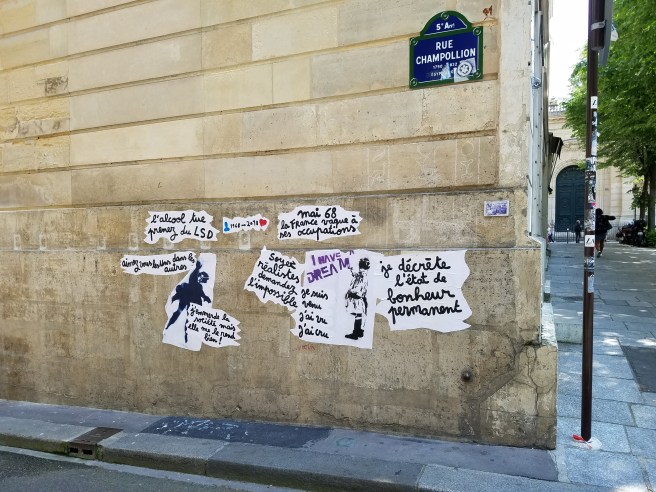
I love French film and I had originally hoped to visit the massive Grand Rex theater , but I settled for something more intimate: the Filmotheque du Quartier Latin. We stayed in the Latin Quarter near the Sorbonne, which actually turned out to be home to a number of small independent theaters. The Filmotheque was literally right around the corner from our apartment and the walls were adorned with political graffiti. It happened to be showing the classic Cary Grant and Audrey Hepburn film “Charade,” with an excellent musical score by Henry Mancini. The Filmotheque only had two small theaters – each without about 50 seats. It was like sitting in someone’s private home theater. The rest of the family stayed in to rest, so it was my own private Parisian moment.
However, I kept my eyes open to the realities of Paris and its history as well. Notre Dame was one of the first places we went to. Built between the 12th and 14th centuries, it’s one of the best examples of a Gothic church. The western façade features three entrances which are richly decorated with images of saints and martyrs. Of course, Notre Dame is also famous for its magnificent stained glass. Inside, the high domed ceilings reach up more than 100 feet into the air. We toured Notre Dame during a Wednesday morning mass. The hymns, combined with the flickering votive candles, created a very peaceful and reflective atmosphere, which my mother found to be quite moving. However, I was quite ambivalent about it. I was certainly impressed by the amount of labor, time and money that went into creating such an impressive monument.
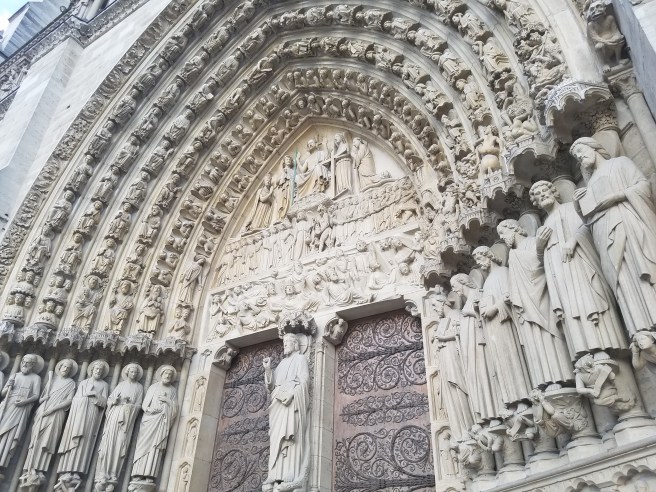
On the other hand, it struck me as rather misguided. I’m skeptical of organized religion in general, and the Catholic Church is no exception. For more than 200 years, skilled artisans and architects dedicated themselves to creating a monument to the glory of God and the Catholic Church. Much good has been done in the name of God, but much hatred, violence and oppression has been committed in his name as well. I appreciated the artistic value and the engineering accomplishments Notre Dame represented, but I couldn’t help feeling the effort was misguided at best. How much good could have been done in the world with the money and effort spent to create this awesome monument? And remember, it was only one of dozens of massive cathedrals throughout France. I’m not anti-Catholic, but I am critical of how resources spent by any religious organization to glorify God could be better used for that same goal by alleviating suffering here on Earth.

This sense of inequality and injustice would be a recurring theme throughout my trip and my reflections. Don’t get me wrong, I was thrilled to have the chance to return to Paris, especially with my family. I’ll back again, and next time I’d love to get outside the city. Maybe someday I’ll even do the classic “romantic” escape to Paris. However, Paris is a real city – not just the stereotypical “City of Love.”
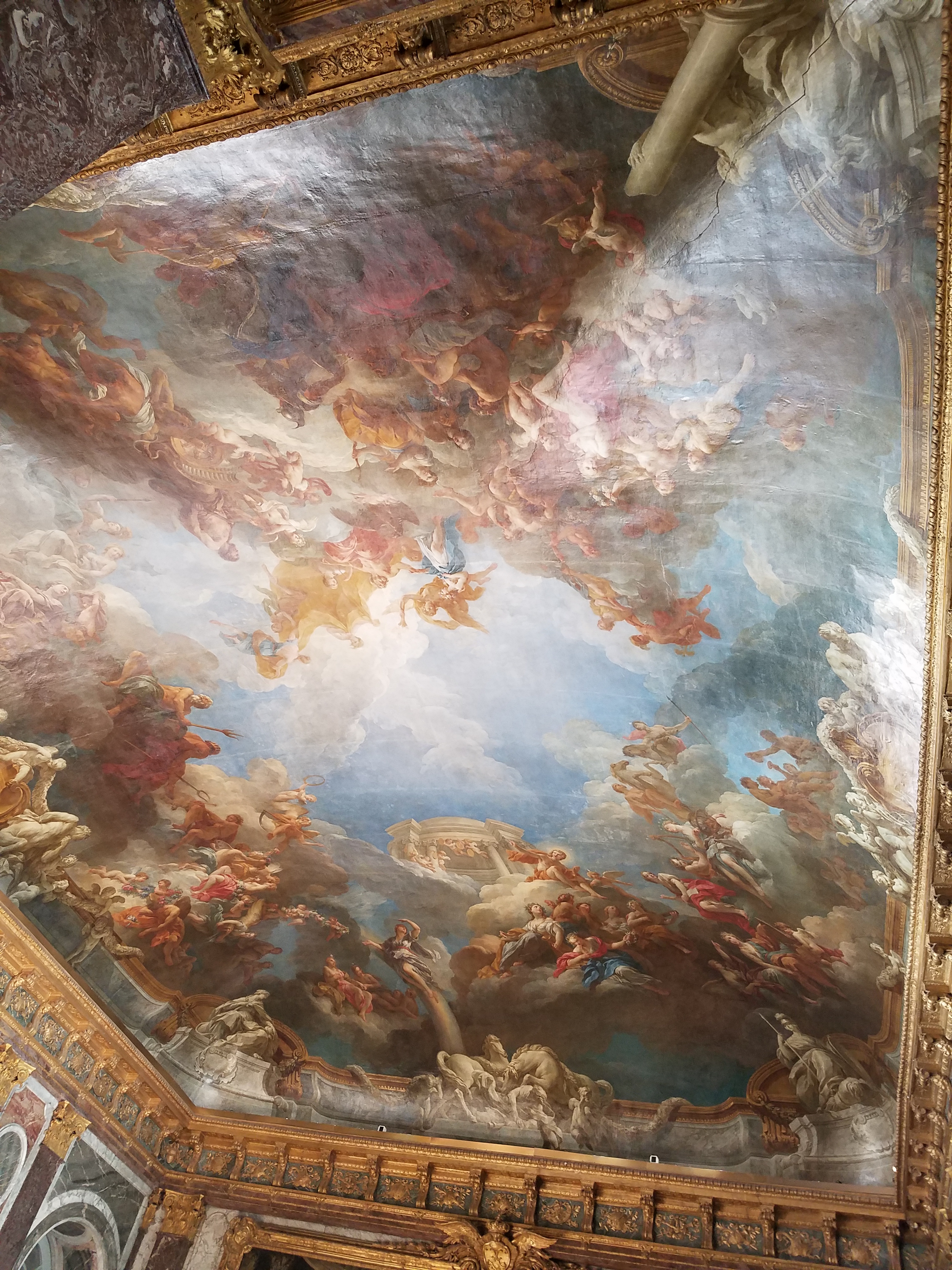
I had visited the Palace of Versailles 18 years ago, and I went back with my family earlier this year. Originally a royal hunting lodge, King Louis XIV made Versailles more than just a mansion in the 1600s. It became a byword for decadence, opulence and luxury. A single room in the palace represents a vast fortune of art, furniture and furnishings. The palace interior was overwhelmingly lavish and featured the largest ceiling canvas in Europe (more than 5,000 square feet). The palace in its entirety is incomprehensible.

We did the main tour and then walked down to the Apollo fountain in the massive gardens. The gardens were a refreshing break from the crowds and the weather was perfect. I laid down in the grass near the Apollo fountain and took a brief snooze. Soothing classical music flowed through the air and dozens of ancient statues adorned the gardens. However, even after several hours we didn’t have time to visit the Trianon Palace, to which Louis XIV retreated when life at Versailles was too hectic.
Visiting Versailles made it obvious that revolution against the monarchy in France in 1789 was almost inevitable. Versailles represented a nearly incomprehensible amount of wealth, but it was only one of many royal estates the Bourbon dynasty owned. I cherished the opportunity to revisit Versailles, which is a UNESCO World Heritage site, but couldn’t ignore its historical context.

The Louvre was a “new” destination for me. It was on our itinerary 18 years ago, but I missed it because I was lying on a bench ill and tired. I was excited about having the chance to return and see the impressive collection of Egyptian artifacts. We’d already visited the Musee d’Orsay so I had already seen enough European paintings. I’ve always had a passing interest in ancient Egyptian history and, as a child, once dreamed of becoming an archeologist like Indiana Jones (instead I chose the equally lucrative field of history). Again, after several hours we had only scratched the surface on the Egyptian collections at the Louvre, let alone the extensive exhibits of ancient sculptures, Islamic art and European paintings.
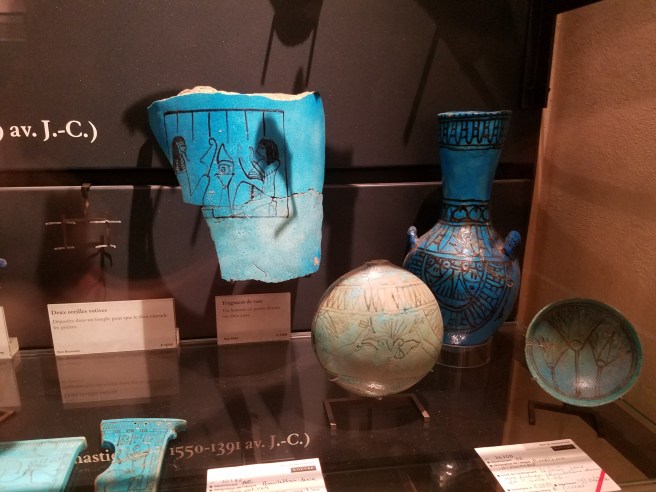
The vibrant colors of the Egyptian artifacts, especially blue pottery, really struck me. The wonderfully intricate hieroglyphics were also inspiring. Again, the sheer amount of material was overwhelming. There were entire rooms on display, as well as an entire exhibit hall filled with dozens of sarcophagi. I’ve never been to Egypt, and, although I’d like to go someday, I may never visit. So, it was rewarding to be able to see these artifacts while visiting France, but I couldn’t ignore the moral context of the exhibit.

Egypt has demanded many institutions, including the Louvre, return artifacts that were taken sometimes illegally and sometimes only under a “legal” façade created by bribery and corruption. I think any institution with Egyptian artifacts should return them or sign an equitable agreement for retaining them on loan. It might be costly or embarrassing, but it’s the right thing to do. Cultural imperialism is still imperialism.
The stark reality of life in Paris also regularly intruded into the bright joy of our time in Paris. When arriving and departing from Charles de Gaulle airport, we traveled through the grimy working-class suburbs of Paris near the Stade de France. Gone were the pristine cafes of the Ile de la Cite – instead there were store fronts covered in graffiti. Every day we also encountered beggars, and this issue doesn’t get much attention. Back in the United States, I often wrestled with the quandary of whether I should give money to panhandlers. I prefer to give out bottled water to beggars back home, but that wasn’t an option in Paris.
Ultimately, I did give money to several Parisian panhandlers – especially those who had a pet dog and another who had a pet rabbit. But Paris is filled with people in need, even if more financial support and social services are available than in the United States. In addition, there are a lot of refugees in Paris and the rest of Europe. Again, my point is not to tarnish experience in Paris with negative memories but to embrace the city in its totality instead of immortalizing it as the romantic ideal. Similarly, I cherish both the good memories from New Orleans as well as remembering the glimpses of inequality. To ignore it would be a disservice to the real people of Pairs. Just because you’re on vacation doesn’t mean you leave your compassion at home.
I’ll carry my love for Pairs home with me when I watch classic French cinema, read bande dessinee and participate in French discussion circles. But I’ll also remember that Paris is vibrant and complex city – not just a cliched postcard.

 Freelance Writer Paul Glasser
Well at least you can write
LikeLike